Postal History · Royal Navy · North America and West Indies Station

H.M.S. Alert

Ireland Island · Bermuda · 1901 and 1910

A crested cover to the ship’s surgeon in 1901, and a postcard written the day she sailed for India in 1910.

◆

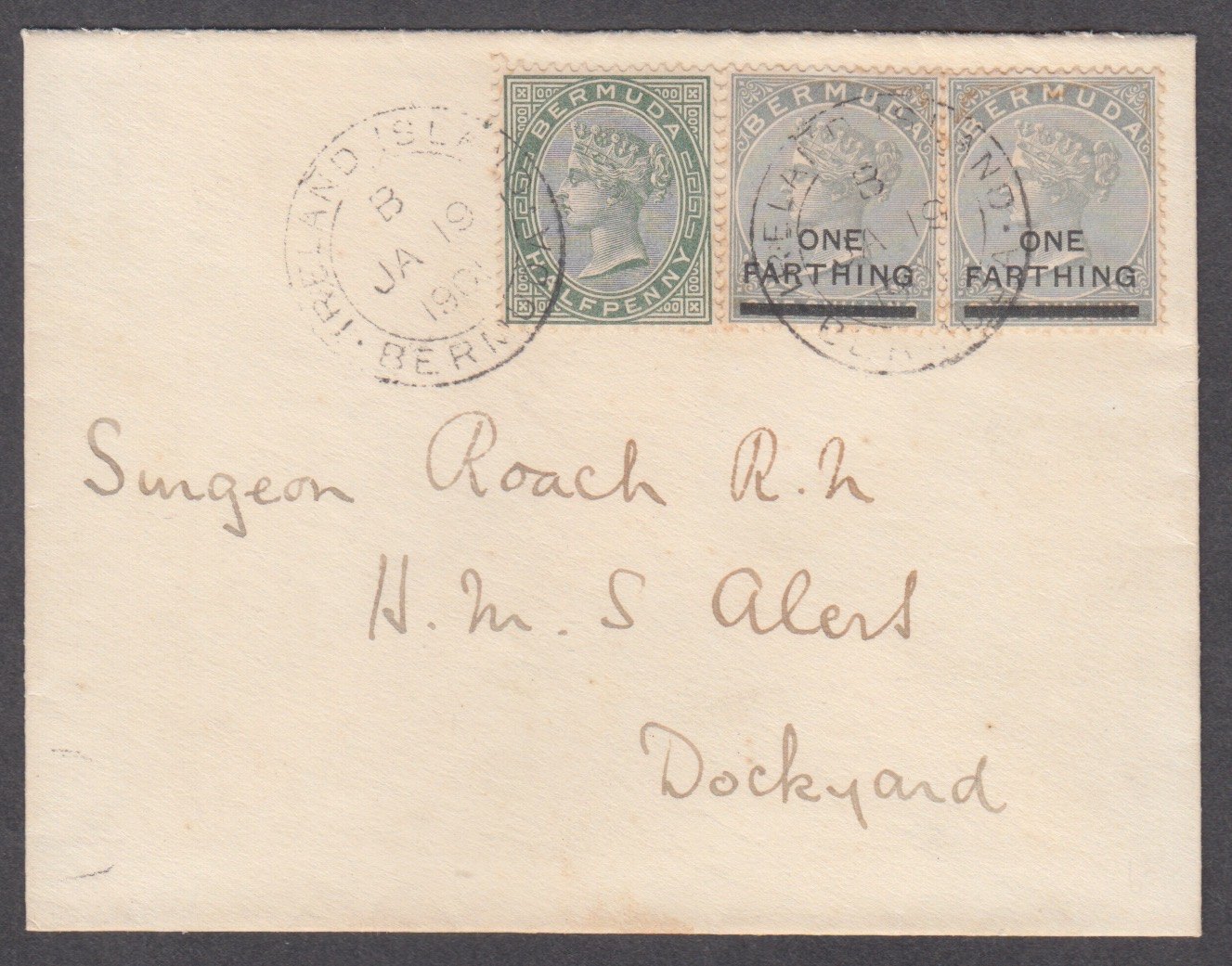
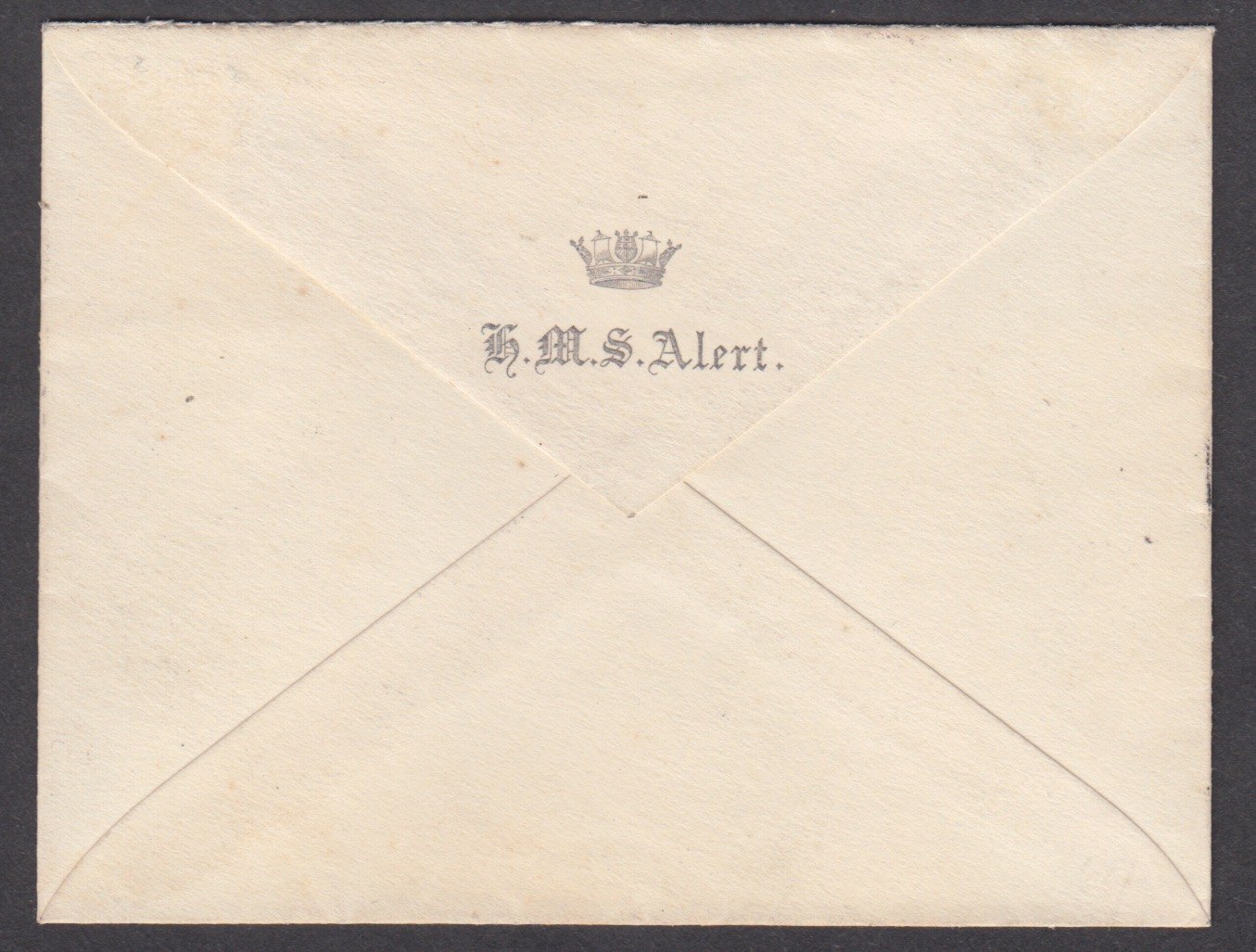
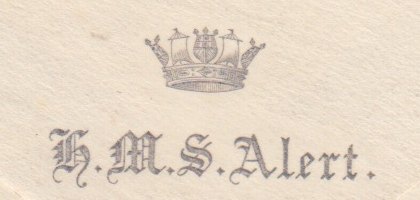
The Alert has turned up in my collection twice, nine years apart: a cover in 1901 and a postcard in 1910, both posted at the Dockyard. The cover is a lovely little item, and one I enjoy every time I turn it over. On the back flap is the ship’s crest, a naval crown above “H.M.S. Alert” in Gothic lettering, embossed so it stands up from the paper. On the front it’s addressed to “Surgeon Roach R.N., H.M.S. Alert, Dockyard”. So it’s the Alert’s own stationery, sent to the Alert’s own surgeon, and posted at the Dockyard post office on 19 January 1901, three days before Queen Victoria died.

By the time of the postcard she’d spent four years laid up at Bermuda, and in February 1910 she was fitted out for a new life in the East Indies. The card was written on the morning she left: “We leave to day for Bombay.”

I

The cover

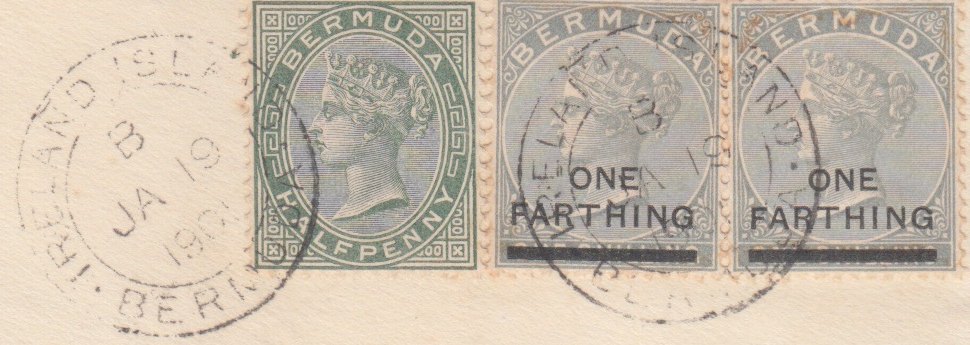
Small cream envelope addressed in brown ink to Surgeon Roach R.N., H.M.S. Alert, Dockyard, franked with a Bermuda halfpenny green Queen Victoria stamp and a pair of grey One Farthing surcharges on the one shilling, tied by Ireland Island Bermuda datestamps, code B, JA 19 1901
Posted at Ireland Island, 19 January 1901, to Surgeon Roach aboard the Alert
Reverse of the envelope, plain except for the back flap, which carries a naval crown above the words H.M.S. Alert in Gothic lettering
The reverse: no backstamp, just the ship’s crest on the flap
Close-up of the embossed crest on the back flap: a naval crown of sterns and sails above H.M.S. Alert in Gothic lettering
The embossed crest, raised from the paper
  • Addressed to Surgeon Roach R.N., H.M.S. Alert, Dockyard
  • Franking ½d green and a pair of ¼d on 1s grey “ONE FARTHING”
  • Rate 1d, the local letter rate
  • Datestamp Ireland Island type H7, code B, JA 19 1901
  • Backstamp None
  • Reverse Embossed crown and “H.M.S. Alert” on the flap

The stamps are tied by the Ireland Island datestamp, type H7, which came into use around June 1900. It carries code B, the noon or early afternoon collection. There’s no backstamp, and there didn’t need to be, because the letter never left Ireland Island. It went into the Dockyard post office and came back out to a ship lying a few hundred yards away in the Cambre.

“Surgeon Roach R.N. / H.M.S. Alert / Dockyard”

The address

I can’t help wondering whether the surgeon wrote it to himself. It’s on his own ship’s paper, carrying a stamp only eight days old, and it has the look of a souvenir. I can’t prove it, but I’d love to know.
II

A brand-new farthing

Close-up of the stamps: Bermuda halfpenny green Queen Victoria and a pair of the grey one shilling surcharged ONE FARTHING with the original value barred out, tied by the Ireland Island datestamp, code B, JA 19 1901
The ½d green and the pair of ONE FARTHING surcharges, the old value barred out

The two grey stamps are Bermuda’s first farthing, made by surcharging the old 1s grey “ONE FARTHING” and barring out the original value. Ludington records them as issued on 11 January 1901, so this cover used them just eight days later. Add the ½d green and the franking comes to exactly 1d, the local letter rate.

The timing is close in another way too. Essays had been prepared for a new farthing design, but with the Queen’s death on 22 January neither was adopted. Three days after this letter was posted, Bermuda’s stamps were already out of date.

III

The Alert at Bermuda

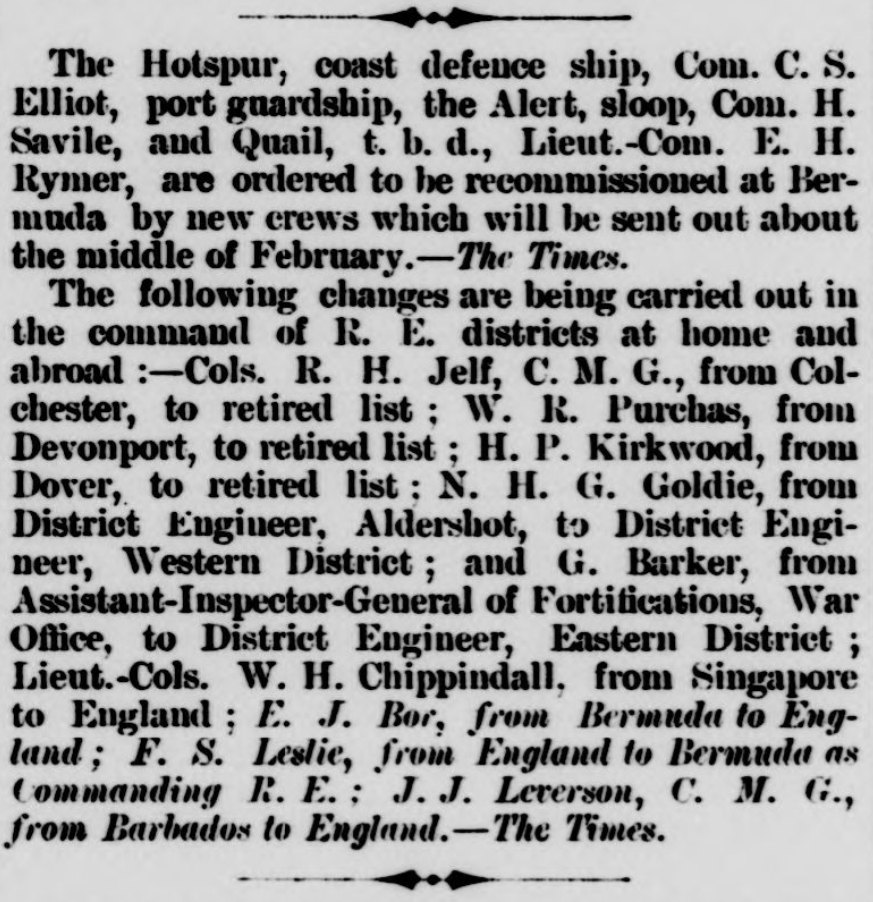
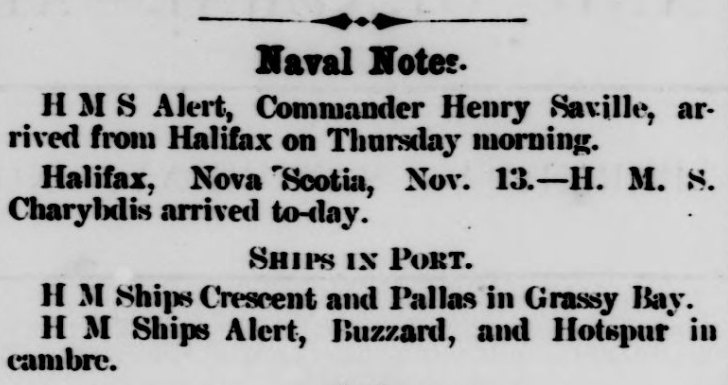
Royal Gazette Naval Notes: H M S Alert, Commander Henry Saville, arrived from Halifax on Thursday morning; Ships in Port: H M Ships Crescent and Pallas in Grassy Bay, H M Ships Alert, Buzzard and Hotspur in Cambre
Royal Gazette, 17 November 1900: arrived from Halifax
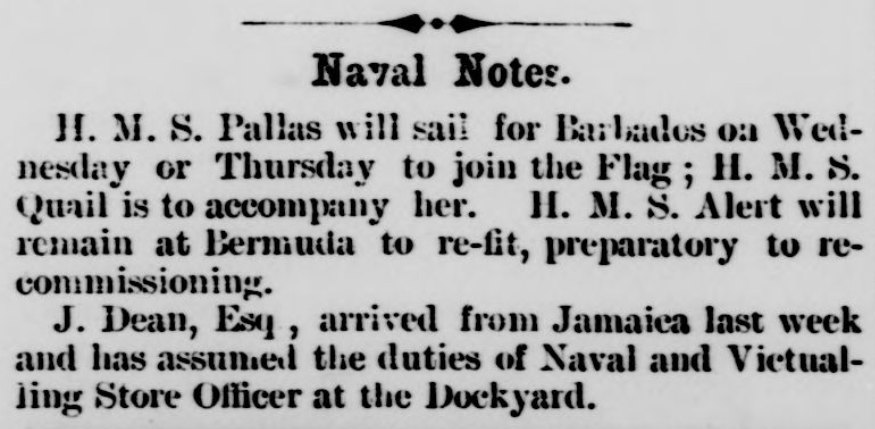
Royal Gazette Naval Notes: H.M.S. Pallas will sail for Barbados to join the Flag with Quail; H.M.S. Alert will remain at Bermuda to re-fit, preparatory to re-commissioning; J. Dean has assumed the duties of Naval and Victualling Store Officer at the Dockyard
Royal Gazette, 18 December 1900: to refit, “preparatory to re-commissioning”
Royal Gazette item from The Times: the Hotspur, coast defence ship, the Alert, sloop, Commander H. Savile, and Quail, torpedo boat destroyer, are ordered to be recommissioned at Bermuda by new crews to be sent out about the middle of February, followed by changes in Royal Engineers commands
Royal Gazette, 23 February 1901, from The Times: new crews ordered out
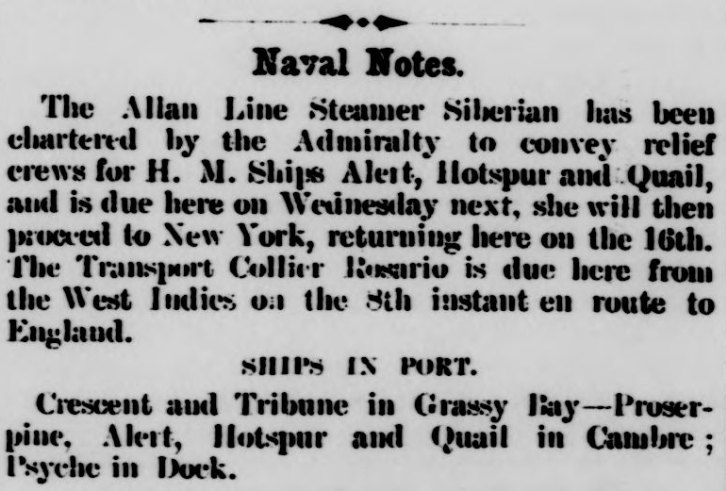
Royal Gazette Naval Notes: the Allan Line steamer Siberian has been chartered by the Admiralty to convey relief crews for H. M. Ships Alert, Hotspur and Quail, and is due here on Wednesday next; Ships in Port: Crescent and Tribune in Grassy Bay, Proserpine, Alert, Hotspur and Quail in Cambre, Psyche in Dock
Royal Gazette, 3 March 1901: the Siberian brings the relief crews
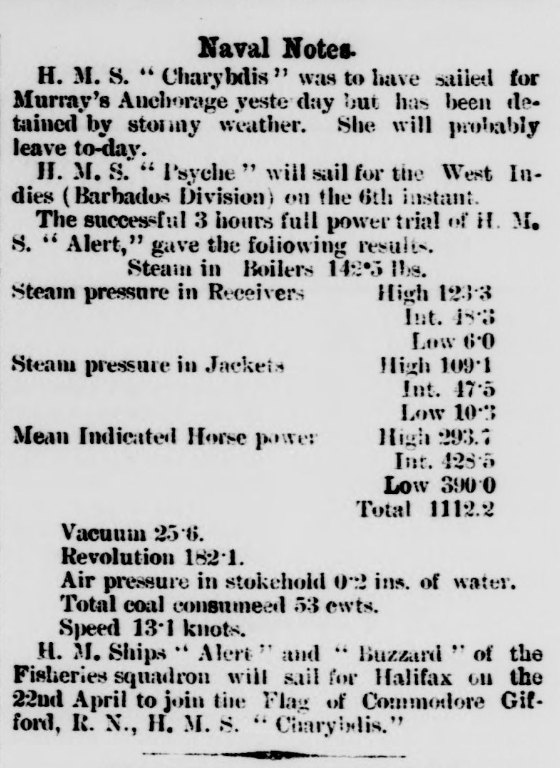
Royal Gazette Naval Notes: results of the successful three hours full power trial of H.M.S. Alert, total indicated horse power 1112.2, speed 13.1 knots, total coal consumed 53 cwts; H.M. Ships Alert and Buzzard of the Fisheries squadron will sail for Halifax on the 22nd April
Royal Gazette, 2 April 1901: full power trial, 13.1 knots

The Royal Gazette lets me follow the Alert through the months either side of the cover. She sailed from Halifax on 11 November 1900 and arrived at Bermuda on Thursday morning the 15th under Commander Henry Savile. She lay in the Cambre alongside Buzzard and Hotspur. The flagship Crescent went off on the West Indian cruise, but the Alert stayed behind. On 18 December the Gazette reported she would “remain at Bermuda to re-fit, preparatory to re-commissioning.”

That’s where she was when Surgeon Roach’s letter arrived. In February The Times reported that Hotspur, Alert and Quail were to be recommissioned at Bermuda by new crews sent out from England. On 3 March the Gazette reported that the Allan liner Siberian had been chartered to bring them. The surgeon who received this cover was almost certainly one of the outgoing commission.

By April the Alert was back at work. She ran a three-hour full power trial and made 13.1 knots. She did her quarterly firing in Murray’s Anchorage, then sailed with Buzzard for Halifax, arriving on 26 April 1901.

A winter in the Cambre

The ship on one side, the letter on the other.

The Alert
The letter
11 Nov 1900
The AlertSails from Halifax for Bermuda.
15 Nov
The AlertArrives at Bermuda, Commander Henry Savile.
Dec
The AlertRefitting in the Cambre, ready for recommissioning.
11 Jan 1901
The stampThe ONE FARTHING surcharge is issued.
19 Jan
The letterPosted at Ireland Island, code B.
22 Jan
The QueenQueen Victoria dies.
16 Feb
The AlertUndocked from the Floating Dock.
c. 6 Mar
The AlertRelief crews due in the Siberian.
Early Apr
The AlertFull power trial and quarterly firing.
26 Apr
The AlertArrives at Halifax with Buzzard.
IV

An accident at the Dockyard

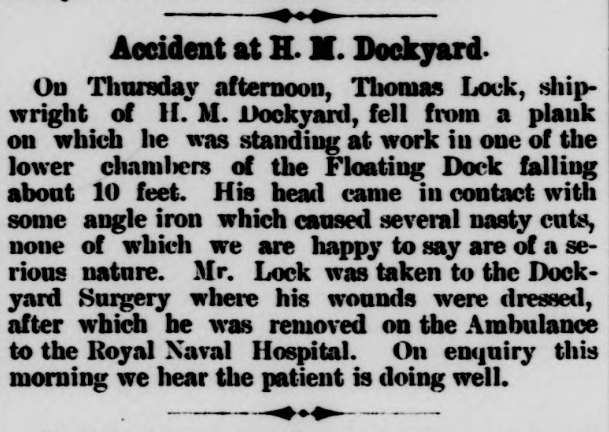
Royal Gazette report headed Accident at H. M. Dockyard: Thomas Lock, shipwright of H. M. Dockyard, fell from a plank in one of the lower chambers of the Floating Dock about 10 feet, cutting his head on angle iron; he was taken to the Dockyard Surgery and then by ambulance to the Royal Naval Hospital, and is doing well
Royal Gazette, 23 February 1901: “Accident at H.M. Dockyard”

One snippet from those weeks caught my eye. On Thursday afternoon, 21 February 1901, a Dockyard shipwright, Thomas Lock, fell about ten feet inside the Floating Dock and cut his head on some angle iron. He was taken to the Dockyard Surgery, then by ambulance to the Royal Naval Hospital, and the next morning he was reported to be doing well.

I did wonder whether Surgeon Roach was the one who patched him up. Honestly, it’s unlikely, because the Dockyard had its own surgery and the report names no one. But it’s a nice picture of Dockyard life while the Alert sat waiting for her new crew.

V

A postcard on the day she sailed

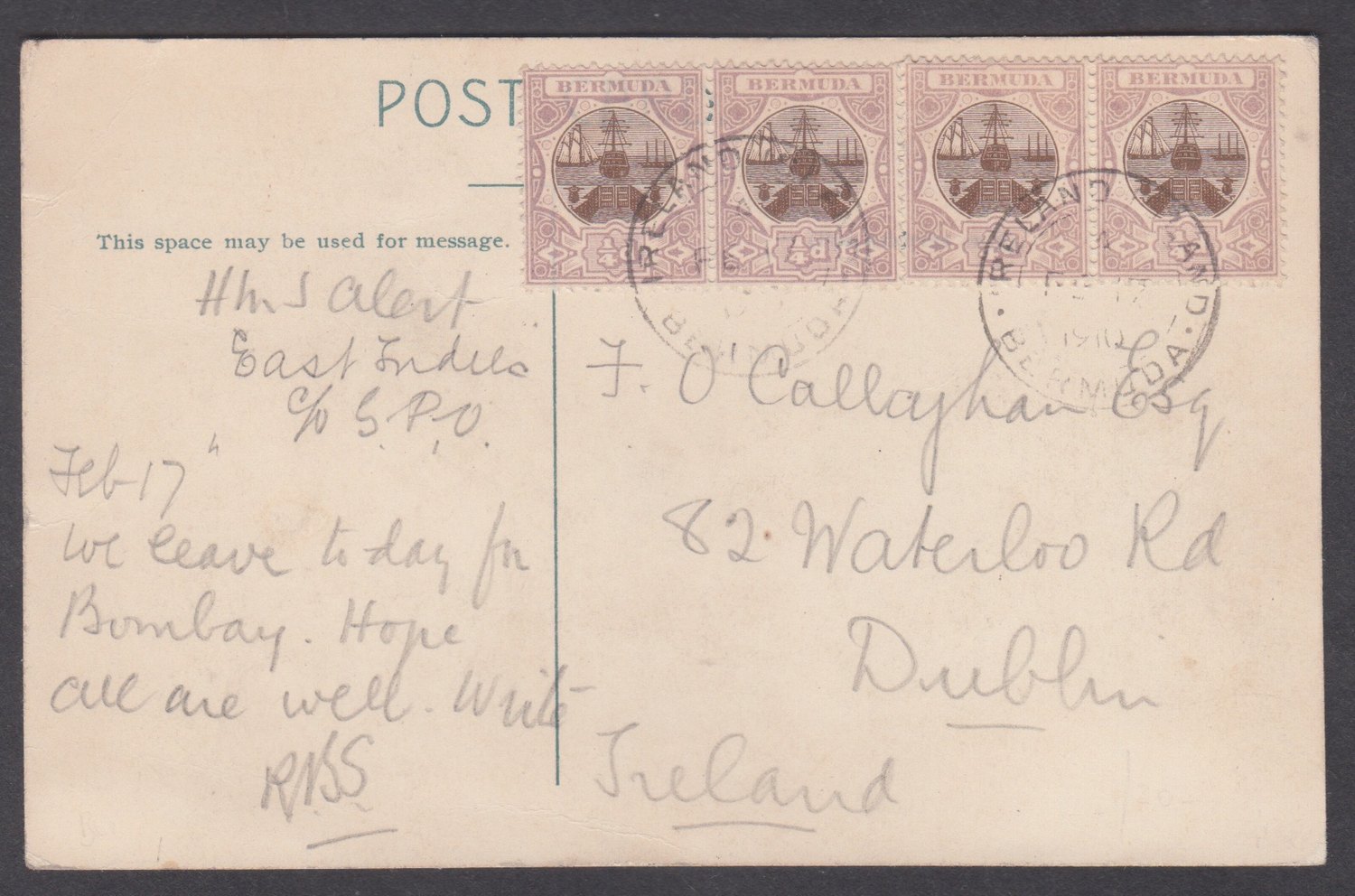
Message and address side of a picture postcard: four Bermuda quarter-penny Dry Dock stamps in brown and lilac, in two pairs, along the top right, tied by two strikes of the Ireland Island Bermuda datestamp of February 17 1910; on the left in pencil, H.M.S. Alert, East Indies, c/o G.P.O., Feb 17th, We leave to day for Bombay. Hope all are well. Write, signed RNSS; addressed on the right to F. O'Callaghan Esq, 82 Waterloo Rd, Dublin, Ireland
Posted at Ireland Island, 17 February 1910, to F. O’Callaghan in Dublin
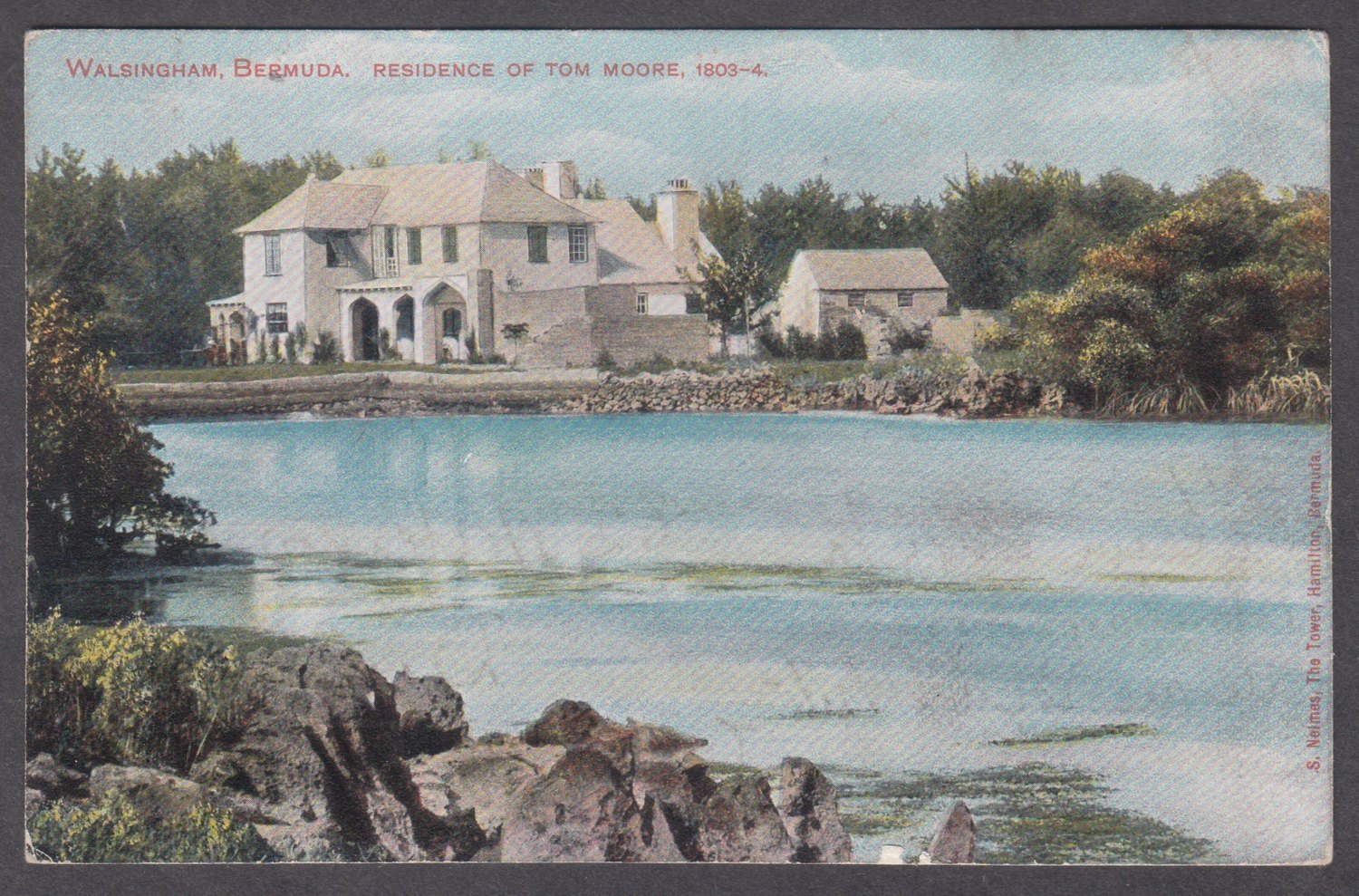
Picture side of a coloured postcard: a two-storey white house with arched porch and outbuildings beside the water, trees behind and rocks in the foreground, captioned Walsingham, Bermuda. Residence of Tom Moore, 1803-4, with the imprint S. Nelmes, The Tower, Hamilton, Bermuda up the right edge
The picture side: Walsingham, published by S. Nelmes, The Tower, Hamilton
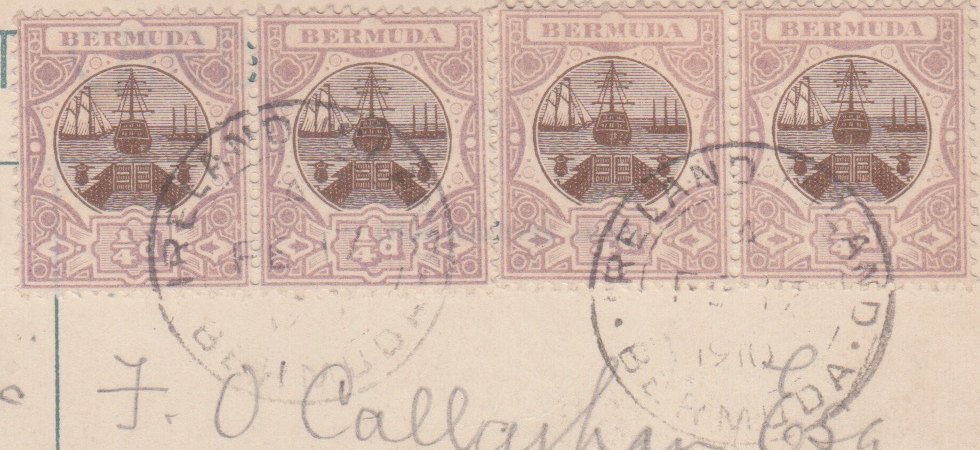
Close-up of the four quarter-penny Dry Dock stamps in two pairs, tied by two strikes of the Ireland Island Bermuda datestamp, FE 17 1910
Four ¼d Dry Dock, the 1d postcard rate, tied by IRELAND ISLAND
  • Addressed to F. O’Callaghan Esq., 82 Waterloo Rd, Dublin, Ireland
  • Written from “H.M.S. Alert / East Indies / c/o G.P.O.”
  • Franking Four ¼d Dry Dock, two pairs
  • Rate 1d, the overseas postcard rate
  • Datestamp IRELAND ISLAND / BERMUDA, two strikes, code A, FE 17 1910
  • Picture side “Walsingham, Bermuda. Residence of Tom Moore, 1803–4”, S. Nelmes, The Tower, Hamilton

This is an ordinary picture postcard, Walsingham with the water in front and Tom Moore’s name across the top, published by Nelmes at The Tower in Hamilton. Turn it over, though, and it’s a sailor’s goodbye. In pencil, down the message side:

“H.M.S. Alert / East Indies / c/o G.P.O. / Feb 17th / We leave to day for Bombay. Hope all are well. Write”

Signed “RNSS”

I read the initials as RNSS, but I don’t know who they belong to. The address is a careful bit of forward planning. Mail for a ship abroad went “c/o G.P.O.” in London, which sent it on, so whoever answered in Dublin could write to “H.M.S. Alert, East Indies” and the Post Office would find her. The writer gave the address before the ship had even left Bermuda.

The four ¼d Dry Dock stamps make up 1d, the postcard rate overseas, and they’re tied by two strikes of the IRELAND ISLAND datestamp, code A, dated 17 February 1910. So the card was posted at the Dockyard the same day it was written, presumably just before she sailed. It went to F. O’Callaghan at 82 Waterloo Road, Dublin. I don’t know yet who that was: family, I’d guess, from “Hope all are well”, but I can’t prove it.

I like the picture too. Tom Moore was only in Bermuda for a few months in 1804, and calling Walsingham his “residence” is the tradition rather than strictly the fact. But it was one of the island’s favourite views, and a nice one to send home before going to the other side of the world.

VI

Fitted out again

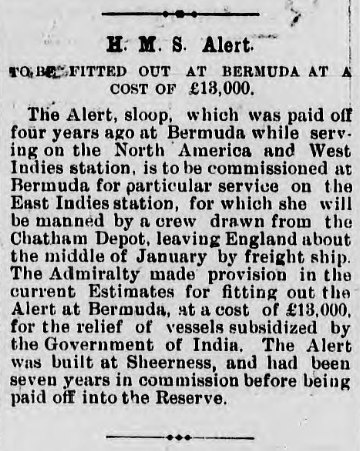
Royal Gazette item headed H. M. S. Alert, to be fitted out at Bermuda at a cost of 13,000 pounds: the Alert, sloop, paid off four years ago at Bermuda while serving on the North America and West Indies station, is to be commissioned at Bermuda for particular service on the East Indies station, manned by a crew from the Chatham Depot; the Admiralty made provision for fitting her out for the relief of vessels subsidized by the Government of India
Royal Gazette, 6 January 1910: “to be fitted out at Bermuda at a cost of £13,000”
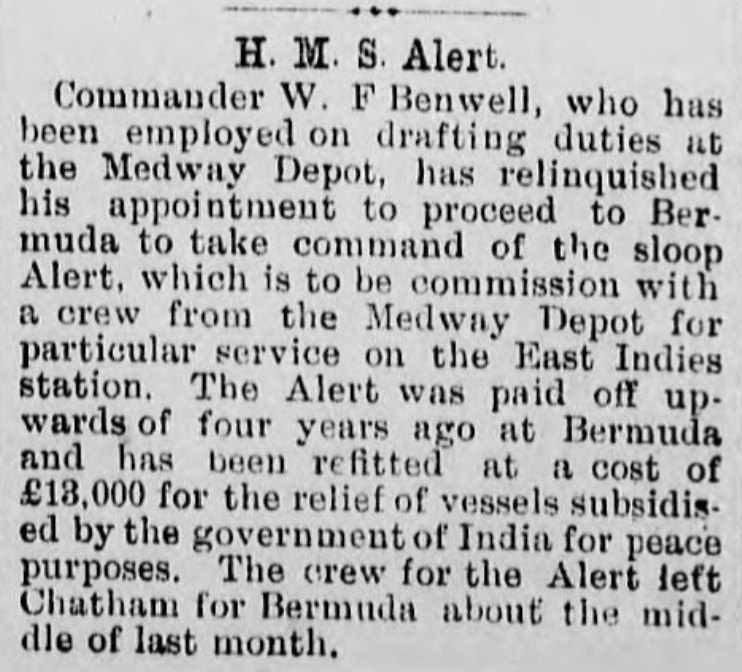
Royal Gazette item headed H. M. S. Alert: Commander W. F. Benwell, employed on drafting duties at the Medway Depot, has relinquished his appointment to proceed to Bermuda to take command of the sloop Alert, to be commissioned with a crew from the Medway Depot for particular service on the East Indies station; the crew left Chatham for Bermuda about the middle of last month
Royal Gazette, 1 February 1910: Commander W. F. Benwell to command
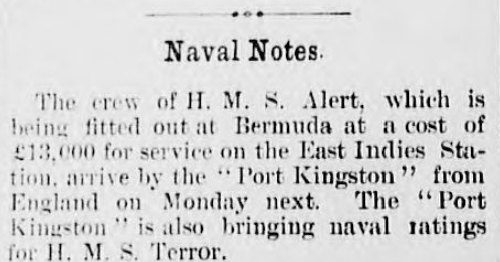
Royal Gazette Naval Notes: the crew of H. M. S. Alert, being fitted out at Bermuda at a cost of 13,000 pounds for service on the East Indies Station, arrive by the Port Kingston from England on Monday next; the Port Kingston is also bringing naval ratings for H. M. S. Terror
Royal Gazette, 12 February 1910: the crew due by the Port Kingston
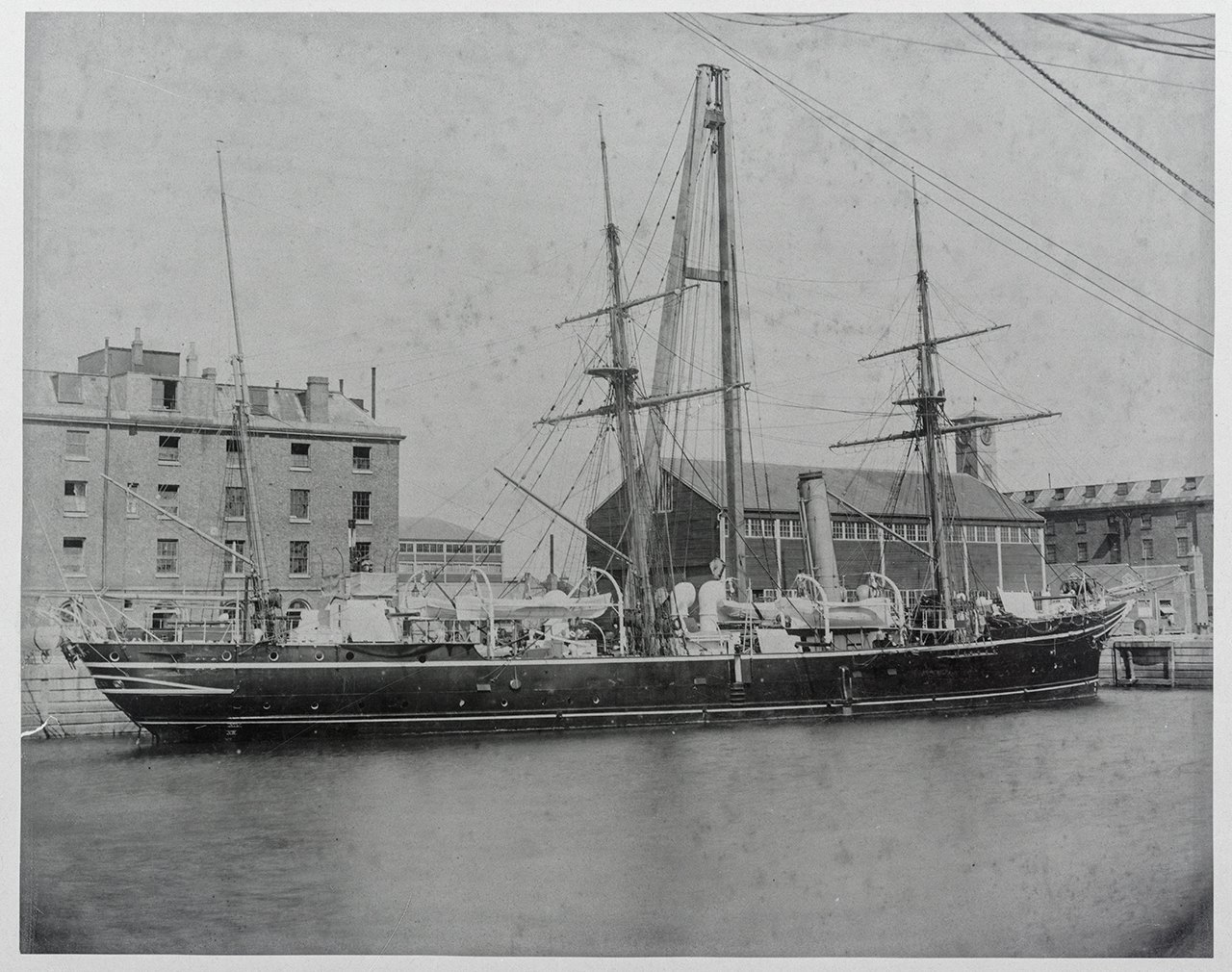
Photograph of the sloop HMS Alert broadside on, moored in a dockyard basin in front of tall brick storehouses and a clock tower, with a single funnel, three masts with yards on the foremast, and boats in davits along her side
The Alert alongside, probably at Sheerness, in her early years. Royal Museums Greenwich
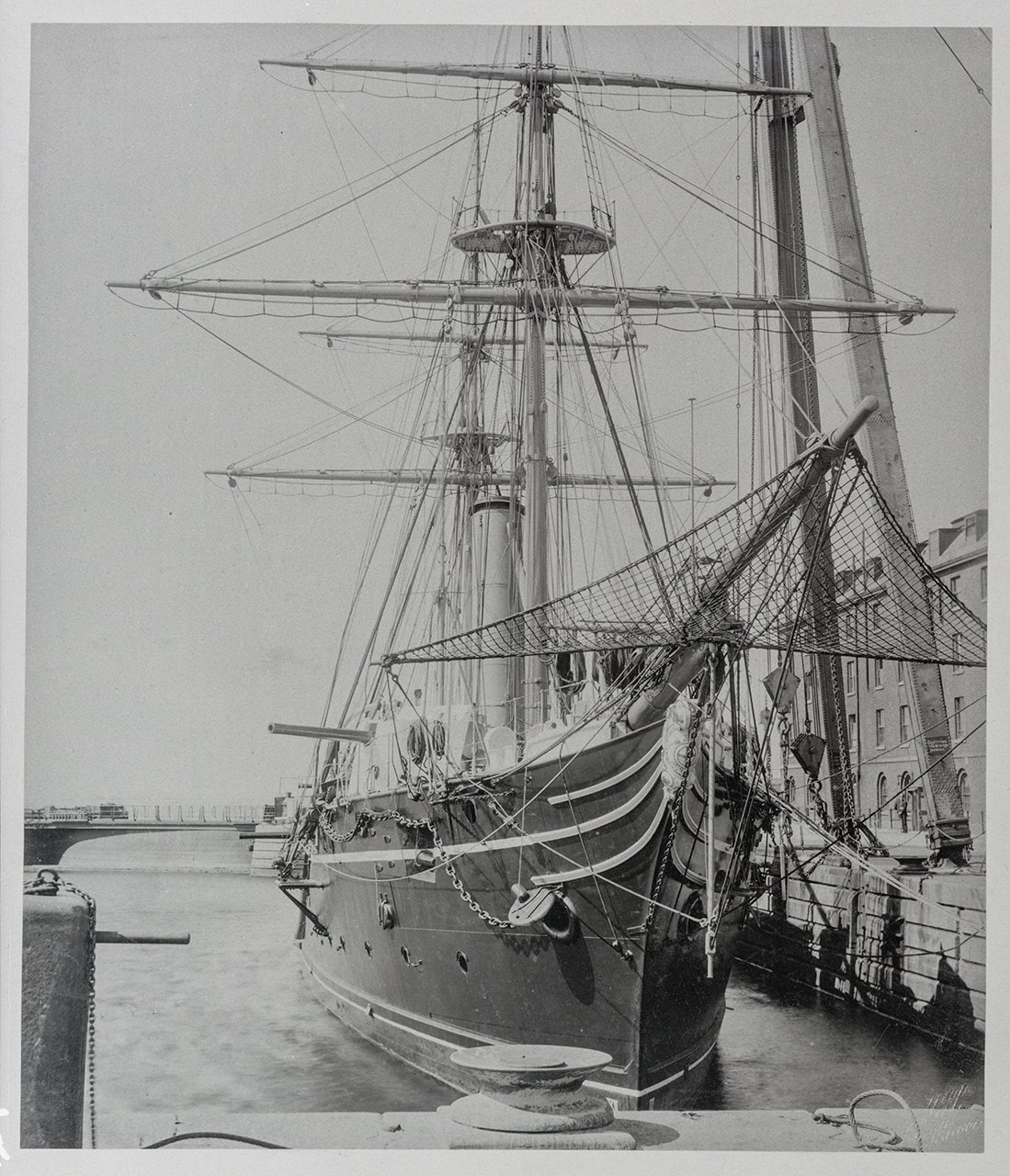
Photograph of HMS Alert from the bow, alongside a stone quay at Sheerness, with her figurehead scroll, anchor chains, a 4-inch gun run out, netting rigged under the bowsprit and her foremast yards above
From the bow, alongside at Sheerness. Royal Museums Greenwich

The Royal Gazette fills in why the Alert was at Bermuda at all. On 6 January 1910 it reported that the sloop, “paid off four years ago at Bermuda”, was to be commissioned there “for particular service on the East Indies station”. The Admiralty had put £13,000 in the Estimates to fit her out “for the relief of vessels subsidized by the Government of India”. As I understand it, that means she would take over work the Indian Government had been paying for, which at the time meant patrolling the Persian Gulf against gun-running.

On 1 February the Gazette named her new captain, Commander W. F. Benwell, who had given up drafting duties at the Medway Depot to come out and take her. Her crew came from the same depot. On 12 February the Gazette said they would arrive “by the ‘Port Kingston’ from England on Monday next”, which was the 14th. The Port Kingston also brought naval ratings for H.M.S. Terror, and she was a regular caller: she’s in the January pilot lists on the Braemar Castle page too.

That gives the crew three days in Bermuda before the card says “We leave to day”. It’s quick, but she had been fitting out for weeks before they arrived. I haven’t found the Gazette noting her departure. By June she was in the Gulf: the Muscat agency’s weekly diary records H.M.S. Alert arriving there at 6 a.m. on 20 June 1910 and leaving the next morning.

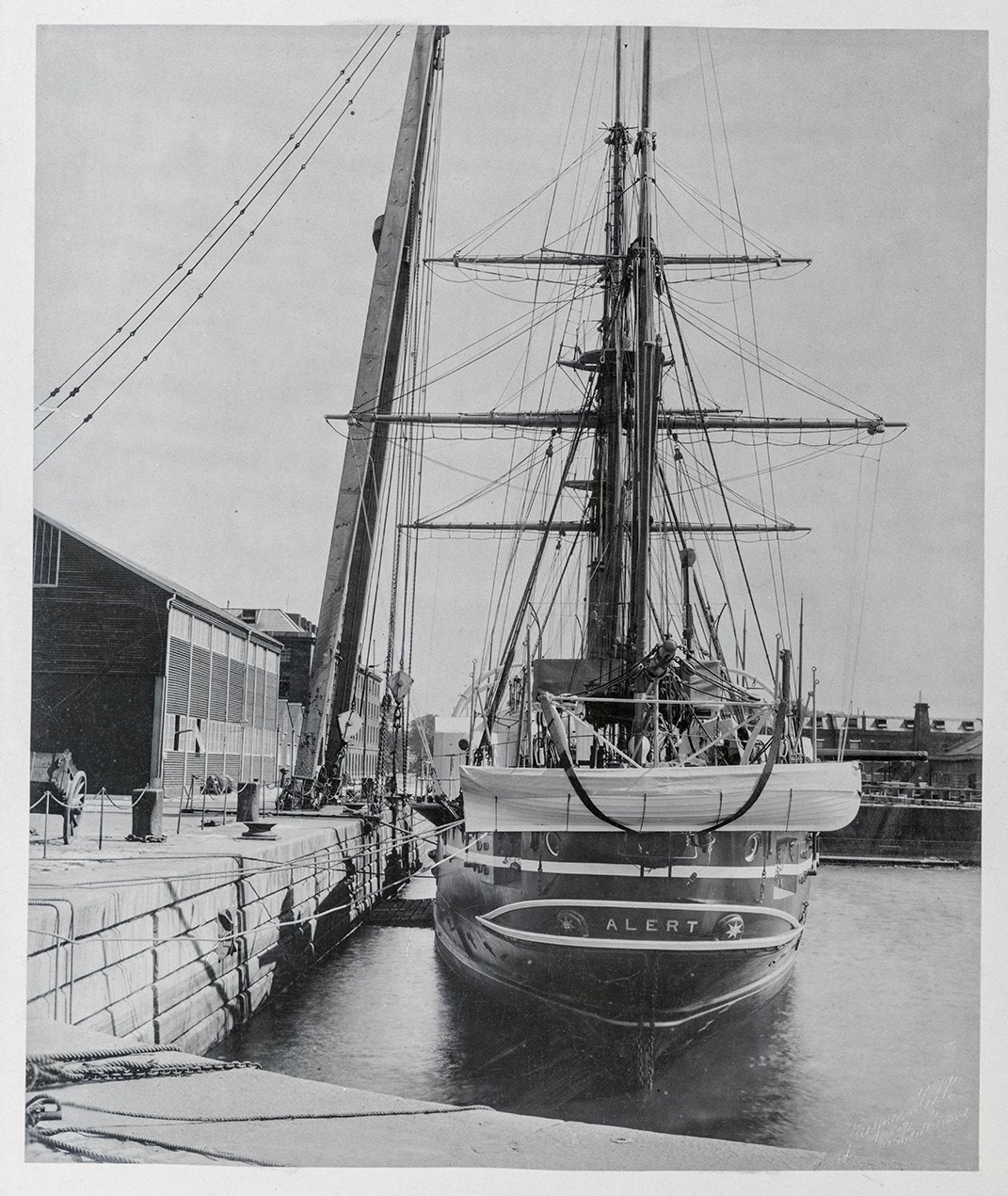
The two photographs show her as she was built, a barque-rigged sloop with her yards crossed, alongside the Dockyard at Sheerness. By 1910 she’d been re-rigged as a barquentine, but these are the best pictures of her I know.

The Ship

Photograph of the sloop HMS Alert from astern, moored alongside a stone quay with dockyard buildings behind, ALERT lettered across her stern, a boat slung in davits across the counter and her barquentine rig with yards on the foremast

H.M.S. Alert

The Alert and her sister Torch were steel screw sloops built at Sheerness, both launched on 28 December 1894. They were built barque-rigged and re-rigged as barquentines before 1900. The Alert served on the North America and West Indies Station, and in 1902–03 she helped enforce the blockade of the Venezuelan coast under Commodore Montgomerie in Charybdis, capturing the Venezuelan Zumbador. She was paid off into reserve at Bermuda around 1905–06, refitted there for £13,000, and recommissioned in February 1910 for the East Indies. From 1910 she worked in the Persian Gulf against the arms traffic, and she was among the ships named in the 1915 award for dhows and arms captured there between 1910 and 1912. In the First World War she was the naval base ship at Basra. She was lent to the civil authority at Basra in 1918, sold to them in 1926 as a pilot vessel, and finally broken up in 1949.

BuiltSheerness, launched 28 December 1894
TypeAlert-class sloop, 960 tons
GunsSix 4-inch, four 3-pounders
CommanderHenry Savile (1900–01); W. F. Benwell (1910)
FateBasra pilot vessel; broken up 1949

Photographs: Royal Museums Greenwich (National Maritime Museum, Greenwich, London), N11341, N11340 and N11339.

Still to find out

If you can help with any of these, I’d be very pleased to hear from you.

Provenance and references

It’s a small envelope that only went a few hundred yards. But it catches a stamp eight days old, a ship waiting for her new crew, and the last few days of Queen Victoria’s reign.

Two very different pieces from the same ship: a local envelope that went a few hundred yards in 1901, and a postcard written as she set off for India in 1910. In between she sat four years in reserve in the place both were posted.