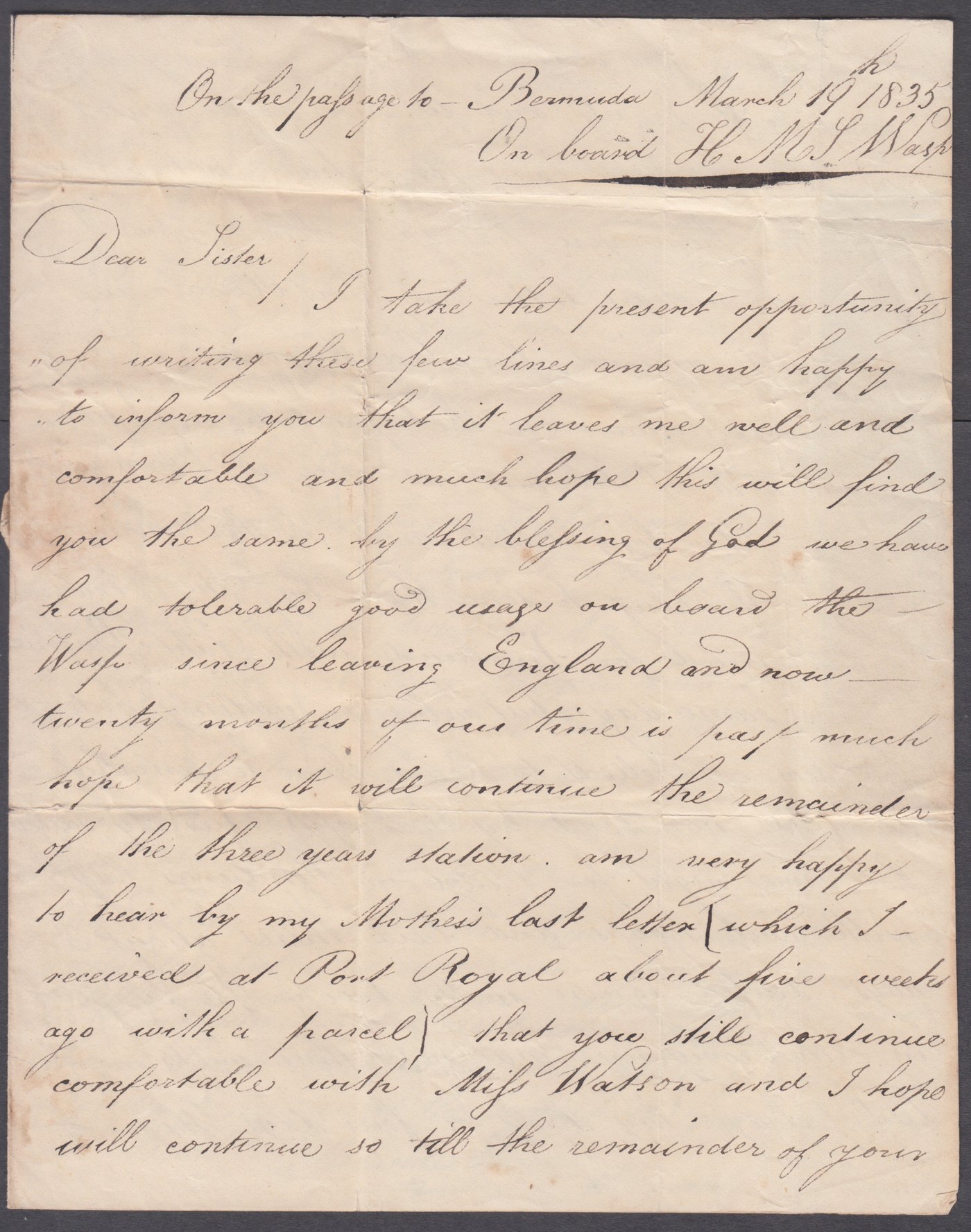
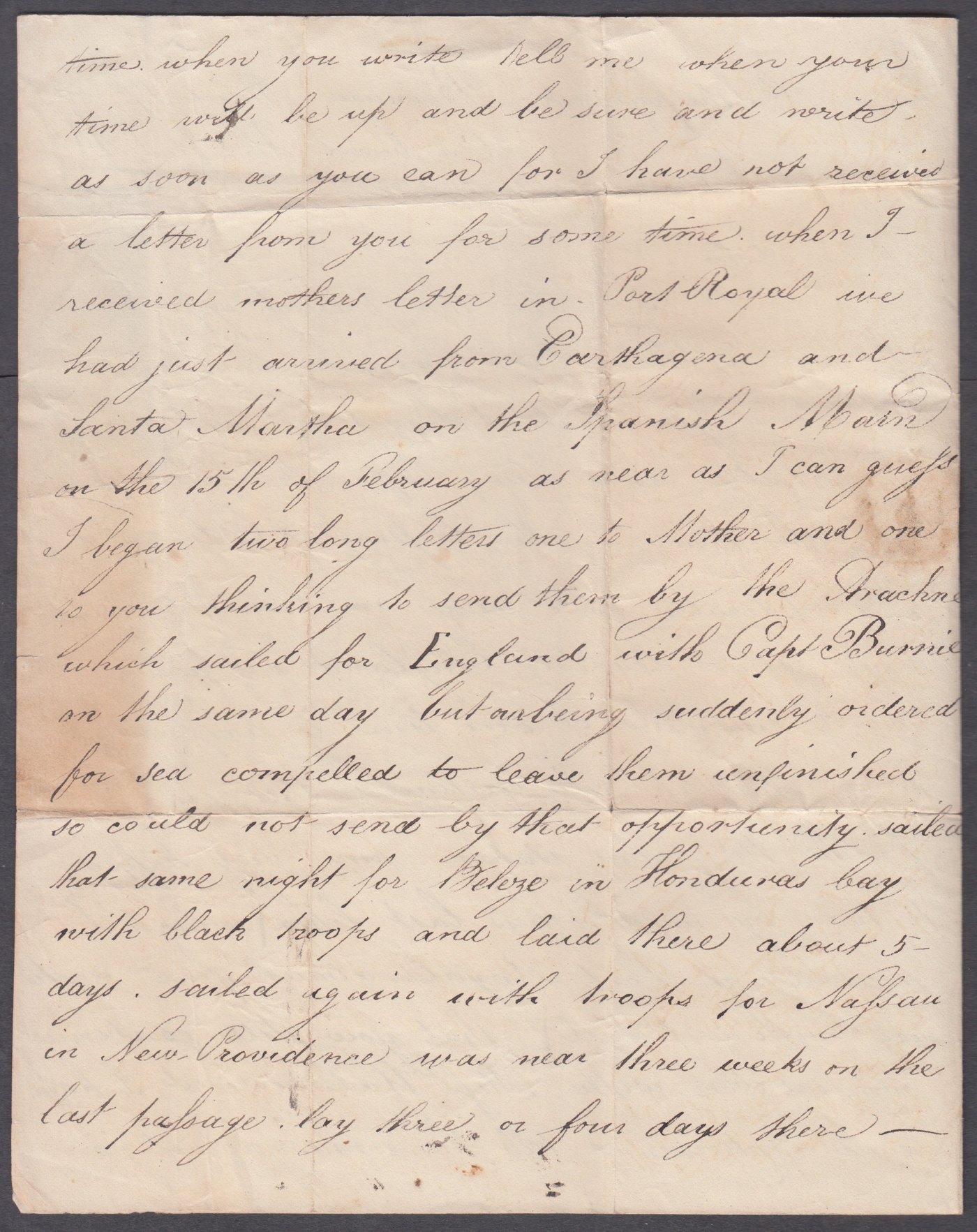
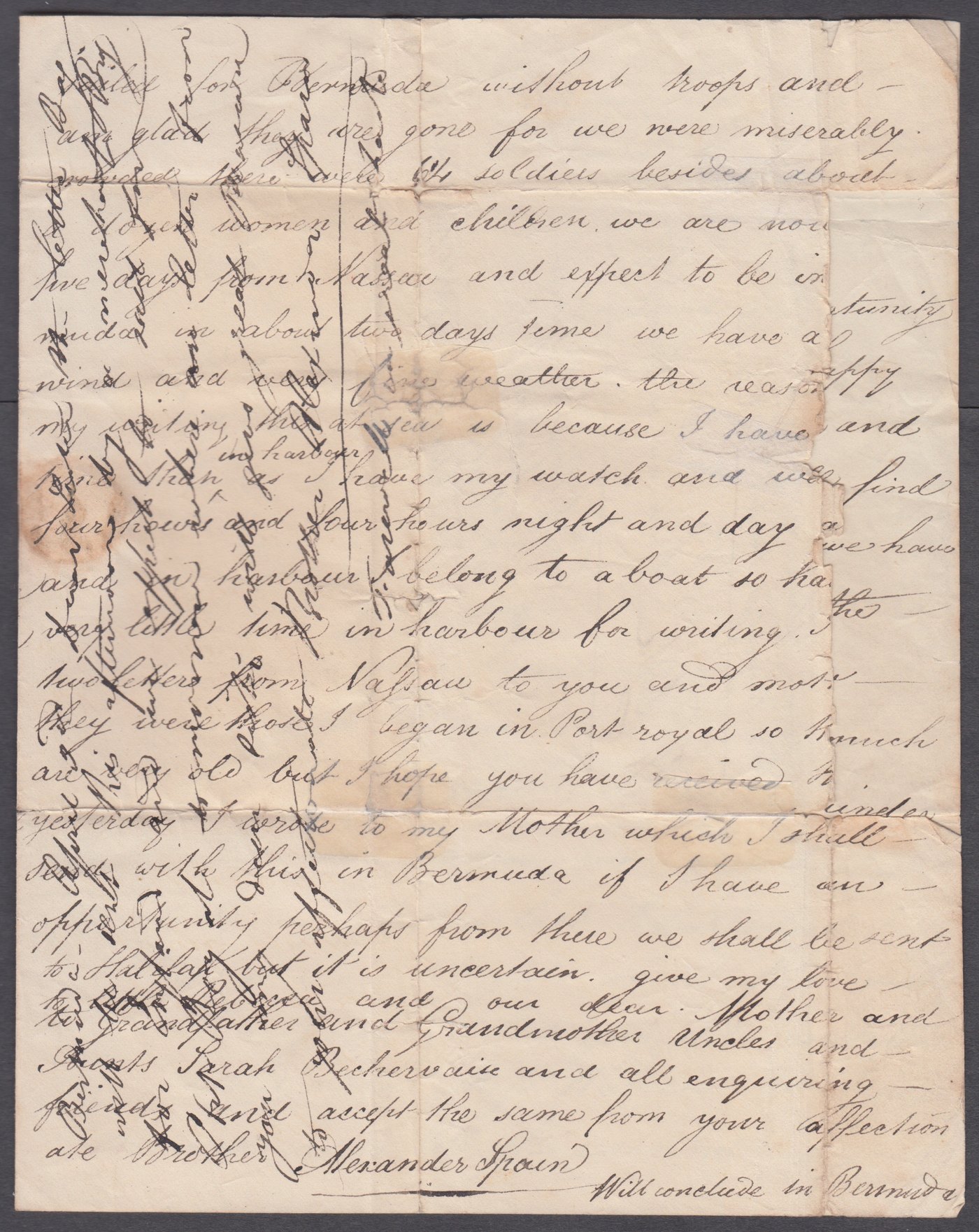
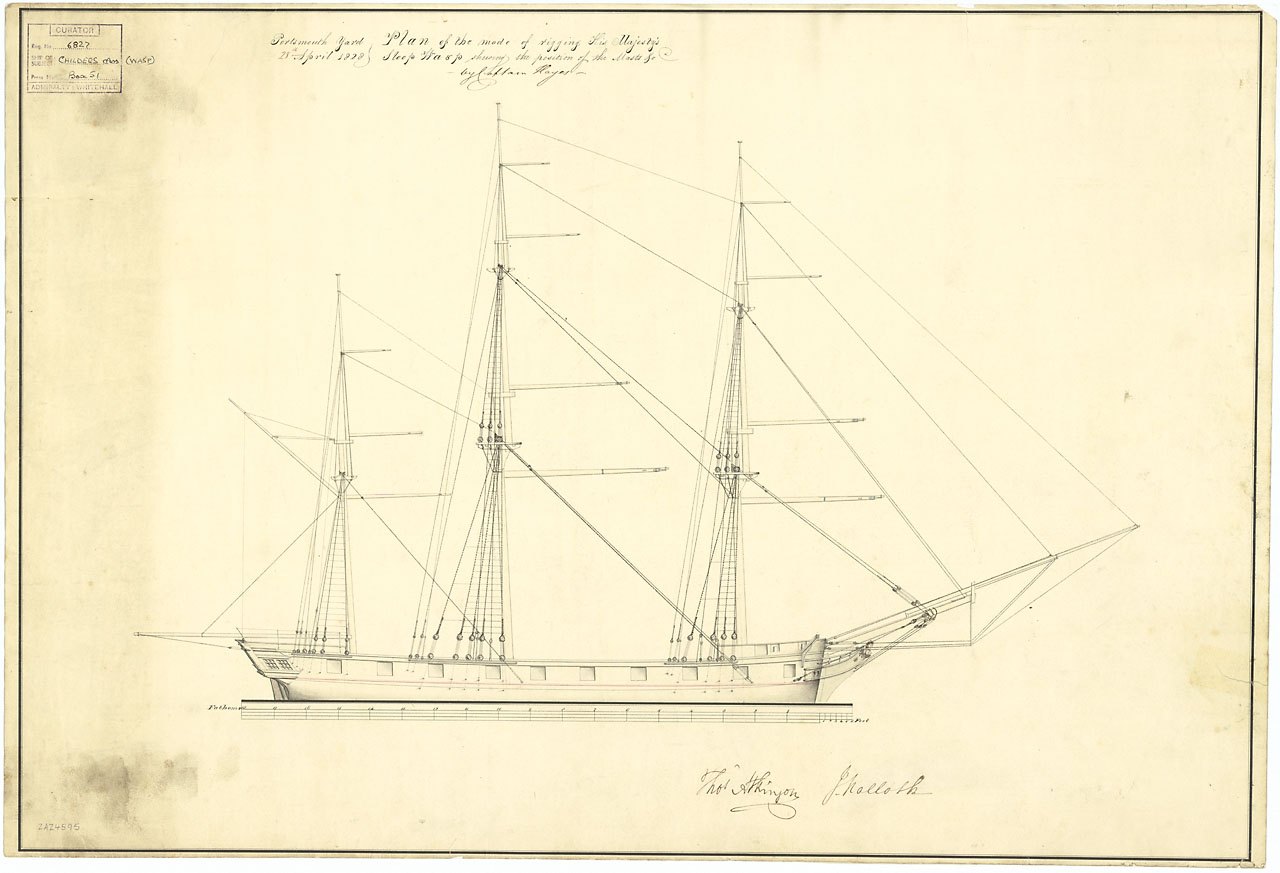
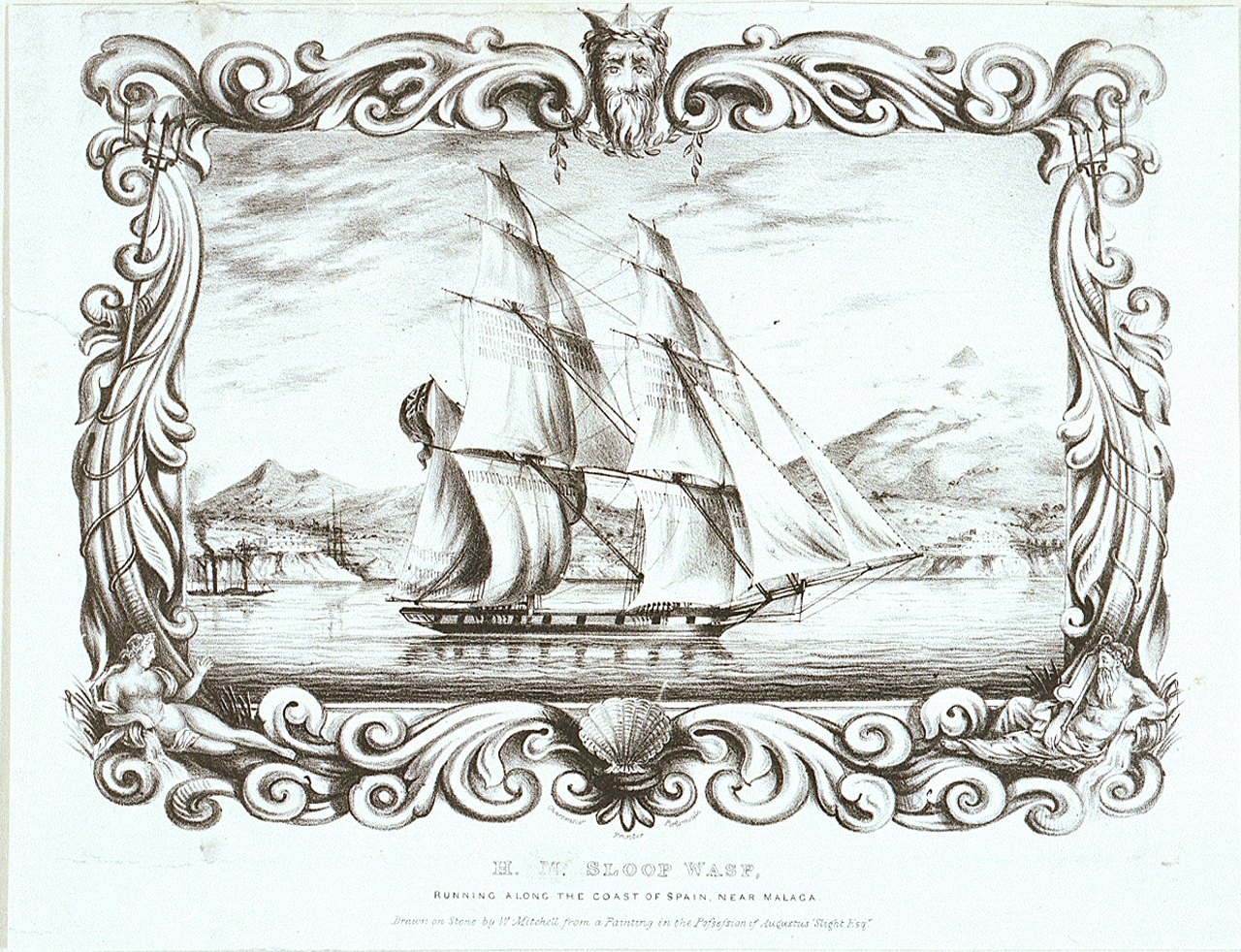
“From Alexander Spain on board His Majesty’s Sloop Wasp”
Bermuda, 3–13 April 1835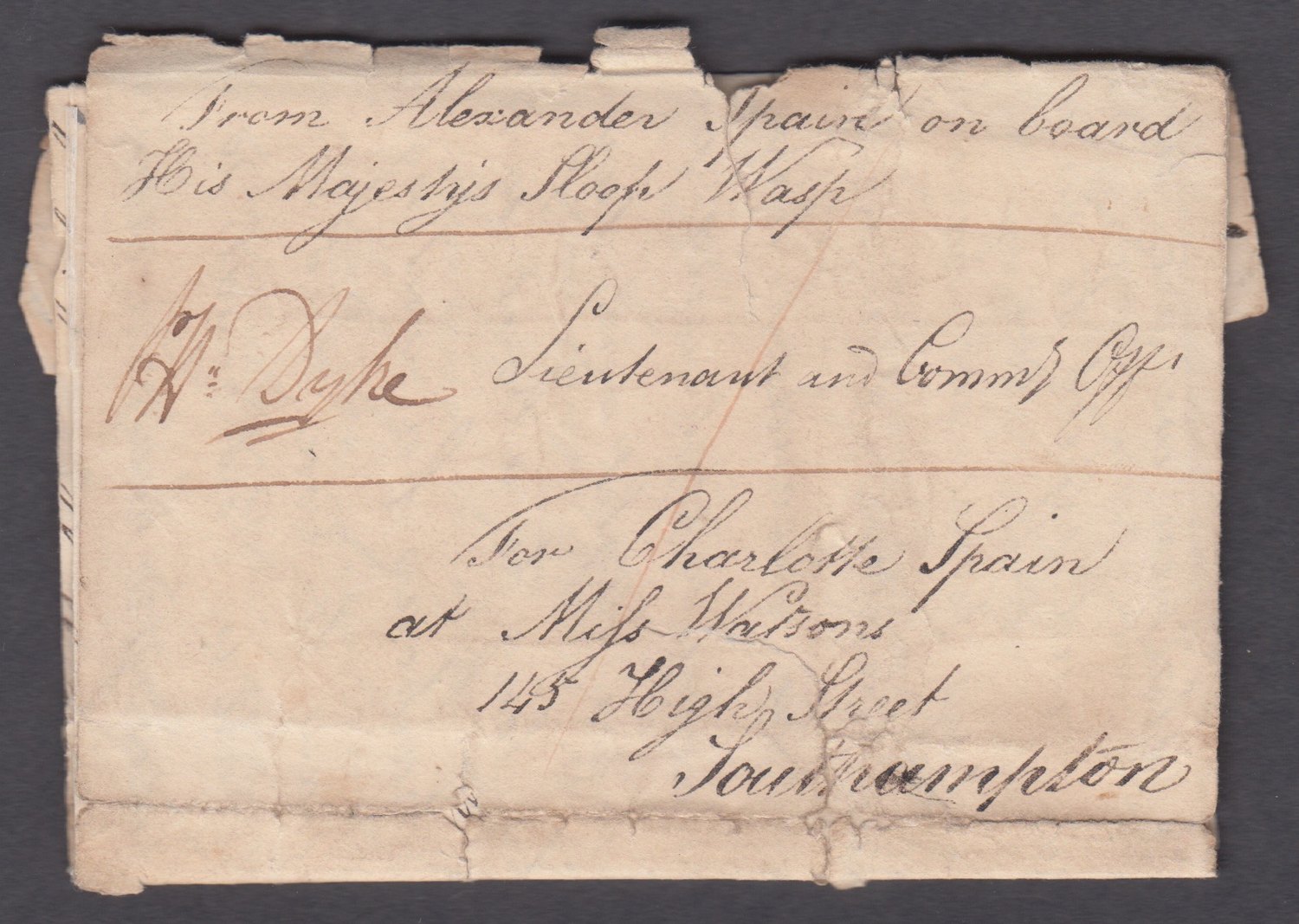
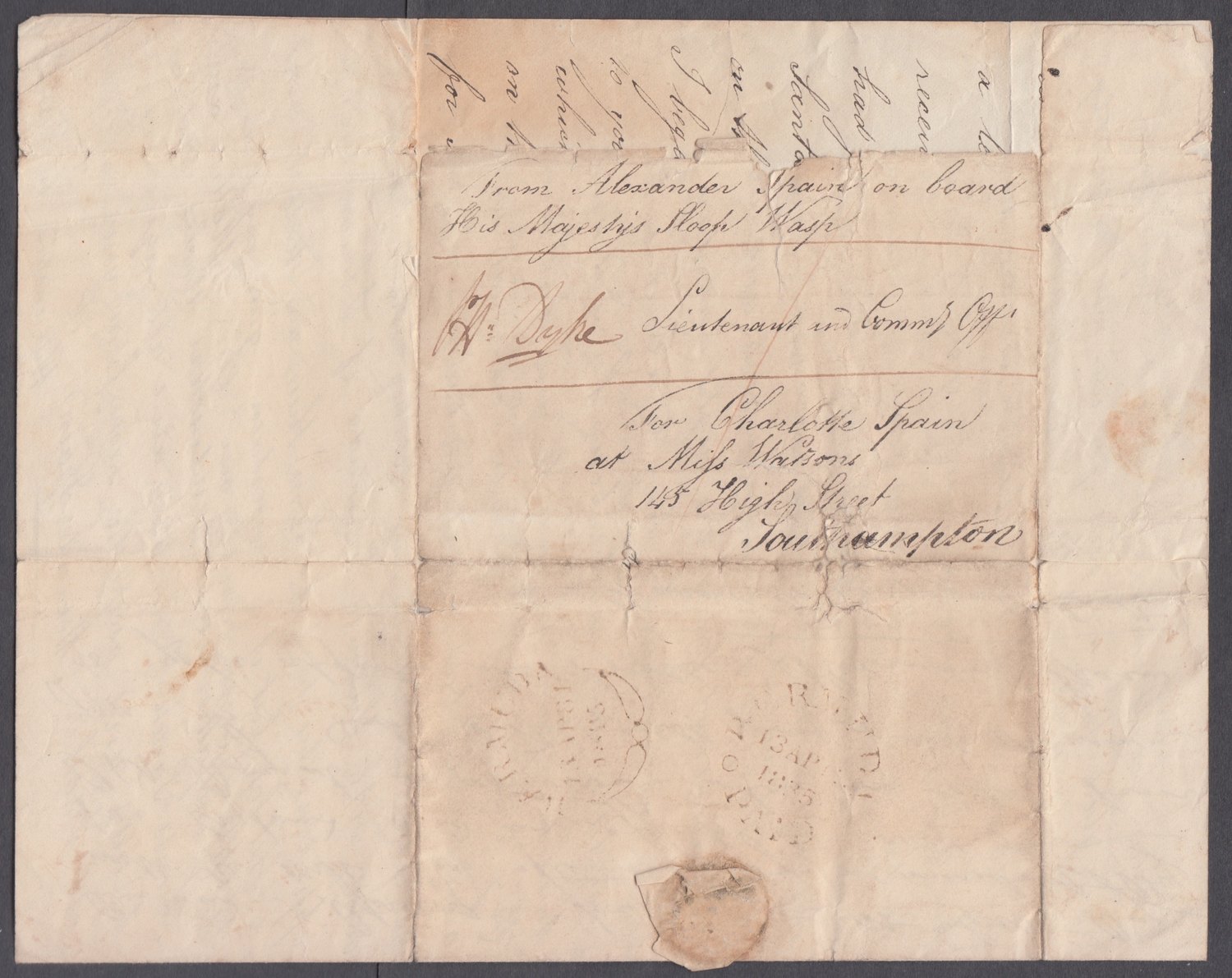
- Item Entire letter, one sheet written on three sides and folded to make its own cover
- From Alexander Spain, H.M. Sloop Wasp
- To Miss Charlotte Spain, at Miss Watson’s, 145 High Street, Southampton
- Written At sea, 19 March 1835; finished at Bermuda, 3 April
- Endorsed “P.H. Dyke, Lieutenant and Commg Offr”
- Rate 1d, soldiers’ and sailors’ concessionary rate, prepaid
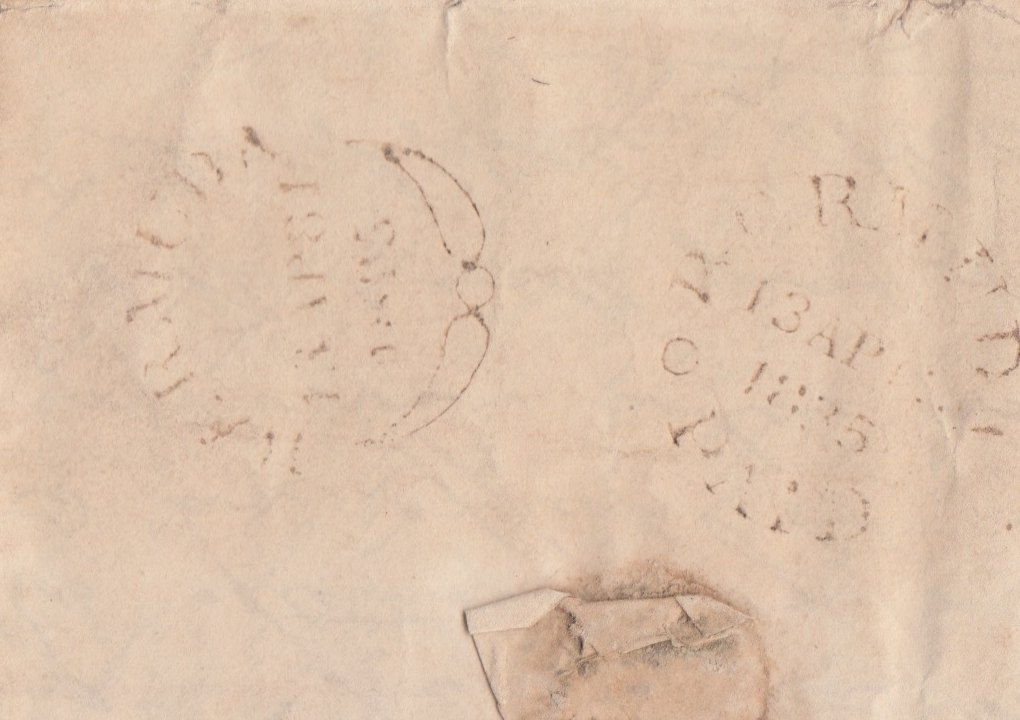
- Markings “BERMUDA” fleuron (Ludington PM2) and “BERMUDA / PAID” (Ludington P1), both in black, St George’s, 13 April 1835
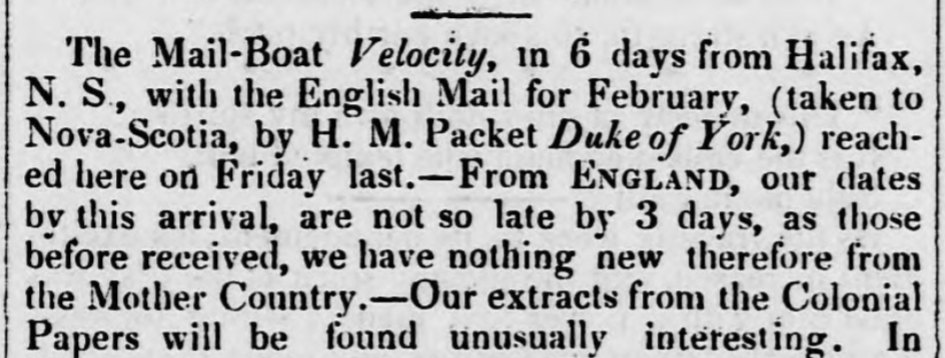
- Route Mail-boat Velocity to Halifax, then by packet to England
It’s an entire. Folded up, all it shows is the panel he ruled across the front. At the top he wrote “From Alexander Spain on board His Majesty’s Sloop Wasp”, in the middle is the officer’s signature, and below that is Charlotte’s address. The long stroke in red across the panel is the “1” for the penny he paid.
The signature is there because of the rules. Sailors and soldiers below officer rank could send a letter about their own private affairs for a penny, paid in advance, as long as their commanding officer signed it to say they were entitled to it. Here it’s “P.H. Dyke, Lieutenant and Commg Offr”. That’s Peché Hart Dyke, who had joined Wasp as a lieutenant in July 1833.
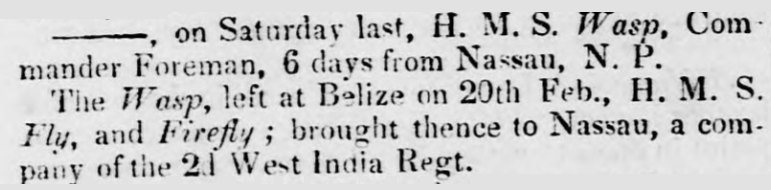
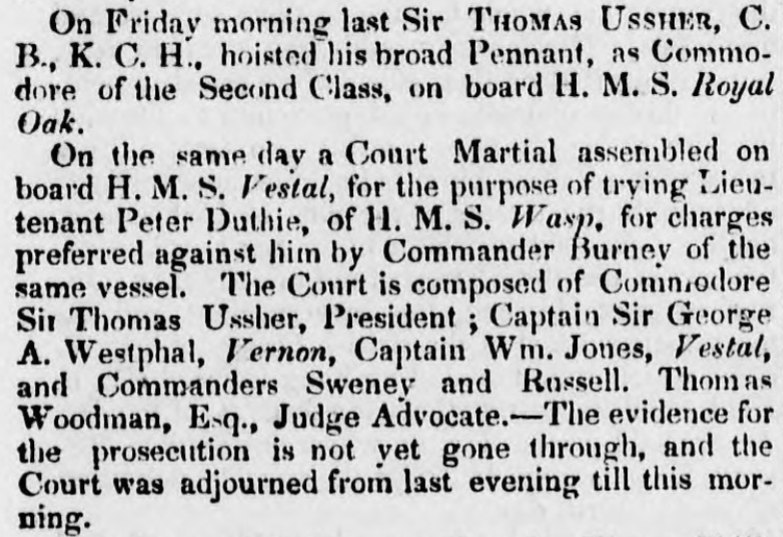
Which raises a question I can’t answer. The Royal Gazette names Wasp’s commander as Commander John Samuel Foreman, both when she arrived on 21 March and when she sailed on 4 April. So why is it Dyke, her lieutenant, who signs as “Commanding Officer”? Foreman may have been ashore or unwell on the day Alexander handed the letter in, or a lieutenant may have been allowed to sign for the captain. I haven’t seen another concession letter from a ship with a commander on board signed this way, and I’d like to.
On the back, under the address panel, are the two Bermuda marks: the “BERMUDA” fleuron and the “BERMUDA / PAID” datestamp, both struck in black at St George’s on 13 April 1835. Together they’re the post office saying it had taken the letter in and that it was paid. Most strikes of the PAID datestamp are in red. David Cordon’s census records only four in black, and this is the earliest of them; Ludington records the stamp only from January 1843, so this one is eight years earlier. The fleuron was already familiar by then: Cordon has some 65 strikes, from March 1828 to November 1841.
It’s the earliest concessionary rate item in my collection. The others are much later: a bandsman’s letter from Northampton in 1881, and the penny covers from Pelican in 1897 and Rambler in 1898, the last of them only weeks before Imperial Penny Postage made the concession unnecessary. Across those sixty years the rules hardly changed. A sailor paid a penny, and an officer signed to say he was entitled to it.