Postal History · Royal Navy · North America and West Indies Station

H.M.S. Melpomene

Ireland Island, Bermuda · 30 October 1911

A Bermuda postcard sent home to Portsmouth the day the paying-off orders came.

◆

This is a postcard written in a hurry. On 30 October 1911 a sailor called Jack wrote to Florrie in Portsmouth that his ship had “just received paying off orders by cable”, and that there was “No time to write letter”. The card doesn’t name the ship. It’s one of my favourite kinds of item, though, because with the date, the Ireland Island postmark and the Royal Gazette beside it, you can work out which ship it was: H.M.S. Melpomene, the old cruiser that had served on the station for years as the Indefatigable.

I

“We have just received paying off orders by cable”

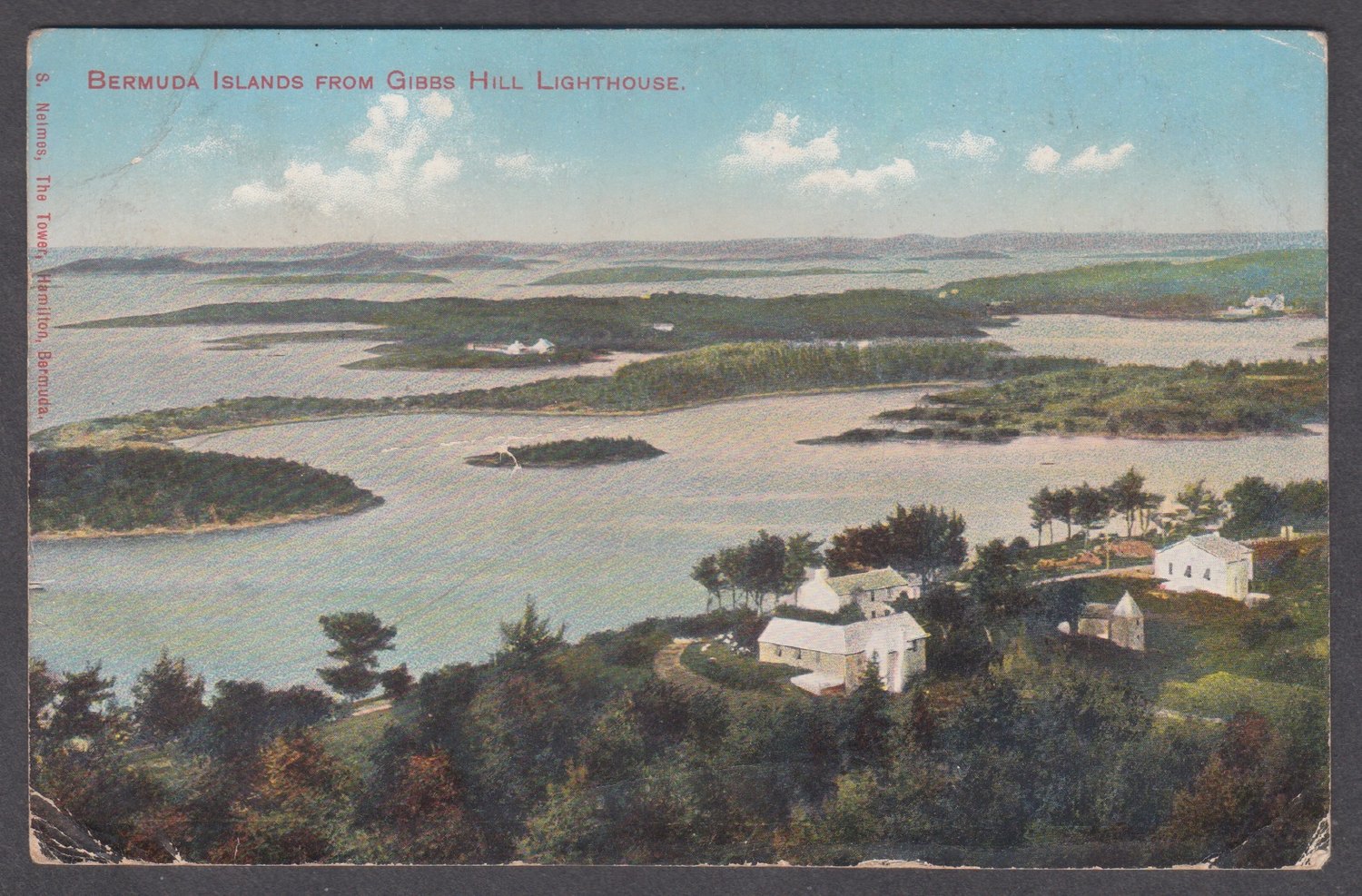
Coloured picture postcard captioned Bermuda Islands from Gibbs Hill Lighthouse: a view from high above over wooded islands and channels of blue-green water stretching away to the horizon, with white Bermuda houses and a small chapel among trees in the foreground; the imprint S. Nelmes, The Tower, Hamilton, Bermuda runs up the left edge
“Bermuda Islands from Gibbs Hill Lighthouse”, S. Nelmes
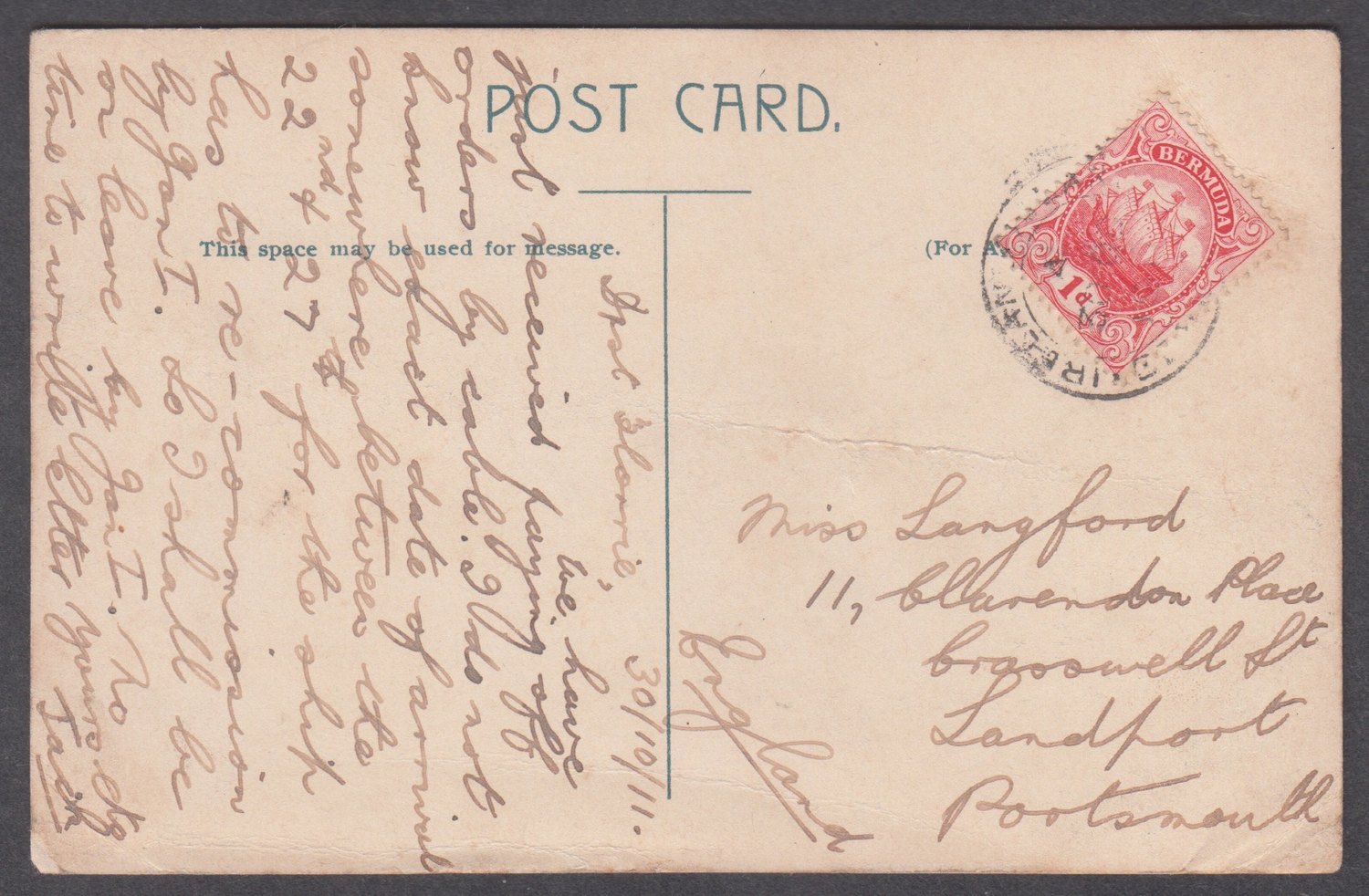
Address side of a divided-back postcard headed Post Card, with a red 1d Bermuda Caravel stamp cancelled by an Ireland Island circular datestamp. Addressed in ink to Miss Langford, 11 Clarendon Place, Crasswell St, Landport, Portsmouth, England. The message, written sideways up the left half and dated 30/10/11, reads: Dst Florrie, We have just received paying off orders by cable. I do not know exact date of arrival, somewhere between the 22nd and 27th for the ship has to re-commission by Jan 1. So I shall be on leave by Jan 1. No time to write letter. Yours etc Jack
To Miss Langford, Landport, Portsmouth
  • Written 30/10/11, signed “Jack”
  • To Miss Langford, 11 Clarendon Place, Crasswell St, Landport, Portsmouth, England
  • Card “Bermuda Islands from Gibbs Hill Lighthouse”, divided back
  • Publisher S. Nelmes, The Tower, Hamilton
  • Postage 1d Caravel, the postcard rate to England
  • Postmark IRELAND ISLAND, 30 October 1911, code A (morning collection)

The card is an S. Nelmes view, “Bermuda Islands from Gibbs Hill Lighthouse”, one of the many the Nelmes family sold from the Tower in Hamilton. It’s franked with a 1d Caravel, the postcard rate to England, tied by the IRELAND ISLAND datestamp of 30 October 1911, code A, the morning collection. Jack posted it the same day he wrote it.

It’s addressed to Miss Langford at 11 Clarendon Place, Crasswell Street, Landport, in the streets of Portsmouth just behind the Dockyard. The message is short and to the point:

“Dst Florrie, We have just received paying off orders by cable. I do not know exact date of arrival, somewhere between the 22nd & 27th for the ship has to re-commission by Jan 1. So I shall be on leave by Jan 1. No time to write letter. Yours etc Jack”

Ireland Island, 30 October 1911

I like it because you can feel the excitement in it. He’s going home for Christmas, or near enough, and he can’t wait to tell her.
II

Whose ship?

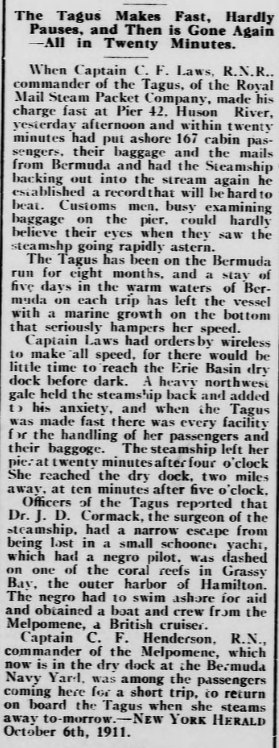
Royal Gazette item reprinted from the New York Herald of 6 October 1911, headed The Tagus Makes Fast, Hardly Pauses, and Then is Gone Again, All in Twenty Minutes. It describes the Royal Mail steamer Tagus landing 167 passengers and the Bermuda mails at New York and hurrying to dry dock; the surgeon of the Tagus had a narrow escape when a small schooner yacht was dashed on a reef in Grassy Bay, and the pilot swam ashore and obtained a boat and crew from the Melpomene, a British cruiser. Captain C. F. Henderson, R.N., commander of the Melpomene, which now is in the dry dock at the Bermuda Navy Yard, was among the passengers
Royal Gazette, 10 October 1911, from the New York Herald

Jack doesn’t name his ship, but the card gives enough to go on. It was posted at Ireland Island, so he was at the Dockyard end of the island. His ship was a seagoing one with a commission ending, and she was going home to Portsmouth to recommission in the new year.

At the end of October 1911 the Gazette shows one ship that fits: the cruiser Melpomene. She had been in dock at the Dockyard earlier that month, and the New York Herald story the Gazette reprinted on 10 October has her boat and crew going out after a yacht wrecked on a reef in Grassy Bay. Her officers and men turn up all through October and November. The other naval ship at Ireland Island was H.M.S. Terror, the base ship, which stayed put. The Fourth Cruiser Squadron didn’t come in from Halifax until 22 November.

She did go home that winter. Her captain, Charles Henderson, handed over on 15 January 1912, and she was recommissioned at Portsmouth that month for another spell in the West Indies, with a crew made up mostly of Royal Marines. Jack’s “by Jan 1” was a little hopeful, but not far out. I can’t prove he was aboard her, but I’d be surprised if he wasn’t.

III

Her last months on the station

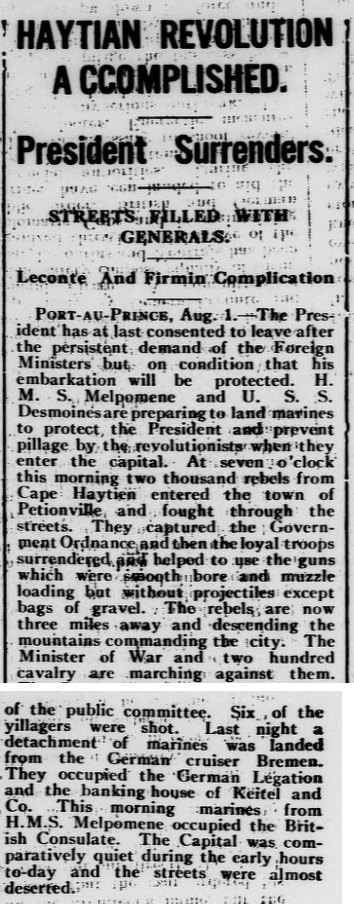
Royal Gazette report headed Haytian Revolution Accomplished. President Surrenders. Streets Filled with Generals. Leconte and Firmin Complication. Port-au-Prince, Aug. 1: the President has at last consented to leave on condition that his embarkation will be protected; H.M.S. Melpomene and U.S.S. Desmoines are preparing to land marines to protect the President and prevent pillage by the revolutionists. A second extract reports that marines from the German cruiser Bremen occupied the German Legation, and this morning marines from H.M.S. Melpomene occupied the British Consulate
Royal Gazette, 5 August 1911: Port-au-Prince (extracts)
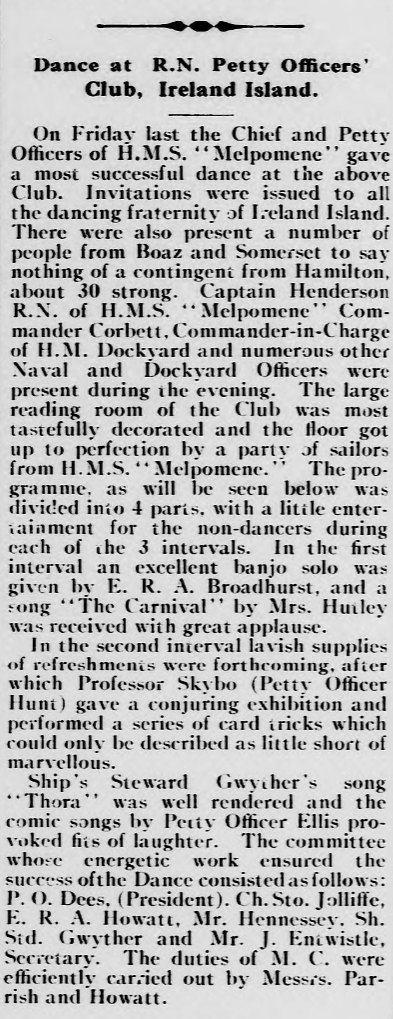
Royal Gazette report headed Dance at R.N. Petty Officers' Club, Ireland Island. On Friday last the Chief and Petty Officers of H.M.S. Melpomene gave a most successful dance at the Club, with Captain Henderson of the Melpomene and Commander Corbett, Commander-in-Charge of H.M. Dockyard, present; the floor was got up by a party of sailors from the Melpomene; entertainment included a banjo solo, songs, and a conjuring exhibition by Professor Skybo (Petty Officer Hunt)
Royal Gazette, 17 October 1911: the Petty Officers’ dance
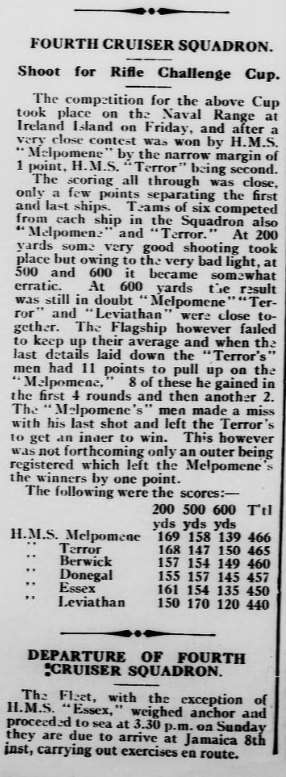
Royal Gazette report headed Fourth Cruiser Squadron. Shoot for Rifle Challenge Cup. The competition took place on the Naval Range at Ireland Island on Friday and was won by H.M.S. Melpomene by the narrow margin of 1 point, H.M.S. Terror being second. Scores: Melpomene 466, Terror 465, Berwick 460, Donegal 457, Essex 450, Leviathan 440. Below, Departure of Fourth Cruiser Squadron: the fleet, with the exception of H.M.S. Essex, proceeded to sea at 3.30 p.m. on Sunday, due at Jamaica on the 8th
Royal Gazette, 5 December 1911: the Rifle Challenge Cup

Melpomene was the Indefatigable under a new name. She had come back to the station in 1906, and in January 1910 she was renamed so that her old name could go to a new battlecruiser. The Gazette had to explain to its readers in April 1910 that the “Melpomene” due the next month was “in reality H.M.S. Indefatigable”.

Her last year on the station was a busy one. In February 1911 she relieved her sister Brilliant at Puerto Cortés, on the coast of Honduras, during the revolution there, and landed marines. In early August she was at Port-au-Prince as the Haitian revolution came to a head. The President agreed to leave if his embarkation was protected, and Melpomene and the American cruiser Des Moines prepared to land marines. The next morning, the Gazette reported, “marines from H.M.S. Melpomene occupied the British Consulate.”

By the middle of August she was back at Bermuda, and in October she was in dock at the Dockyard. The ship’s company made the most of their last months. On Friday 13 October the Chief and Petty Officers gave a dance at the Petty Officers’ Club at Ireland Island, with a sailors’ party getting the floor “up to perfection” and card tricks from “Professor Skybo”, who was Petty Officer Hunt. On 9 November her junior ratings and the Terror’s gave another in the Sail Loft. Jack would surely have been at one or the other.

At the end of November the Fourth Cruiser Squadron arrived from Halifax under Rear-Admiral Bradford, and Melpomene went out on a high note. On Friday 1 December, on the range at Ireland Island, teams from the squadron and from Melpomene and Terror shot for the squadron’s Rifle Challenge Cup. Melpomene won it by a single point, 466 to the Terror’s 465.

Her captain for the whole of her time as Melpomene was Charles Ferdinand Henderson. He took her over on 25 January 1910, a fortnight after the renaming, straight from command of the flagship Crescent, and handed her over on 15 January 1912. The Gazette has him presenting a “dummy cup” at the Dockyard’s married-versus-single cricket match, and slipping up to New York on the Tagus while his ship was in dock. He was the son of a Dean of Carlisle, from a family with a long naval history. Later he went out to Sydney in command of the depot ship Penguin, and he retired as a rear-admiral in 1918.

1910–1912

The ship on one side, the card on the other.

The ship
The card
11 Jan 1910
The shipIndefatigable renamed Melpomene.
25 Jan 1910
The shipCaptain C. F. Henderson takes command.
9 May 1910
The shipArrives at Bermuda from Barbados; berthed under the shear-legs.
Feb 1911
The shipRelieves Brilliant at Puerto Cortés, Honduras.
1 Aug 1911
The shipPort-au-Prince; her marines guard the British Consulate.
19 Aug 1911
The shipBack at Bermuda; Captain Henderson presents the “dummy cup” at the Dockyard cricket.
Oct 1911
The shipIn dock at the Dockyard.
13 Oct 1911
The shipChief and Petty Officers’ dance, Ireland Island.
30 Oct 1911
The cardJack writes: paying-off orders by cable. Posted at Ireland Island the same morning.
9 Nov 1911
The shipJunior ratings’ dance with the Terror’s, in the Sail Loft.
22 Nov 1911
The shipThe Fourth Cruiser Squadron arrives from Halifax.
1 Dec 1911
The shipWins the squadron’s Rifle Challenge Cup by one point.
Dec 1911
The shipSails for England.
Jan 1912
The shipHenderson hands over on the 15th; recommissioned at Portsmouth that month.

The Ship

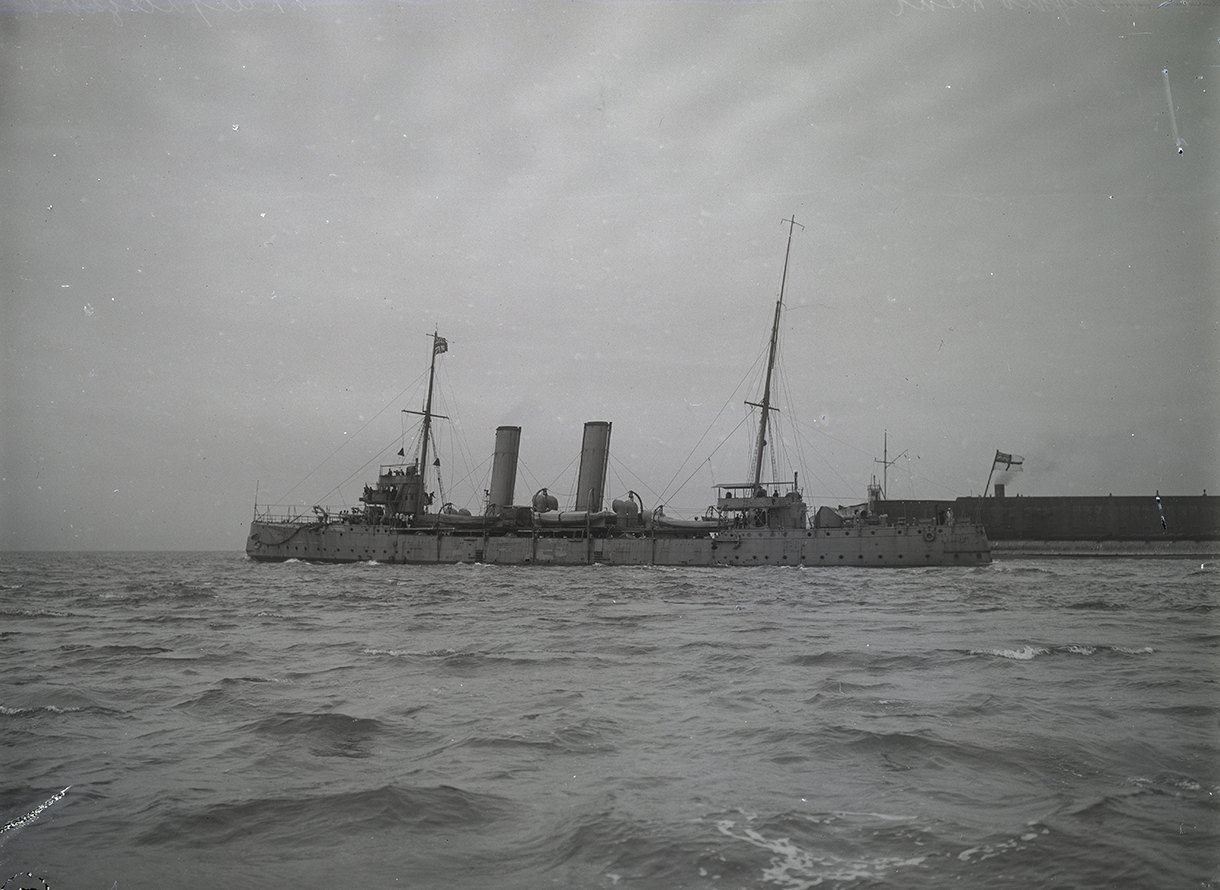
Black and white glass plate photograph of the cruiser Melpomene in 1910, seen from the port quarter in choppy water, with two tall funnels, two masts, boats stowed amidships and the white ensign flying; a harbour wall and another flag are on the right

H.M.S. Melpomene

H.M.S. Melpomene was built as the Indefatigable, an Apollo-class second-class protected cruiser launched at Govan on 12 March 1891. She was one of the ten of her class sheathed in wood and copper for tropical service, and she spent most of her life on the North America and West Indies Station. She was renamed on 11 January 1910, freeing her old name for a new battlecruiser, and stayed on the station until the end of 1911.

Recommissioned at Portsmouth in January 1912, she went back to the West Indies, and in May 1912 she was off Mexico during the revolution there. The Hermione relieved her in July 1913, and she was sold for breaking up on 7 October 1913.

BuiltLondon & Glasgow Co., Govan; launched 12 March 1891
TypeApollo-class second-class cruiser, 3,400 tons
Guns2 × 6-in, 6 × 4.7-in
CaptainC. F. Henderson, 1910–12
FateRenamed from Indefatigable 1910; sold 1913

Photograph, 1910: National Maritime Museum, Greenwich, London (negative G5155).

Still to find out

If you can help with any of these, I’d be very pleased to hear from you.

References

It’s a small card written in a rush, but it catches a ship’s company at the moment the cable came in, and you can follow them through their last dances and the Rifle Cup to the passage home.