Postal History · Hired Military Transport · Bermuda 1912

H.M.T. Soudan

Bermuda · January 1912

A soldier’s card, written the day the troopship that brought the Queen’s sailed on for South Africa.

◆

A picture postcard of a rubber tree, with no stamp and no postmark, and the word “Cancelled” scrawled across the back in violet pencil. It isn’t much to look at postally, but the message ties it to the visit of the troopship Soudan in January 1912. She brought the 2nd Battalion of the Queen’s from Gibraltar and, as far as I can tell, took the 2nd Bedfordshire Regiment on to South Africa. Bert, who wrote it, was going with her.

I

“We set sail on the 16th”

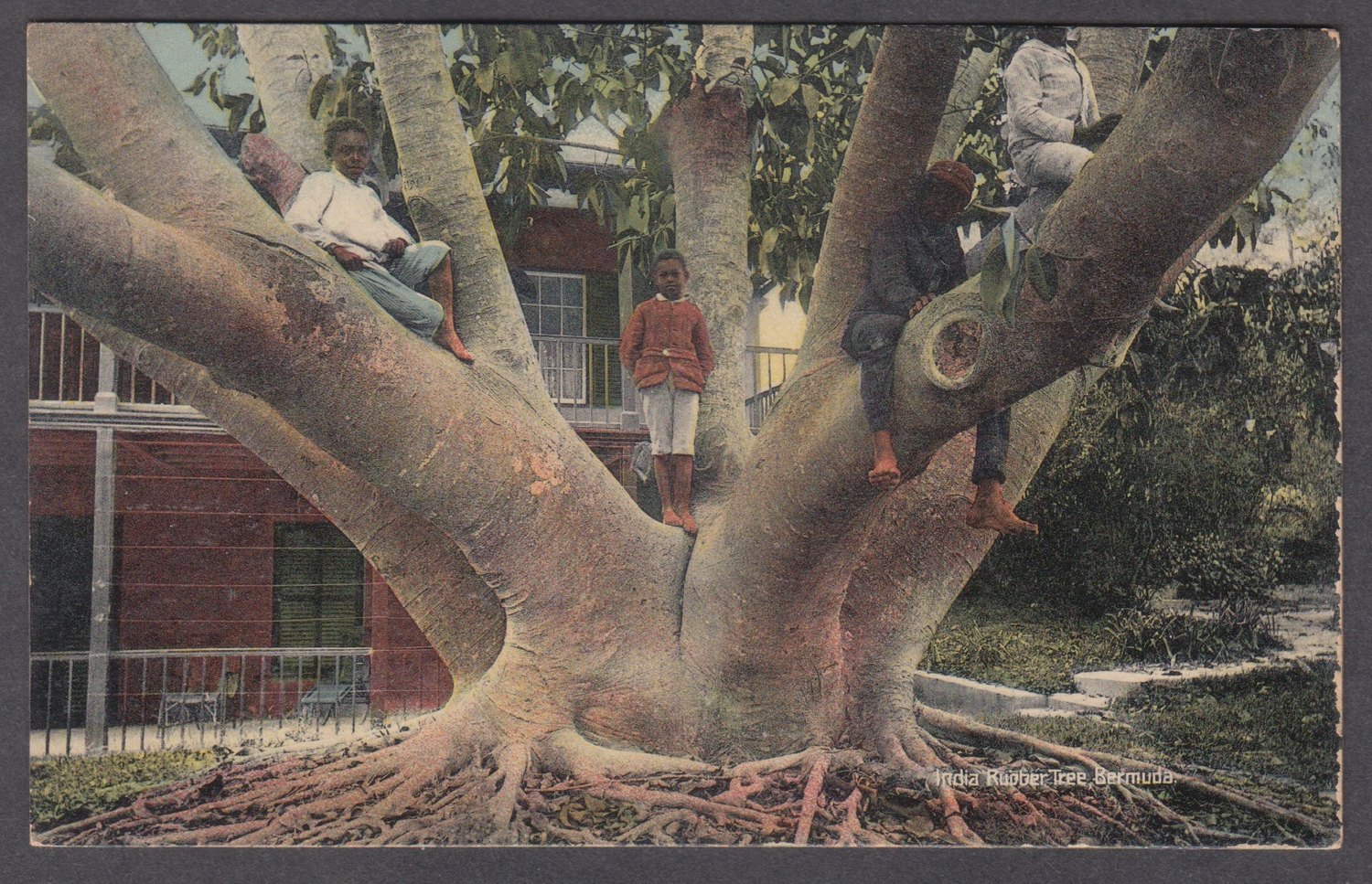
Picture side of a coloured postcard: a huge India rubber tree with a smooth grey trunk dividing into several great limbs over a mass of surface roots; four barefoot boys sit and stand in its branches; behind is a two-storey building with a red wall, a verandah with railings and green shutters; captioned India Rubber Tree, Bermuda
“India Rubber Tree, Bermuda”
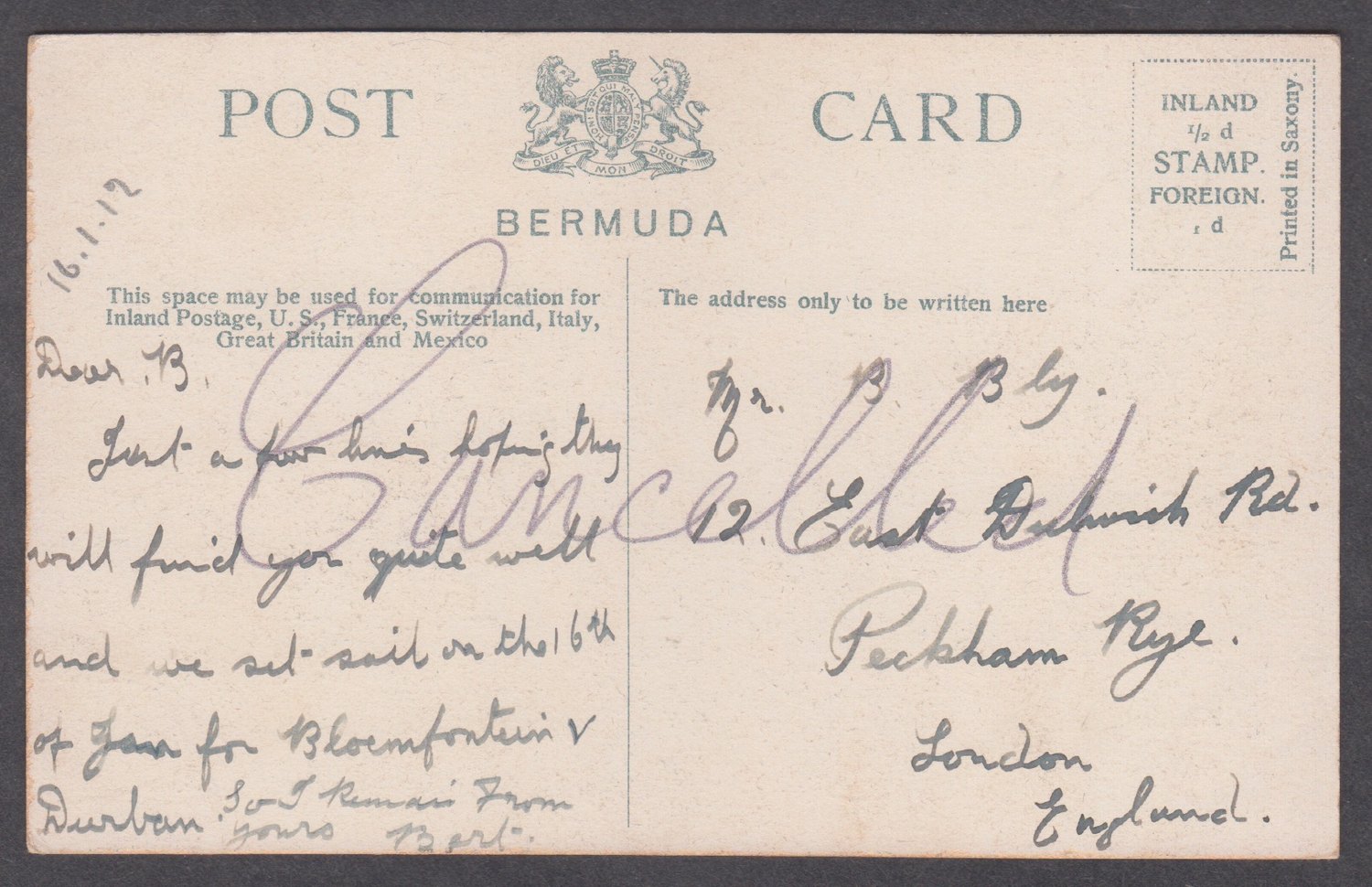
Message and address side of a Bermuda postcard printed in Saxony, with the royal arms and the words Post Card Bermuda; the stamp box, asking for a halfpenny inland or one penny foreign stamp, is empty and there is no postmark; dated 16.1.12 at top left; the message in ink begins Dear B. and is signed Bert; addressed to Mr B. Bly, 12 East Dulwich Road, Peckham Rye, London, England; the word Cancelled is written large across both halves in violet pencil
“Dear B.”: no stamp, no postmark, and “Cancelled” in violet pencil
  • Written Bermuda, dated 16 January 1912
  • Card “India Rubber Tree, Bermuda”; printed in Saxony, publisher not named
  • Stamp None
  • Postmark None; “Cancelled” written across the back in violet pencil
  • Addressed to Mr B. Bly, 12 East Dulwich Rd., Peckham Rye, London, England

The picture side is one of Bermuda’s great India rubber trees, with four boys climbing in its branches. The most famous was Postmaster Perot’s at Par-la-Ville in Hamilton, sent to him from British Guiana by his son Adolphus and planted in 1847. It was photographed for years and turns up on a lot of postcards. The building behind the tree here could well be Par-la-Ville, but I can’t say for certain this is Perot’s tree. There were others on the island, one of them by the Warwick Post Office.

Bert dated the back 16.1.12 and wrote:

“Dear B. Just a few lines hoping they will find you quite well and we set sail on the 16th of Jan for Bloemfontein & Durban. So I remain from yours Bert”

The message, 16 January 1912

He wrote it on the day the Soudan sailed, so he was going with her. She was bound for Durban, and from there Bloemfontein was a long train ride inland. He addressed it to a Mr B. Bly in East Dulwich Road, Peckham Rye.

The card never went through the post office. There’s no stamp and no postmark, although the printed box asks for ½d inland or 1d foreign. Instead someone has written “Cancelled” across both sides in violet pencil. I don’t know who did that, or why.
II

The Queen’s in, the Bedfords out

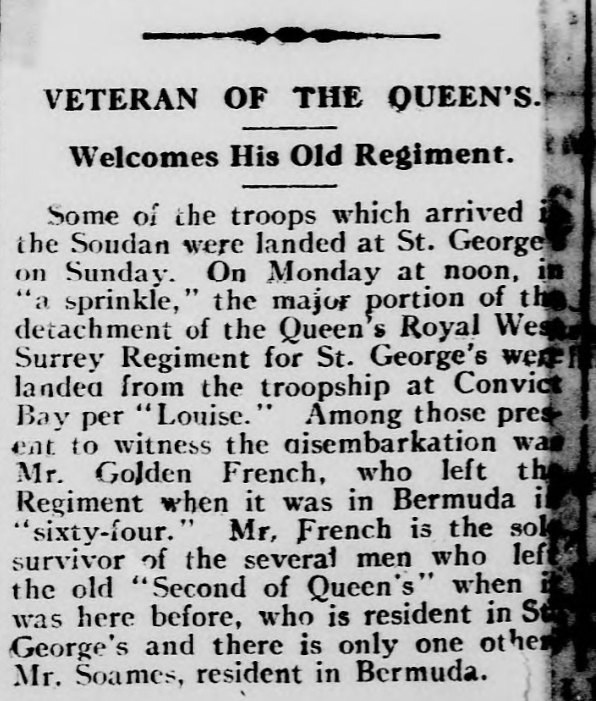
Royal Gazette clipping headed Veteran of the Queen's, Welcomes His Old Regiment: some of the troops which arrived in the Soudan were landed at St. George's on Sunday; on Monday at noon, in a sprinkle, the major portion of the detachment of the Queen's Royal West Surrey Regiment for St. George's were landed from the troopship at Convict Bay per Louise; among those present was Mr. Golden French, who left the Regiment when it was in Bermuda in sixty-four, the sole survivor resident in St. George's of the men who left the old Second of Queen's when it was here before; there is only one other, Mr. Soames, resident in Bermuda
“Veteran of the Queen’s”, Royal Gazette, 18 January 1912
  • From Gibraltar
  • Brought 2nd Battalion, The Queen’s (Royal West Surrey Regiment)
  • Landed St. George’s, Sunday 14 January; Convict Bay, by the Louise, Monday 15 January
  • Took away Probably the 2nd Battalion, Bedfordshire Regiment, for South Africa
  • Sailed Tuesday 16 January 1912, for Durban

The Soudan came from Gibraltar with the 2nd Battalion, the Queen’s (Royal West Surrey Regiment). The Royal Gazette of 18 January reported that some of the troops she brought were landed at St. George’s on the Sunday. At noon on the Monday, in “a sprinkle”, the main part of the St. George’s detachment was landed from the troopship at Convict Bay in the Louise.

Watching them come ashore was Mr. Golden French, who had left the regiment when it was last in Bermuda, in “sixty-four”. Of the men who stayed behind from the old “Second of Queen’s”, he was the only one still living at St. George’s, and the Gazette knew of just one other, a Mr. Soames, anywhere in Bermuda. I like the thought of him standing at Convict Bay in the rain, nearly 48 years on, watching his old regiment come back.

The Queen’s took over from the 2nd Bedfordshire Regiment, who had come out from Gibraltar in the Braemar Castle two years earlier. They were still here in November 1911, when Command Orders named them to give the guard of honour for the Fourth Cruiser Squadron. The Soudan sailed on the 16th, and Bert’s card and the regiment’s movements suggest the Bedfords went with her. I haven’t found any Gazette report of them leaving, so I can’t prove it.

The Ship

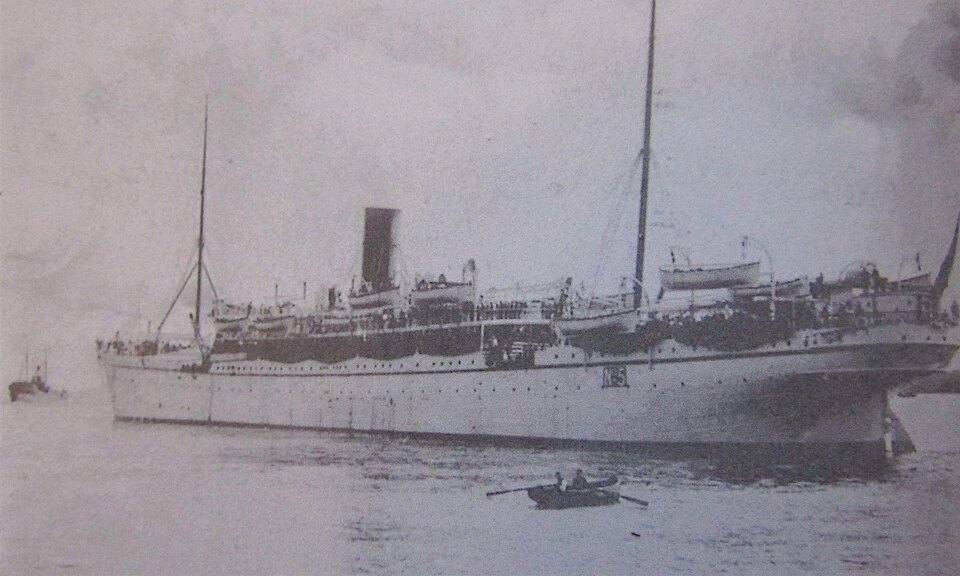
Black and white photograph of the Soudan at anchor as a troopship: a long white hull with a dark band along the upper deck, two masts and a single tall dark funnel, lifeboats along the boat deck and soldiers crowding the rails; a transport number board on her side; a rowing boat in the foreground and a small steamer to the left

H.M.T. Soudan (1901)

The Soudan was one of five sister ships built for P&O in 1901–02, the others being Sicilia, Syria, Somali and Sardinia. She was built by Caird & Co. at Greenock and launched on 7 March 1901. She was an “intermediate” steamer, a mixed passenger and cargo ship, and she spent much of her life trooping for the government. Between contracts she was often laid up at Southampton. In trooping colours she had a white hull, as in the photograph.

In June 1911 she was at the Coronation Naval Review at Spithead, carrying the Press out to see the fleet. The Royal Gazette reprinted W. H. Fitchett’s account on 15 July 1911. After a wet start, the skies cleared as “the Soudan, carrying the Press representatives, moved along the pleasant Hampshire coast”.

In the First World War she became a naval hospital ship. She served at the Dardanelles in 1915, carrying the wounded of the Gallipoli campaign. She was released in 1919, sold to Japanese breakers, and broken up at Kobe in 1925.

BuiltCaird & Co., Greenock, 1901
TypeP&O passenger and cargo steamer, hired as a troop transport
TonnageAbout 6,700 gross
OwnerPeninsular & Oriental Steam Navigation Co.
FateBroken up in Japan, 1925

Photograph: photographer not identified, via Wikimedia Commons.

Still to find out

If you can help with any of these, I’d be very pleased to hear from you.

References

A card that never got a stamp, from a soldier leaving with his battalion. I’d love to know who stopped it, and whether B. Bly ever saw it.