Christmas dinner for Mess 27
8 December 1892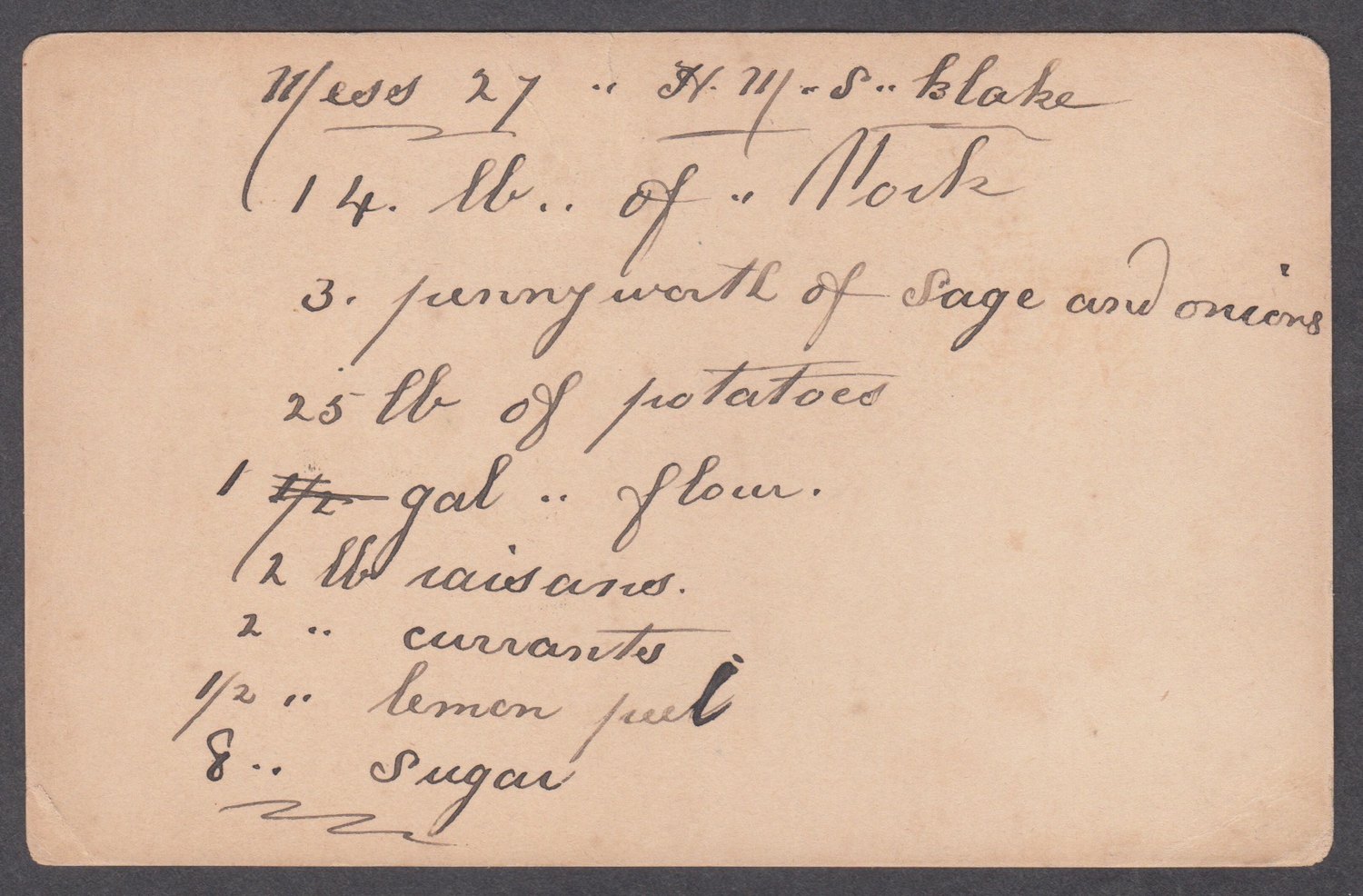
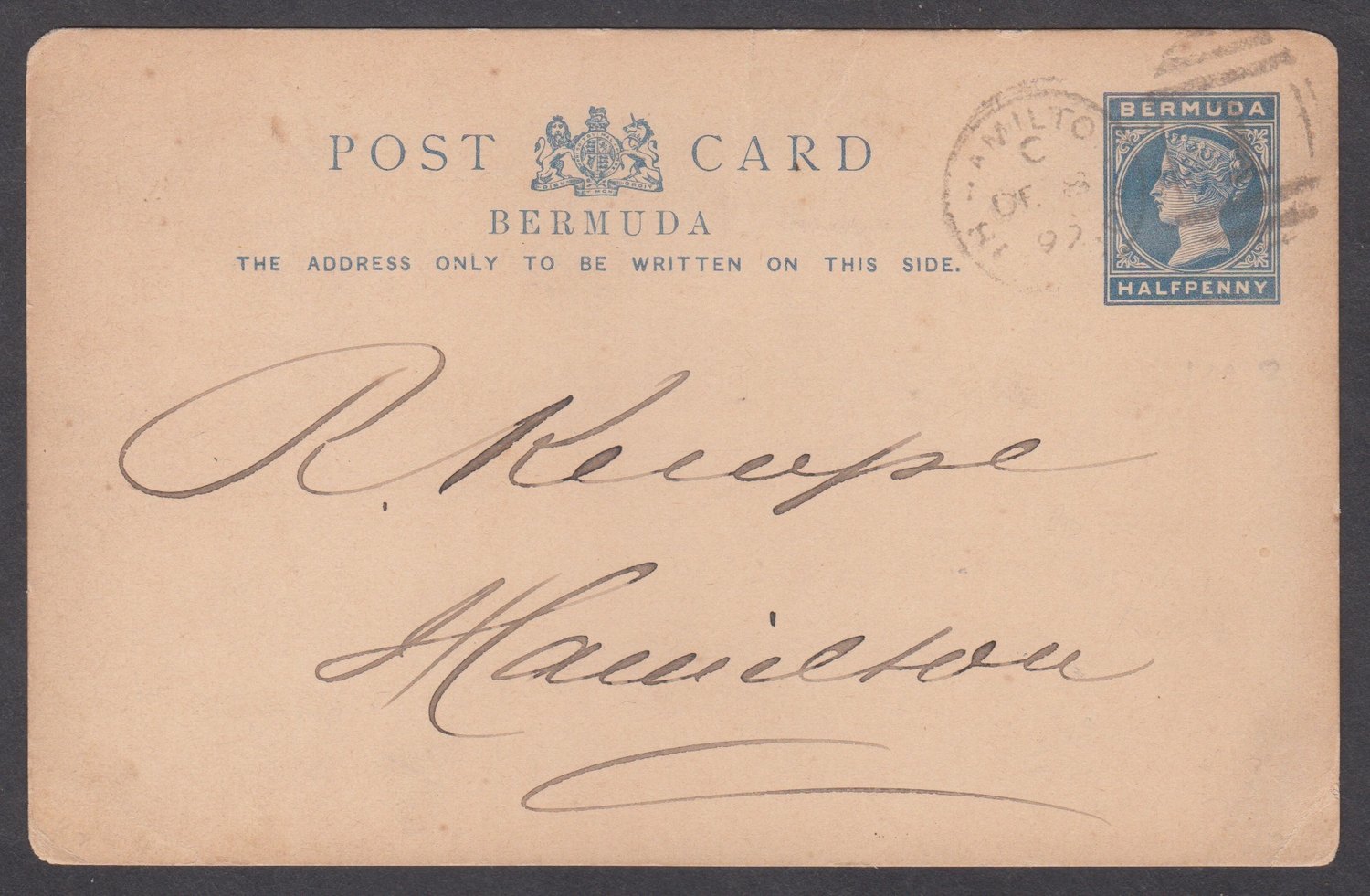
- Written H.M.S. Blake, Mess 27
- Card Bermuda ½d postal stationery card
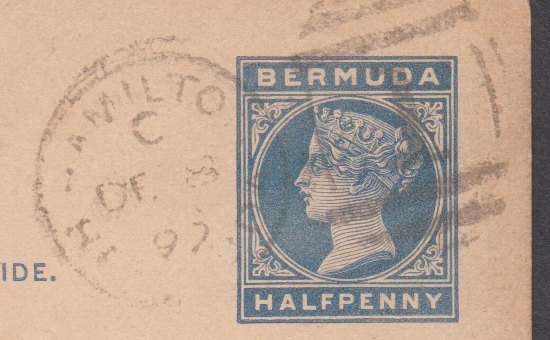
- Datestamp HAMILTON K4 duplex, C (evening), DE 8 92
- Addressed to R. Kempe, Hamilton
“Mess 27 .. H.M.S. Blake / 14 lb .. of .. Pork / 3. pennyworth of sage and onions / 25 lb of potatoes / 1 gal .. flour. / 2 lb raisans. / 2 .. currants / ½ .. lemon peel / 8 .. Sugar”
The card is the Bermuda halfpenny postal stationery card, addressed in a big flowing hand to “R. Kempe, Hamilton”. It was posted locally and cancelled with the HAMILTON K4 duplex, code C, on 8 December 1892. C was the evening collection, so it went into the post at the end of the day. The last figure of the year is weakly struck, but 1892 is the only year that fits: Blake had left the station by 1896, and Kempe himself was gone from Bermuda by the summer of 1893.
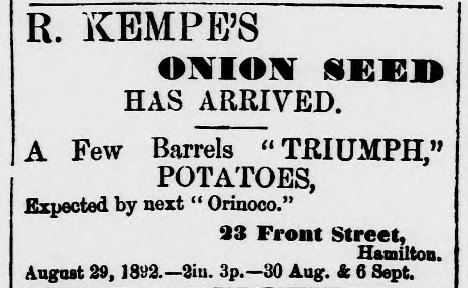
Richard Kempe was the Bermuda agent for J. H. Bahrenburg’s Bro. & Co., fruit and produce commission merchants of New York. In September 1892 he was advertising onion seed and “Triumph” potatoes from 23 Front Street, Hamilton. Readers of my Canada page will know him already. In June 1893 the caterer of No. 17 Mess in HMS Canada ordered a barrel of old potatoes from him on the same kind of card. Each mess on the lower deck had a caterer, who bought the extras the Navy’s ration didn’t cover. This card isn’t signed, but it must be the work of Mess 27’s caterer.
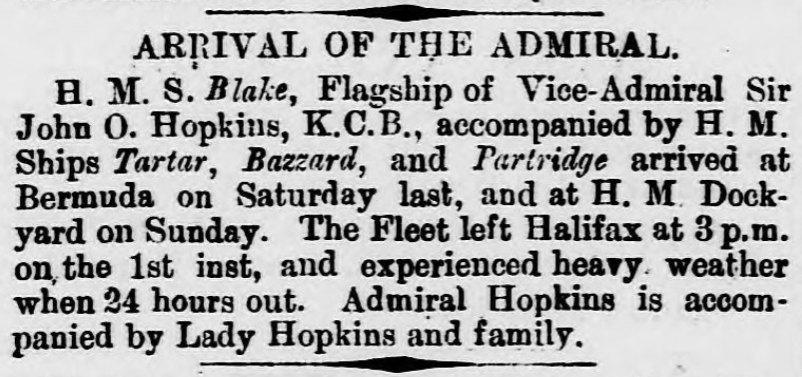
The list is what I like about it. Fourteen pounds of pork and threepence worth of sage and onions make a roast with stuffing. The flour, raisins, currants, lemon peel and sugar make a plum pudding, or most of one. It was posted two and a half weeks before Christmas, and the Gazette confirms Blake was at Bermuda for it.
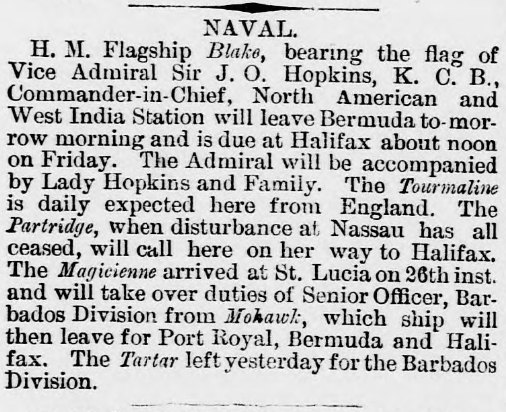
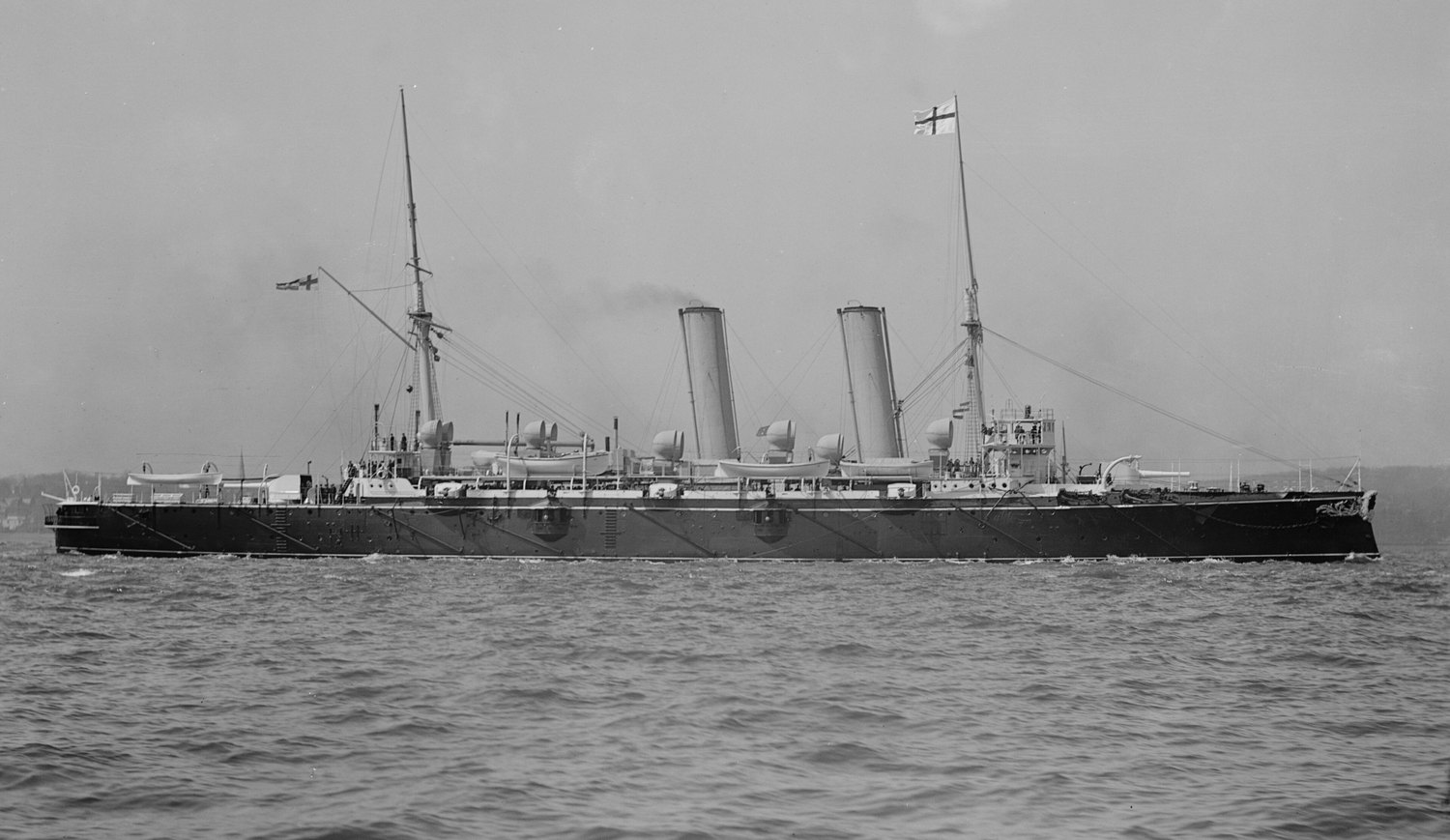
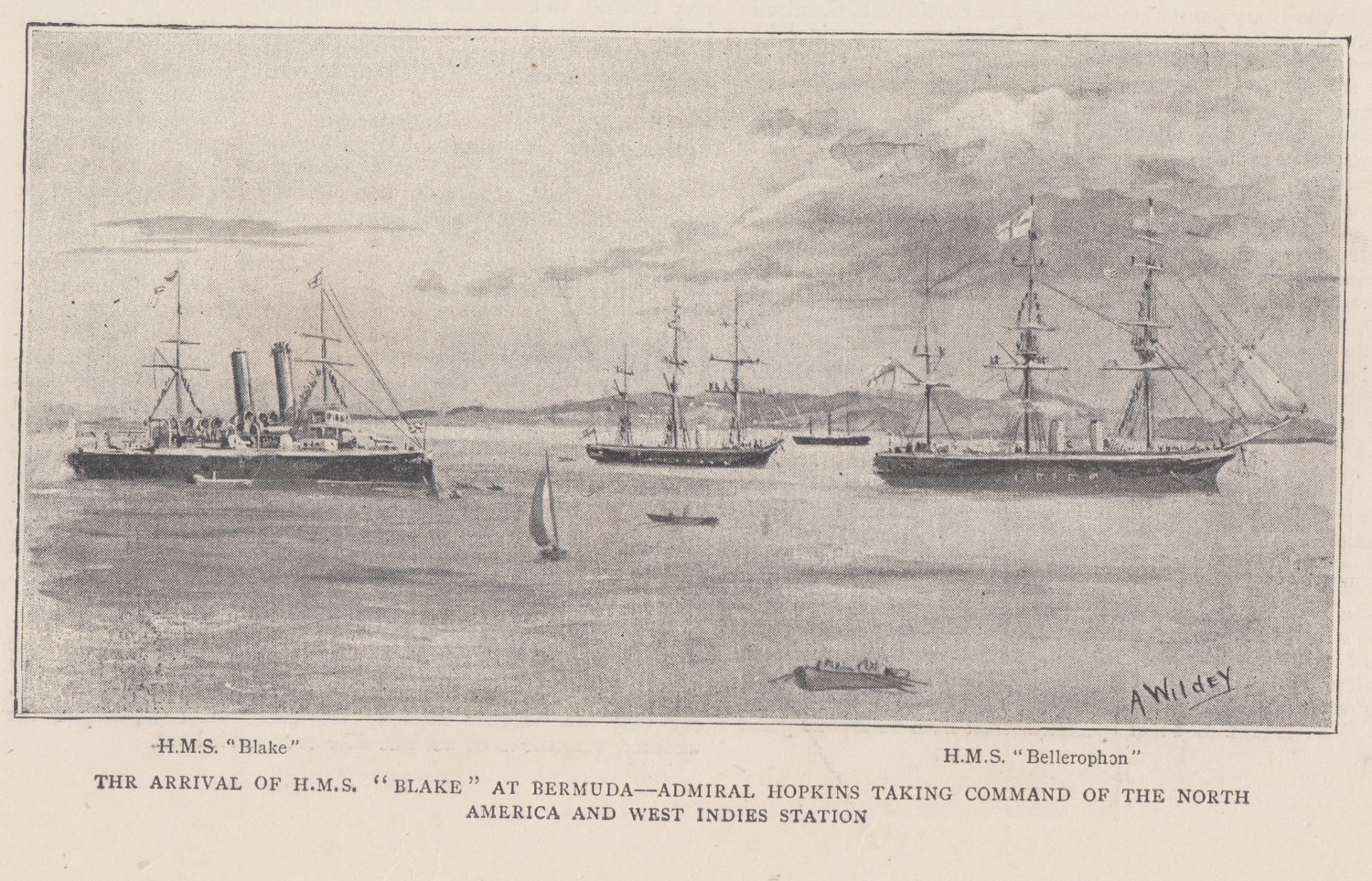
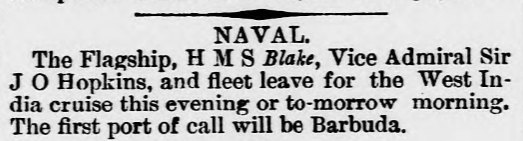
She had come down from Halifax with Tartar, Buzzard and Partridge, arriving on Saturday 5 November and coming into the Dockyard the next day, with Vice-Admiral Sir John Hopkins, Lady Hopkins and family on board. The ship’s company soon made themselves part of the place. On 5 and 6 December, two days before this card, the Blake Amateur Dramatic Club played to a full house at the Spar Yard Theatre in the Dockyard: a comic drama, an acrobatic turn and a farce called “D’ye Know Me Now”, with the ship’s band under Mr Walker. The squadron didn’t leave for its West Indies cruise until the first days of January.
The card was posted at Hamilton, not at the Dockyard, so someone carried it up to town. Blake herself would have been lying at the Dockyard or in Grassy Bay, not in Hamilton Harbour. I’d guess one of the mess went up on leave or on an errand and dropped it in the post before coming back, but that’s a guess.
Mishap to R.M.S. Orinoco
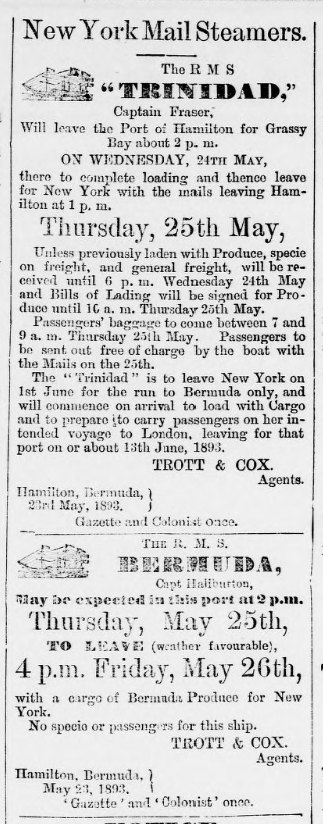
A fortnight before the card, Blake’s men were out on the water on rather more serious business. On Thursday 24 November the RMS Orinoco left Hamilton for New York at about 1.20 p.m., with freight, passengers and the mails, in a strong westerly. Squalls caught her twice, first in Timlin’s Narrows and then in the Staggs Channel, where she fouled the No. 15 buoy. Its mooring chain wrapped round her propeller and broke her rudder, and she went onto the sand. She came off on the rising tide and anchored in Grassy Bay with no steering. The agents, Trott & Cox, turned to the Admiral for help, and Captain Carr, the Dockyard Superintendent, and Captain W. des V. Hamilton of Blake got her clear. The Court of Inquiry later recorded that the chain was cut away from her propeller with Blake’s help.
It’s one of the things I like about these ships. They weren’t at Bermuda just for the pomp and ceremony of an admiral’s flag. They were working ships, and when something went wrong in the islands, they were the ones called on to put it right.
The court sat at the Town Hall in Hamilton and gave its judgment on 7 December, the day before the Mess 27 card. It found two errors. She had left too late, reaching the Staggs Channel two and a half hours after high water, and the pilot had taken her into the channel in a heavy squall, on the wrong side of the buoy. It did not blame the master, officers or crew.
The part that interests me most is the mails, which were stuck on board. In the end they went to Philadelphia in the SS Clandeboye, which had put in for coal on her way from Bilbao. I’d love to find a cover from that mail.