“On Thursday for certain we sail for Halifax”
6 April 1828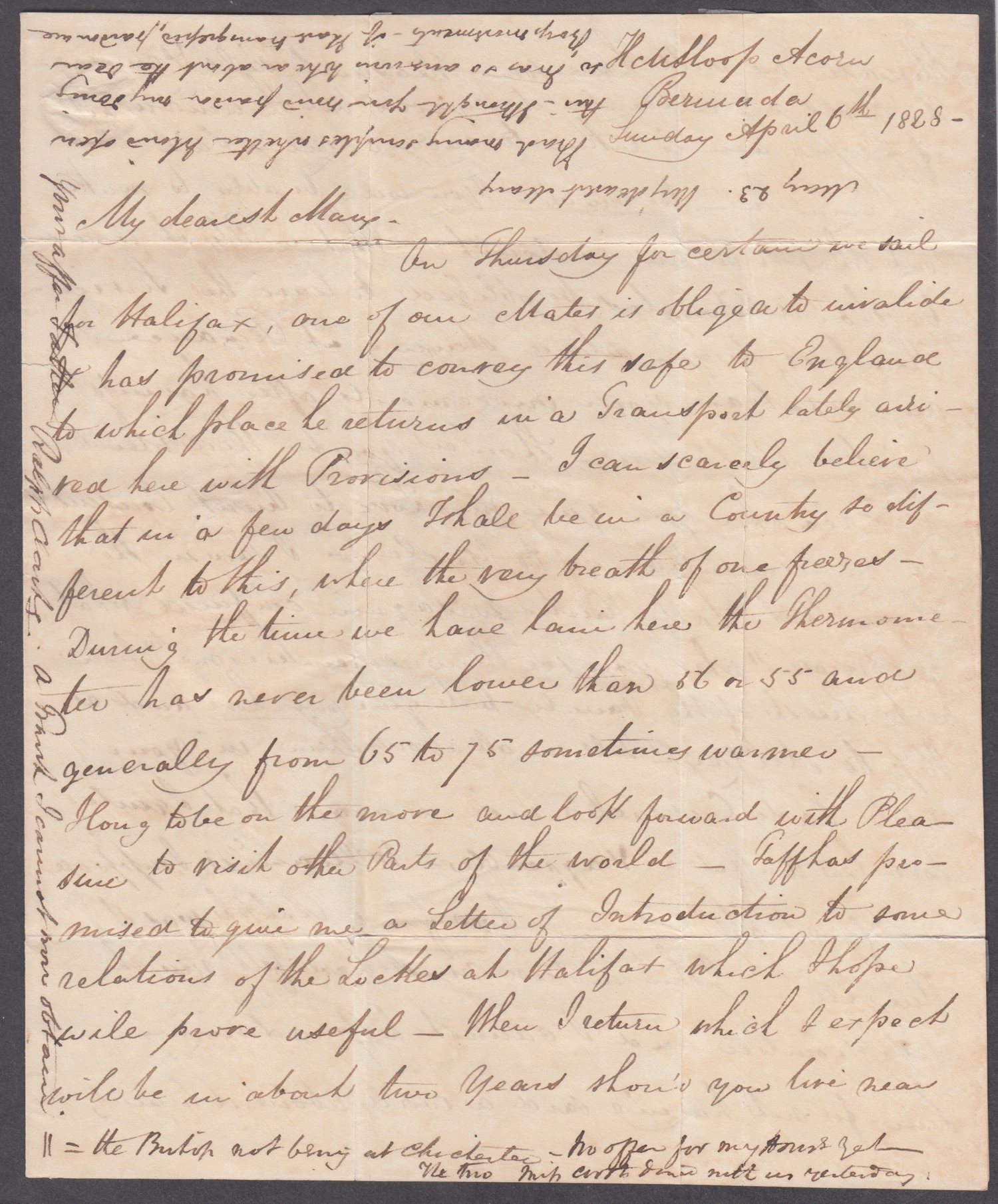
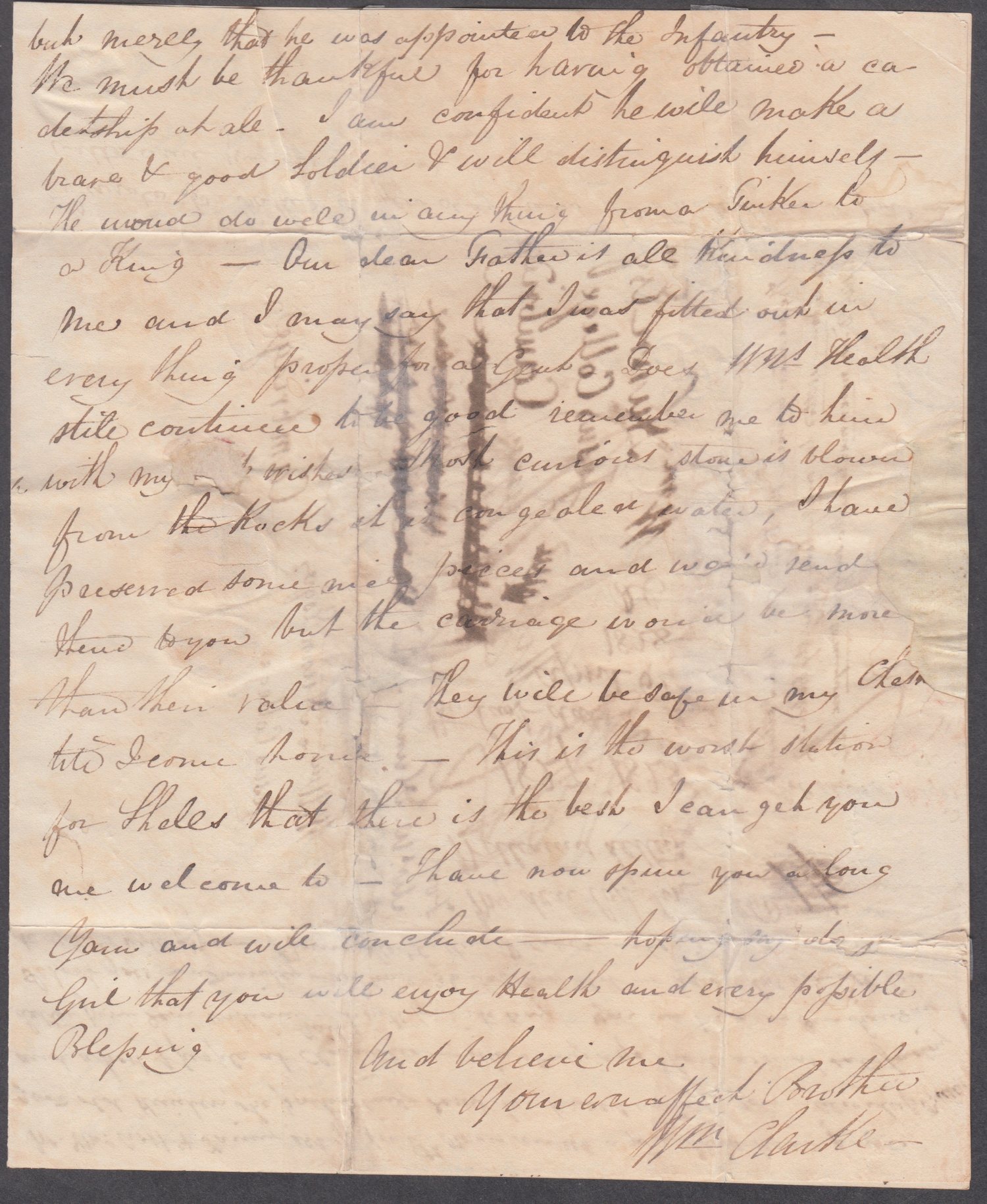
William’s letter is long, chatty and full of family. There is nothing in it to suggest he had any worries about what lay ahead. Quite the opposite.
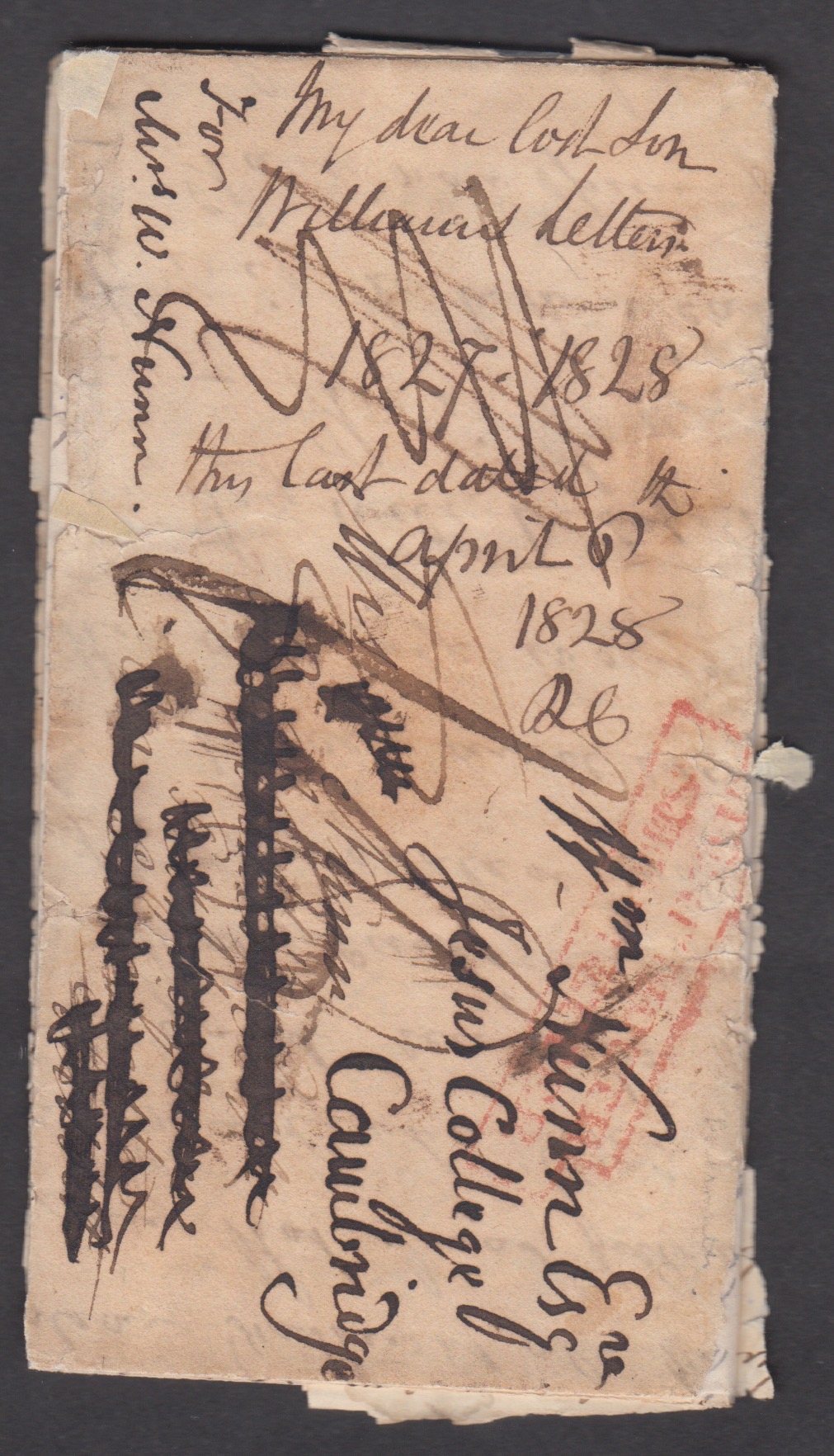
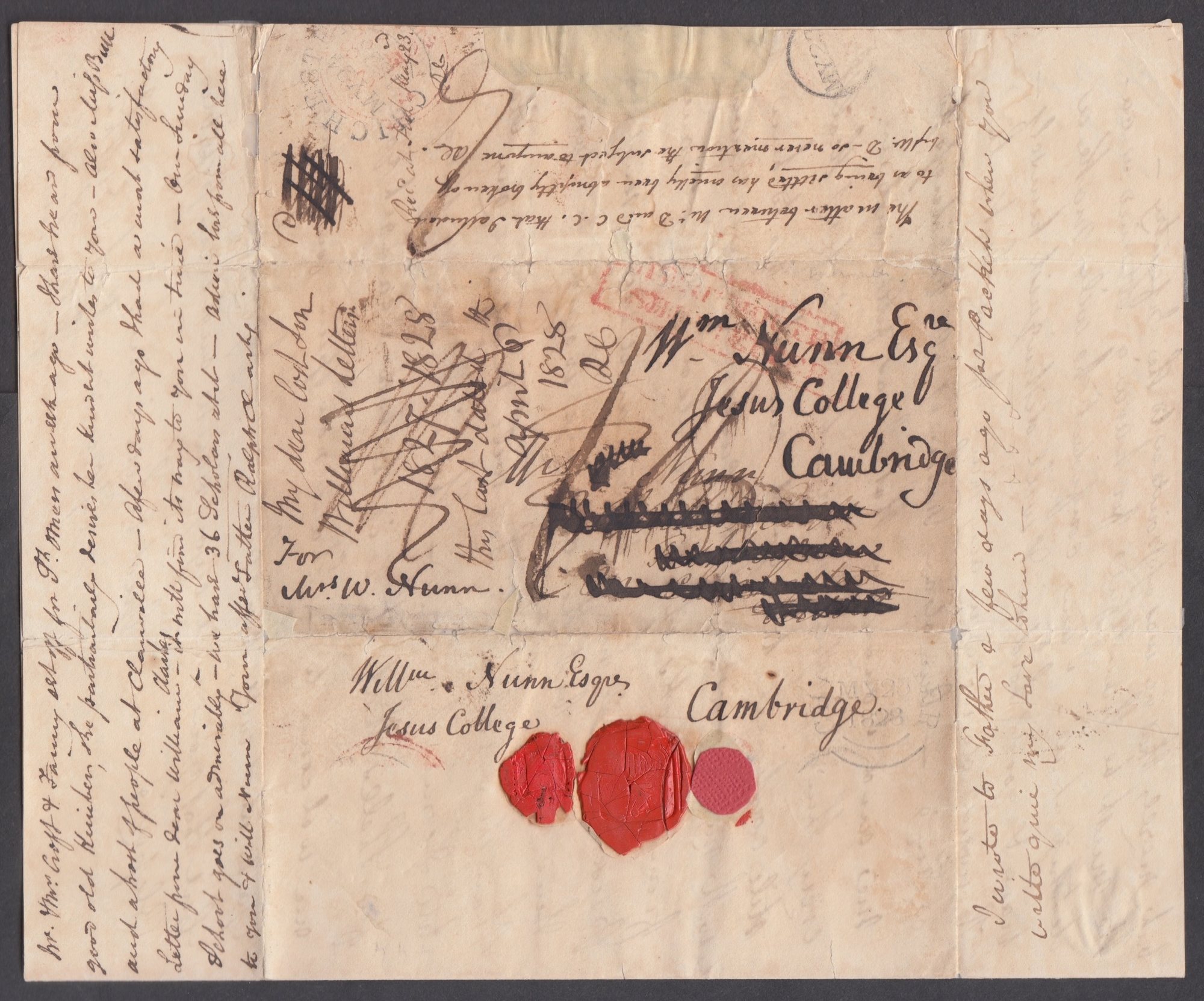
He opens with the practical news. Acorn would sail for Halifax on Thursday “for certain”. One of the ship’s mates was being invalided home and had promised to carry the letter safely to England in a transport that had recently arrived with provisions. That one sentence turns out to be the key to the whole postal story, but more on that below.
He’s clearly excited about the move north, and just as clearly wondering what he’s in for: “I can scarcely believe that in a few days I shall be in a Country so different to this, where the very breath of one freezes.” The Bermuda thermometer, he tells her, had never dropped below 55 or 56 and usually sat between 65 and 75.
“I long to be on the move and look forward with pleasure to visit other Parts of the world.” He expected to be away about two years. Someone he calls Taff had promised him a letter of introduction to relations of “the doctor” at Halifax.
Then comes a passage I find hard to read past. Talking about sailing with Mary when he gets home, he writes:
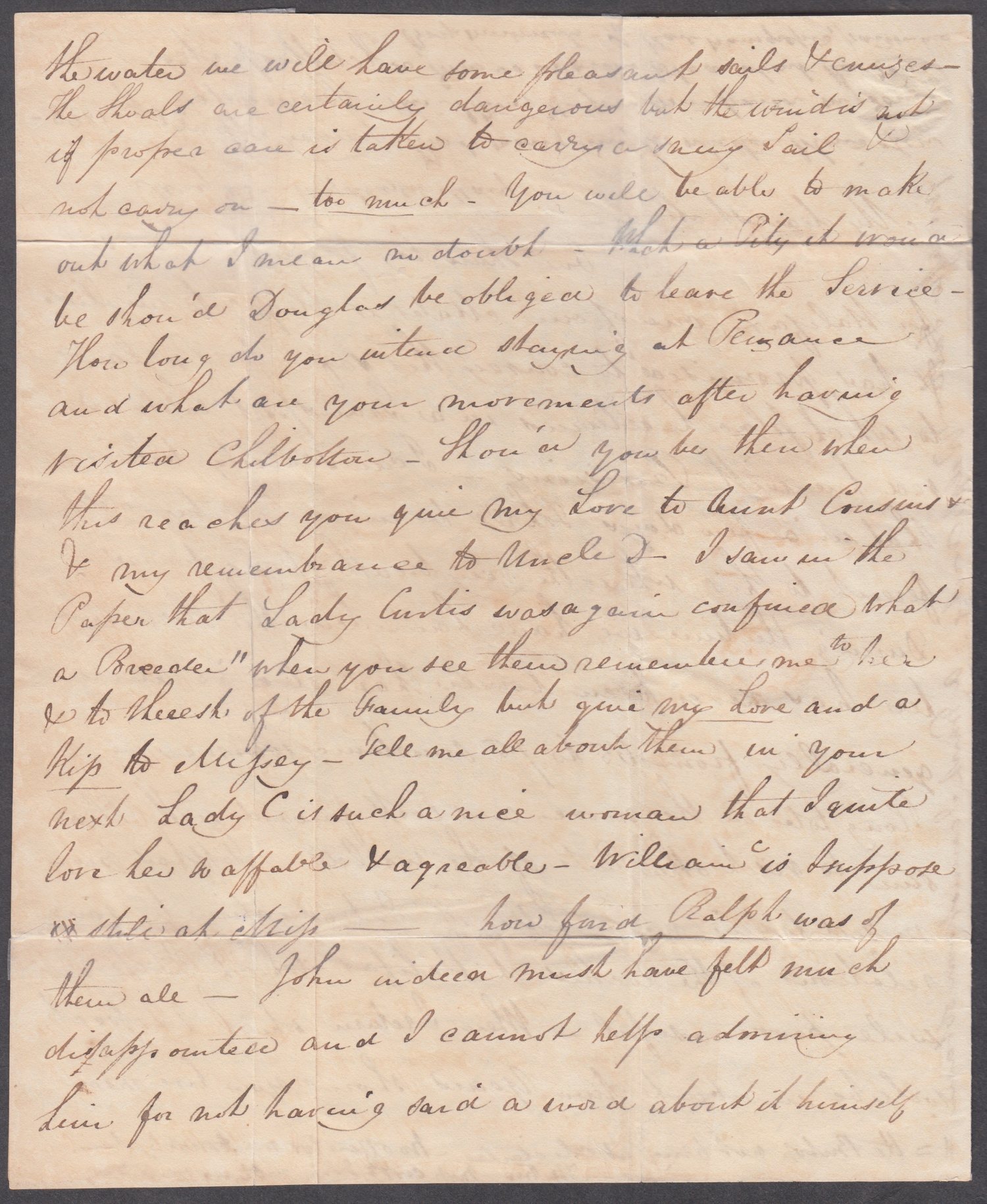
“The Shoals are certainly dangerous but the wind is not if proper care is taken to carry a snug Sail & not carry on too much — You will be able to make out what I mean no doubt.”
I want to be careful here. Nobody knows what happened to Acorn, and I’m not suggesting this line tells us anything about it. It’s a young man showing his sister that he’s learning his trade. But knowing what came four days later, it does make you stop.
The rest is family. He wants to know how long Mary will stay at Penzance and what her plans are after visiting Chilbolton. He sends love to Aunt Cousens, remembrance to Uncle D, and “my Love and a Kiss to Missy”. There’s a lovely bit of gossip about Lady Curtis, who he’d seen in the paper “was again confined what a Breeder!!”, followed straight away by the assurance that “Lady C is such a nice woman that I quite love her.”
He admires John, almost certainly his brother, for saying nothing about a disappointment and simply reporting his appointment to the infantry: “He would do well in any thing from a Tinker to a King.” He is grateful to their father, who “is all kindness to me and I may say that I was fitted out in every thing proper for a Gent.”
Like a lot of sailors, he was collecting. He had pieces of a curious stone “blown from the rocks” that he was keeping safe in his chest until he came home, because sending them would cost more than they were worth. He apologises that Bermuda “is the worst Station for Shells that there is”.
He signs off “I have now spun you a long Yarn”. In a postscript he adds that he’d written to their father a few days earlier by the packet. That small detail comes back later.