Postal History · Royal Navy · Unpaid Letter

H.M.S. Woodlark

Ireland Island · Bermuda · 8 January 1873

The right amount, paid in the wrong stamps.

◆

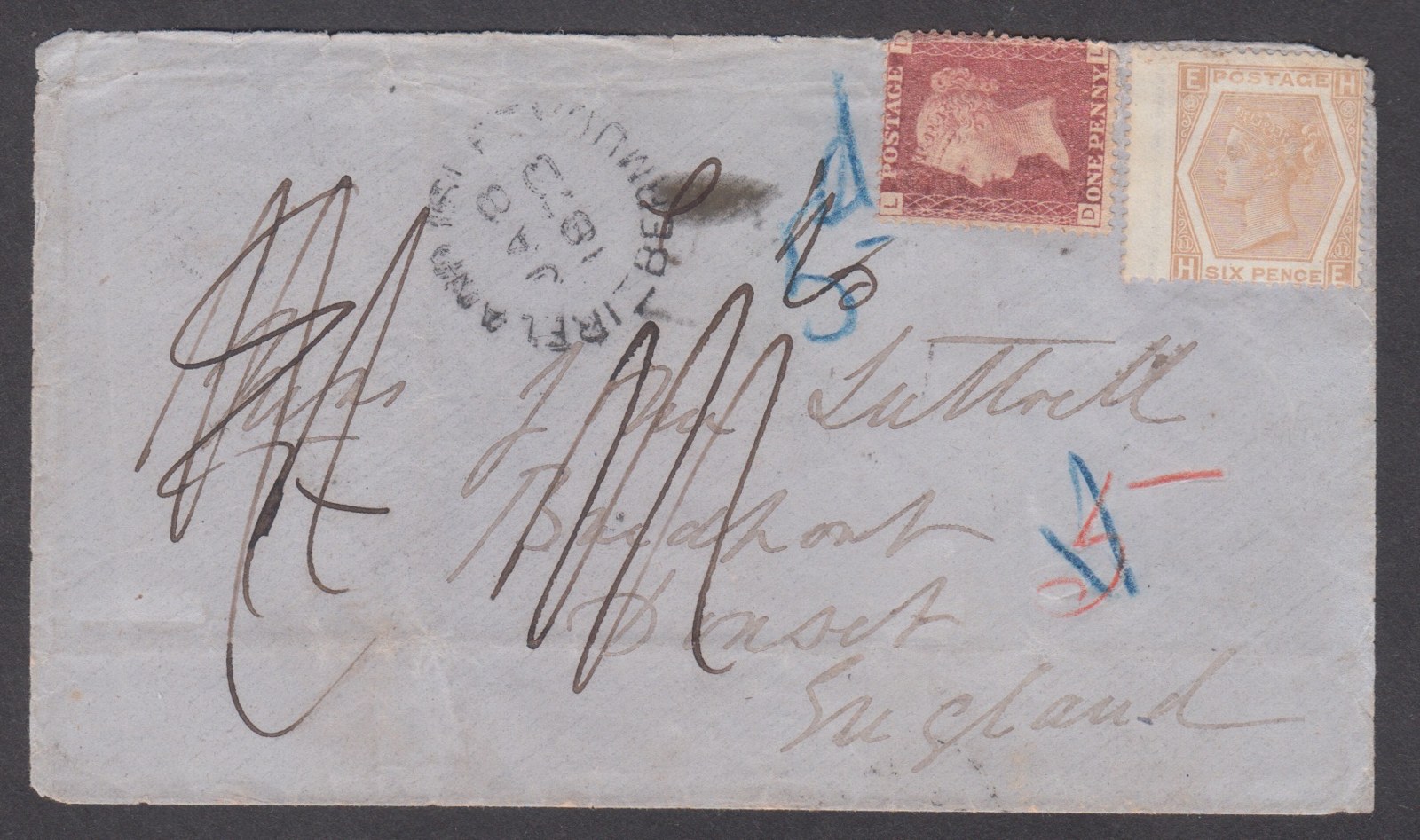
This envelope was posted at Ireland Island on 8 January 1873, addressed to Jno. Luttrell at Bridport, Dorset. It carries the crest of HMS Woodlark on the back. The writer put 7d in stamps on it, the correct rate to England via New York, but the stamps were British, and Bermuda had been using its own since 1865. They were left uncancelled, the letter went home as unpaid, and Mr Luttrell paid 1/1 to receive it.

I

The cover

Envelope addressed to Jno. Luttrell, Bridport, Dorset, England, with uncancelled Great Britain 1d rose-red and wing-margined 6d pale chestnut stamps, an Ireland Isle Bermuda JA 8 1873 datestamp, red and blue crayon 5 markings, and ink charge markings struck through
Front: the Great Britain 1d and 6d, left uncancelled
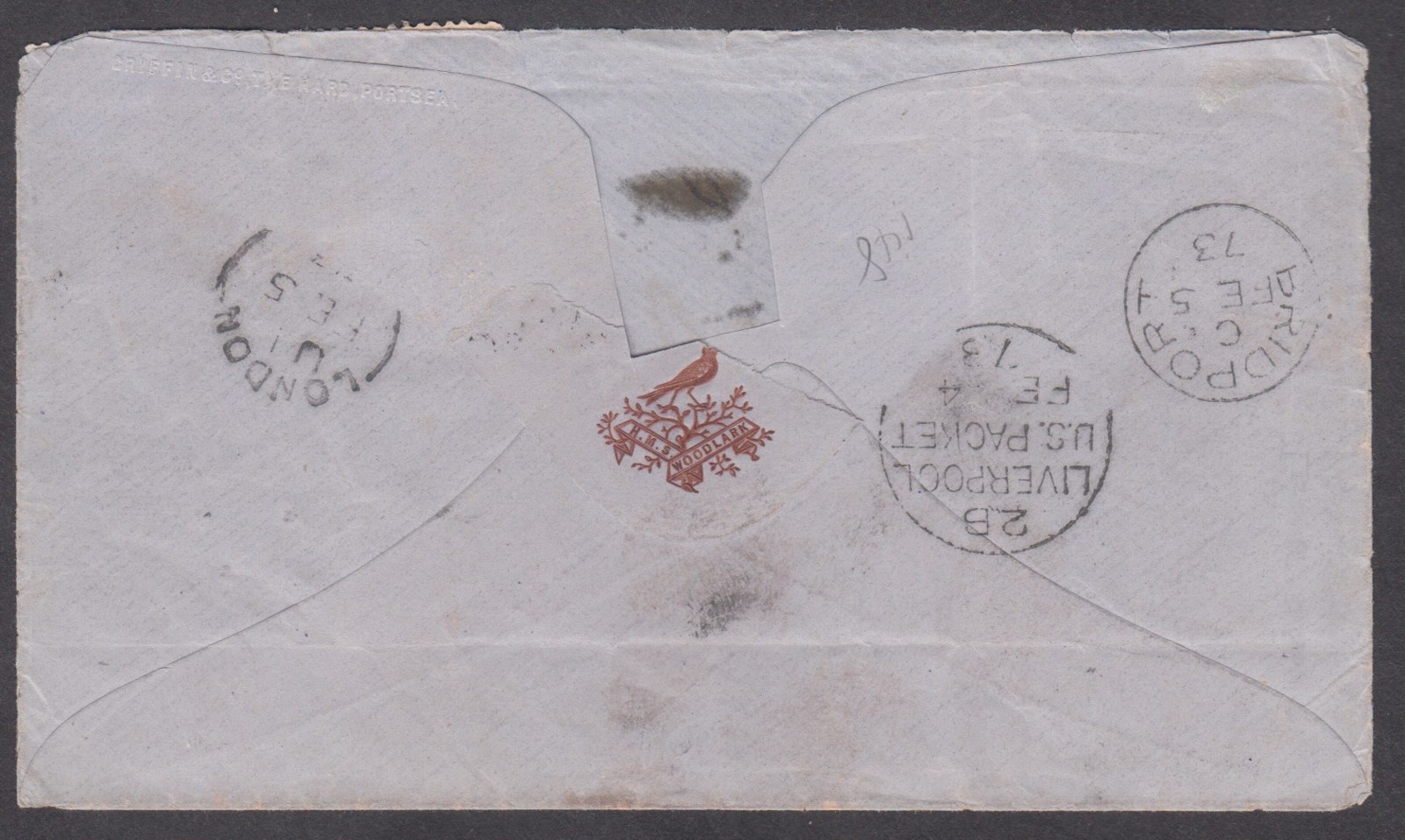
Reverse of the envelope with the embossed crest of HMS Woodlark in red-brown, the stationer's imprint Griffin and Co., The Hard, Portsea on the flap, and Liverpool U.S. Packet FE 4 73, London FE 5 and Bridport FE 5 73 datestamps
Reverse: the Woodlark crest, with Liverpool, London and Bridport datestamps
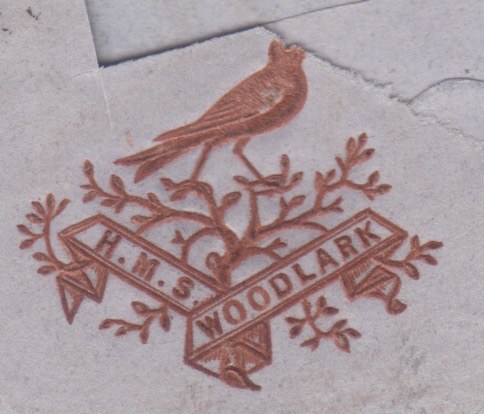
Close-up of the embossed crest: a lark perched on a branch above a ribbon lettered H.M.S. Woodlark
The embossed crest of HMS Woodlark
  • Posted Ireland Island, Bermuda, 8 January 1873
  • Franking Great Britain 1d rose-red (Plate 149) and wing-margined 6d pale chestnut (Plate 11), 7d in all, uncancelled
  • Datestamp IRELAND ISLE/BERMUDA, JA 8 1873 (type PM5)
  • Charge markings red crayon “5” struck through and rewritten in blue; “1/-” deleted and replaced with “1/1”
  • Arrival LIVERPOOL/U.S. PACKET, 4 February 1873; London and Bridport, 5 February 1873
  • Stationery embossed crest of HMS Woodlark; imprint of Griffin & Co., The Hard, Portsea
  • Addressed to Jno. Luttrell, Bridport, Dorset, England

The stamps are a Great Britain 1d rose-red from Plate 149 and a wing-margined 6d pale chestnut from Plate 11. Together they make 7d, which was exactly the rate to Great Britain via New York, in force from 1868 to 1877, which included 1d for United States transit. It is the same little-used rate paid on my Doris cover of 1869, which was correctly franked with Bermuda stamps.

The writer clearly knew what the letter cost. He just paid it in stamps that were no good in Bermuda. The envelope came from Griffin & Co., naval stationers at The Hard, Portsea, and I suspect the stamps came out from England with it. Ireland Island left them uncancelled, struck the PM5 datestamp alongside, and the letter was sent on as unpaid.

The charge markings are the hard part. A “5” in red crayon was struck through in blue crayon, and a “5” written again in blue. On arrival the letter was rated “1/-”, which was deleted and replaced with “1/1”. The later auction descriptions read the 1/1 as the 7d postage plus a 6d fine for an unpaid letter, and that adds up.

I can’t yet fully explain the 5s. My suggestion is that the clerk first treated the letter as paid and marked it in red, as paid letters usually were, then noticed the stamps were British and re-marked it in blue as unpaid. The 4 January 1869 Doris letter, properly paid at 7d via New York, carries a red crayon “6d”, so red crayon on a paid letter by this route is not out of place. Why 5 rather than 6, I don’t know.

On the back is the embossed crest of HMS Woodlark: a lark on a branch, above a ribbon lettered “H.M.S. WOODLARK”.
II

The journey

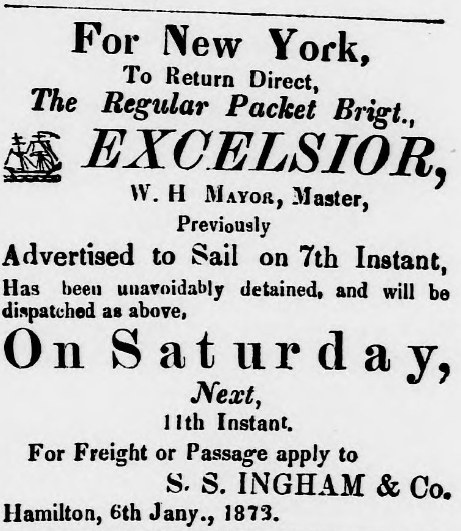
Advertisement: For New York, to return direct, the regular packet brigantine Excelsior, W. H. Mayor, Master, previously advertised to sail on 7th instant, has been unavoidably detained and will be dispatched on Saturday next, 11th instant. For freight or passage apply to S. S. Ingham and Co., Hamilton, 6th January 1873
Royal Gazette, 7 January 1873: the Excelsior delayed to the 11th
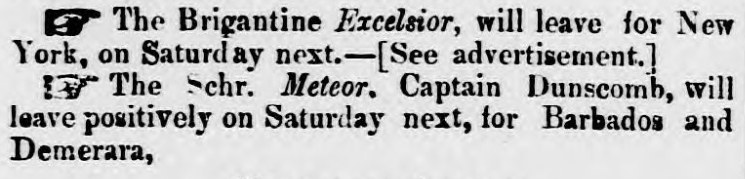
Royal Gazette notice: the brigantine Excelsior will leave for New York on Saturday next; the schooner Meteor, Captain Dunscomb, will leave positively on Saturday next for Barbados and Demerara
Royal Gazette, 7 January 1873
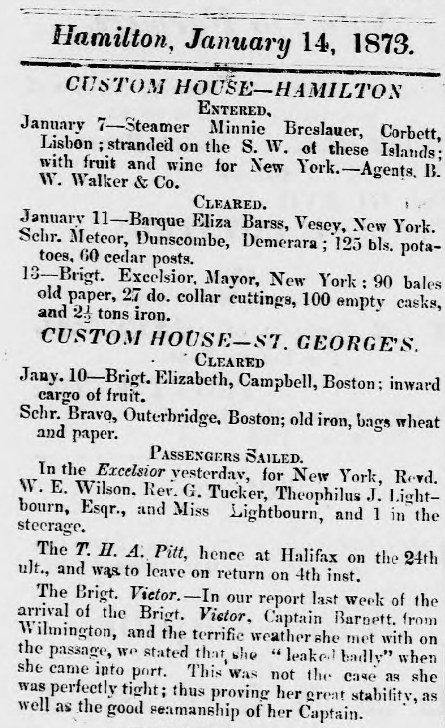
Royal Gazette Custom House list for Hamilton, 14 January 1873, showing the brigantine Excelsior, Mayor, cleared on the 13th for New York with 90 bales of old paper, 27 bales of collar cuttings, 100 empty casks and 2½ tons of iron, and the passengers who sailed in her
Royal Gazette, 14 January 1873: the Excelsior clears on the 13th

The letter left Bermuda in the Excelsior, the regular packet brigantine between Hamilton and New York, W. H. Mayor master, with S. S. Ingham & Co. as agents. She was meant to sail on Tuesday 7 January. Ingham’s advertisement of the 6th says she had been “unavoidably detained”, and put her sailing back to Saturday the 11th. The letter was posted on the 8th, in good time for the new date.

She didn’t make the 11th either. The Custom House list in the Gazette of 14 January shows her clearing Hamilton on Monday the 13th, with 90 bales of old paper, 27 bales of collar cuttings, 100 empty casks and 2½ tons of iron. Her passengers were the Revd W. E. Wilson, the Rev. G. Tucker, Theophilus J. Lightbourn and Miss Lightbourn, with one more in steerage. The schooner Meteor, promised in the same issue to leave “positively” on the Saturday, did get away on the 11th.

From New York the letter crossed in the Cunard steamer Calabria. It was struck LIVERPOOL/U.S. PACKET on 4 February, and passed through London to reach Bridport the next day, about three weeks after leaving Hamilton.

Ireland Island to Bridport

The ships on one side, the letter on the other.

The ships
The letter
23 Dec
WoodlarkHer cutters race in the Royal Naval Regatta on the Great Sound.
4 Jan
WoodlarkSails for the West Indies with the Admiral’s squadron.
7 Jan
ExcelsiorDetained; sailing put back to the 11th.
8 Jan
The letterDatestamped at Ireland Island.
13 Jan
ExcelsiorFinally clears Hamilton for New York.
The letterOn board for New York.
4 Feb
The letterReaches Liverpool in the Cunard Calabria.
5 Feb
The letterLondon, then Bridport; 1/1 to pay.
III

Woodlark in Bermuda

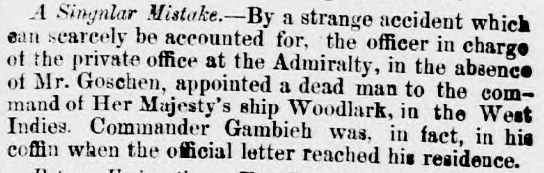
Royal Gazette paragraph headed A Singular Mistake: the officer in charge of the private office at the Admiralty, in the absence of Mr Goschen, appointed a dead man to the command of Her Majesty's ship Woodlark in the West Indies; Commander Gambieh was in his coffin when the official letter reached his residence
Royal Gazette, 15 October 1872: “A Singular Mistake”
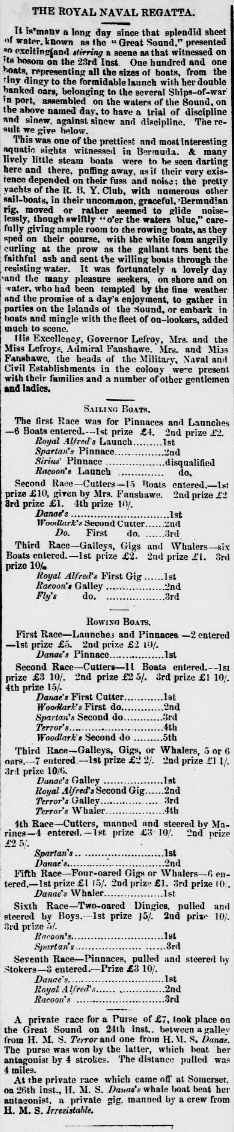
Royal Gazette report of the Royal Naval Regatta on the Great Sound on the 23rd instant, with results of the sailing and rowing races for boats of the ships of war, including Woodlark's first and second cutters
Royal Gazette, 31 December 1872: the Royal Naval Regatta
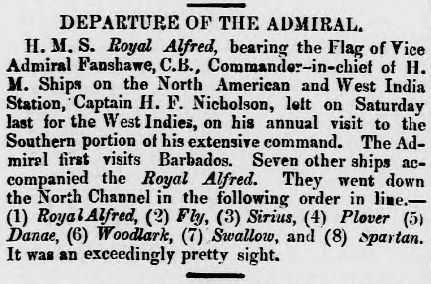
Royal Gazette paragraph headed Departure of the Admiral: HMS Royal Alfred, flagship of Vice Admiral Fanshawe, left on Saturday last for the West Indies, accompanied by seven other ships going down the North Channel in line: Royal Alfred, Fly, Sirius, Plover, Danae, Woodlark, Swallow and Spartan
Royal Gazette, 8 January 1873: “Departure of the Admiral”

The Gazette gives three glimpses of Woodlark in the months around this letter.

15 October 1872. Under its London news the Gazette ran a paragraph headed “A Singular Mistake”. In Mr Goschen’s absence, the officer in charge of the private office at the Admiralty had appointed a dead man to command Woodlark in the West Indies. “Commander Gambieh”, presumably Gambier, “was, in fact, in his coffin when the official letter reached his residence.” She had been commanded since April 1872 by Commander Archibald George Bogle, whose time in her ended in November.

31 December 1872. The Royal Naval Regatta was held on the Great Sound on Monday 23 December, watched by Governor Lefroy and Admiral Fanshawe. Woodlark’s boats did well. In the sailing race for cutters, with 15 boats entered, her second cutter came second and her first cutter third, both behind Danae. In the rowing race for cutters her first cutter was second, again behind Danae, and her second cutter fifth.

8 January 1873. Vice Admiral Fanshawe had left in the Royal Alfred “on Saturday last”, 4 January, for his annual visit to the West Indies, calling first at Barbados. Seven ships went with him, down the North Channel in line, and Woodlark was sixth.

So Woodlark had sailed four days before this letter was datestamped at Ireland Island. I don’t know for certain how that came about. The likeliest explanation is that the letter was written aboard over Christmas or New Year, landed with the ship’s mail as she sailed, and stamped when the dockyard office made up the mail for the Excelsior. The later auction descriptions say “from HMS Woodlark”. That rests on the crest; the 1999 Ludington description doesn’t mention the ship at all.

The Ships · I

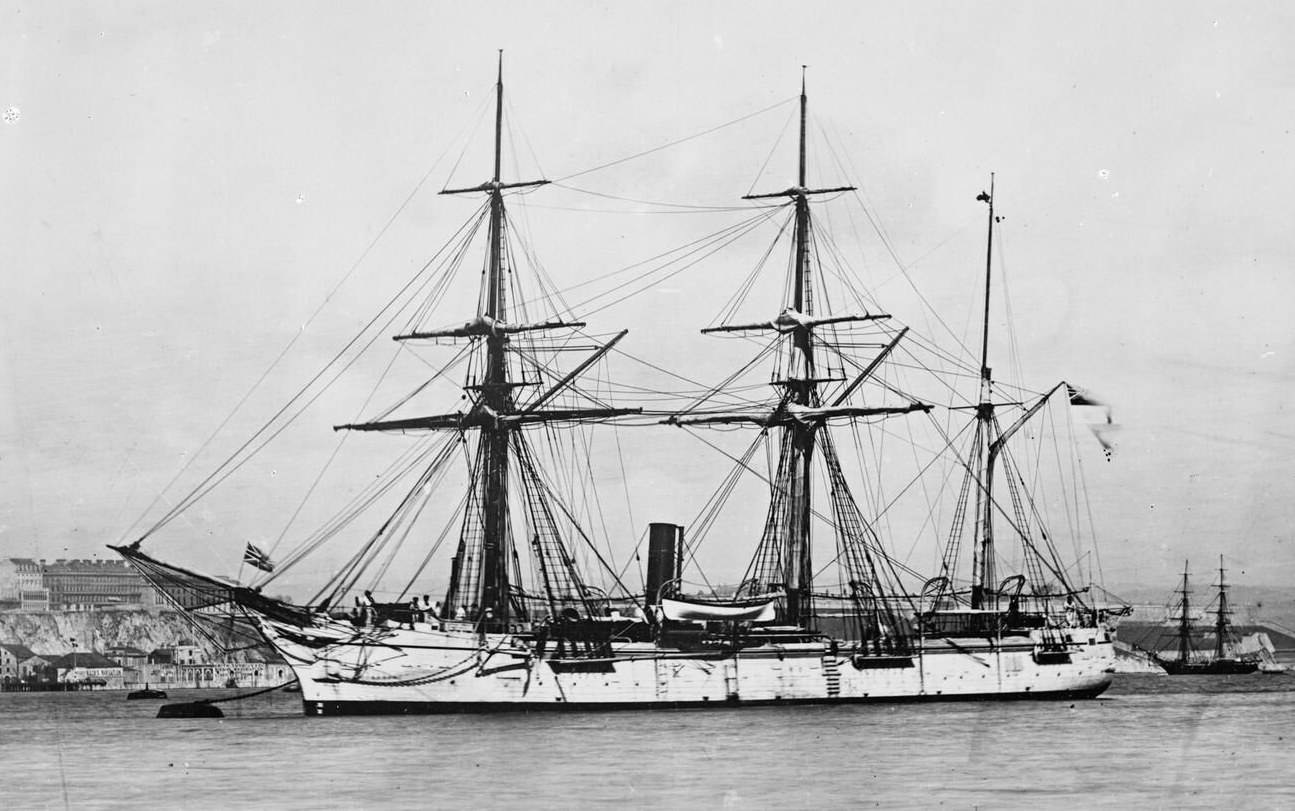
Photograph of the barque-rigged screw gunvessel HMS Woodlark at anchor, painted white, her funnel between the fore and main masts, with buildings on a cliff behind

H.M.S. Woodlark

HMS Woodlark was a wooden screw gunvessel of the Plover class, launched at Chatham on 9 March 1871. She was the last wooden vessel built at Chatham Dockyard. She served on the North America and West Indies station in the early 1870s, and later in the East Indies, where she was sold at Bombay in 1887.

BuiltChatham Dockyard, launched 9 March 1871
TypeWooden screw gunvessel, Plover class
Guns3
Tonnage663 tons (805 tons displacement)
Station, 1873North America and West Indies
FateSold at Bombay, 1887

Photograph of Woodlark in 1880. Imperial War Museum.

The Ships · II

The Excelsior

The Excelsior was a brigantine running as a regular packet between Hamilton and New York, master W. H. Mayor, with S. S. Ingham & Co. of Hamilton as agents. She carried freight, passengers and mail, and the auction descriptions of this cover call her a contract vessel. In January 1873 she ran nearly a week late.

TypeBrigantine, regular packet
RouteHamilton – New York
Master, 1873W. H. Mayor
AgentsS. S. Ingham & Co., Hamilton
Sailed13 January 1873, advertised for the 7th

Provenance and references