Postal History · Royal Navy · Naval Officer’s Letter

H.M.S. Doris

Ireland Island · Bermuda · 29 January 1869

A Naval Officer’s Letter on the ship’s own stationery, sent home by the 7d rate via New York.

◆

This envelope was posted at Ireland Island on 29 January 1869, addressed to J. Trickett Esq., H.M. Dock Yard, Woolwich, Kent. It is written on stationery belonging to HMS Doris, which spent the winter of 1868–69 at Bermuda. It is one of three letters to Trickett that I know of from the ship during her stay.

I

The cover

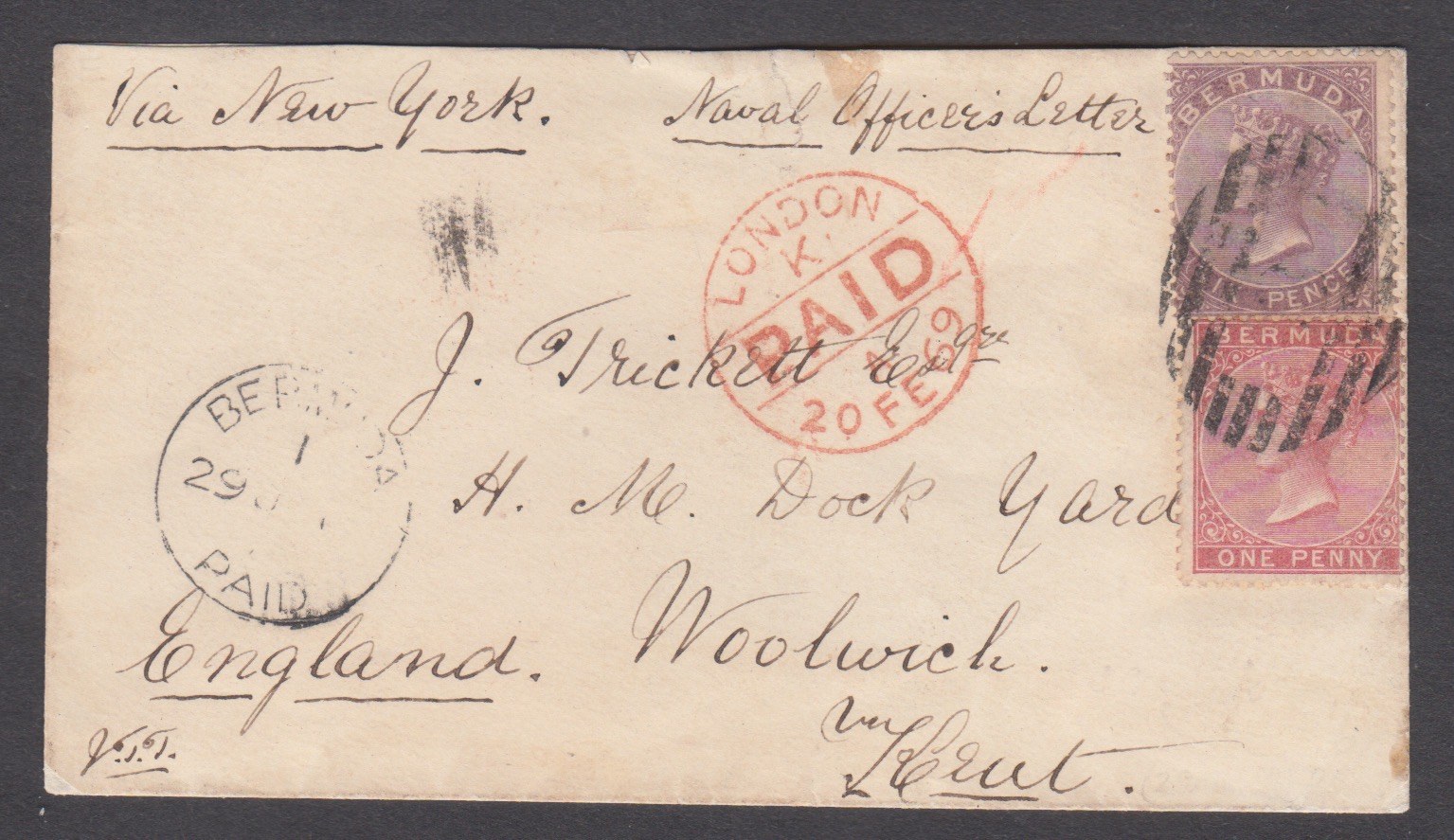
Envelope endorsed Via New York and Naval Officers Letter, addressed to J. Trickett Esq., H. M. Dock Yard, Woolwich, Kent, England, franked with Bermuda 6d dull purple and 1d rose-red tied by a barred numeral 3, with a black Bermuda I 29 JA PAID datestamp and a red London PAID datestamp
Front: the 6d and 1d tied by the Ireland Island “3”
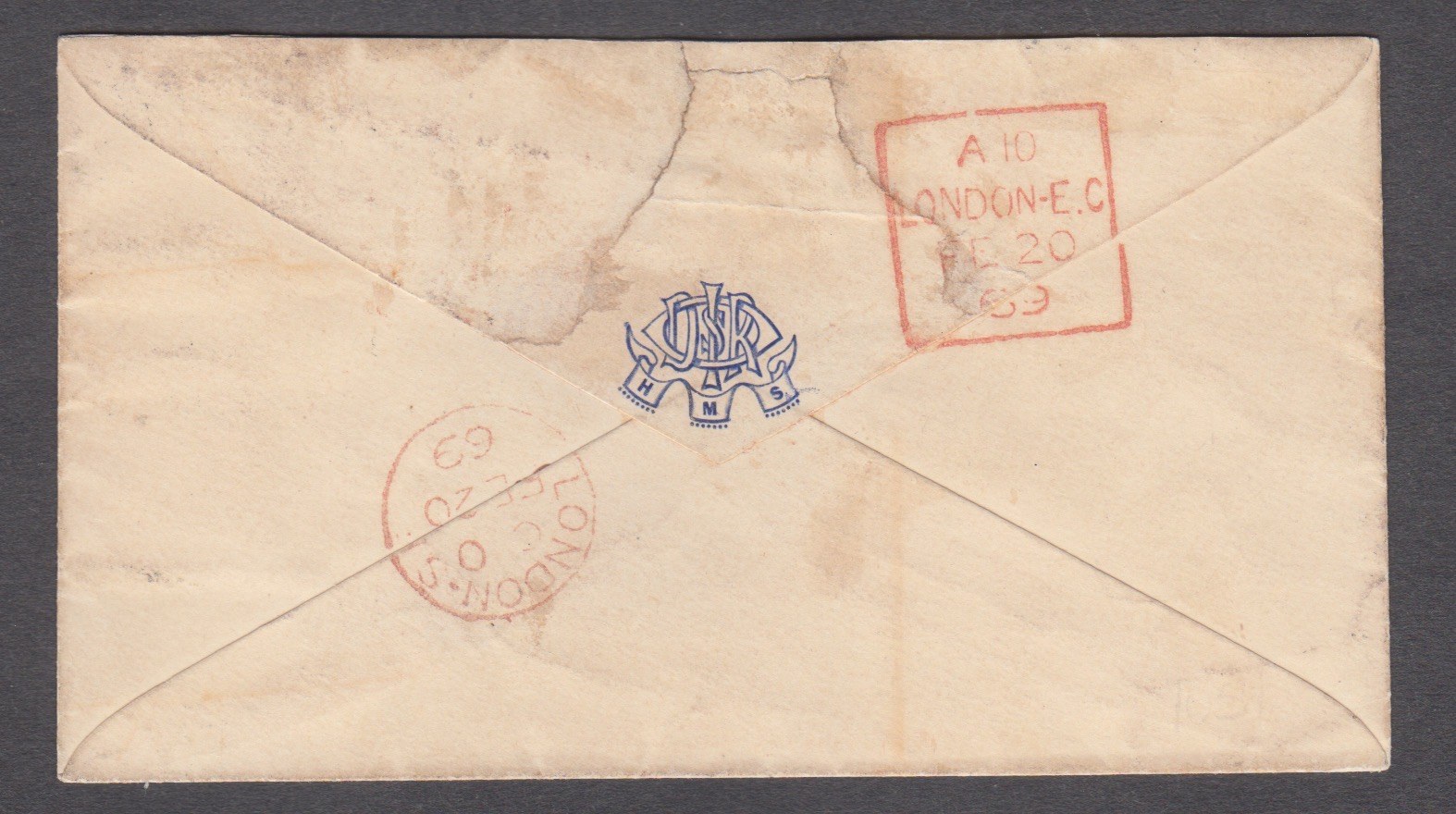
Reverse of the envelope with a blue embossed monogram above a ribbon lettered H.M.S. on the flap, a red boxed London E.C. FE 20 69 marking and a red London circular datestamp
Reverse: the Doris monogram and London markings of 20 February
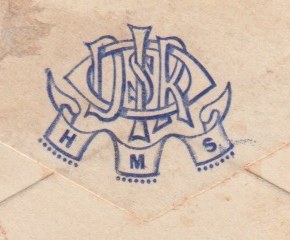
Close-up of the blue embossed monogram above a ribbon lettered H M S
The embossed monogram of HMS Doris
  • Posted Ireland Island, Bermuda, 29 January 1869
  • Endorsed “Via New York” and “Naval Officers Letter”
  • Franking First Issue 6d dull purple and 1d rose-red, paying the 7d rate via New York
  • Obliterator barred numeral “3” (type K1), Ireland Island
  • Datestamp BERMUDA/I/29 JA 69/PAID (type P5)
  • Arrival red London PAID, 20 February 1869; London markings of the same date on the reverse
  • Addressed to J. Trickett Esq., H.M. Dock Yard, Woolwich, Kent

The envelope is endorsed “Via New York” and “Naval Officers Letter”. It is franked with the Bermuda First Issue 6d dull purple and 1d rose-red. Together these pay the 7d rate to Great Britain via New York, in force from 1868 to 1877. Of the 7d, Bermuda kept 1d and credited 6d to the GPO in London, which in turn paid New York 1d for putting the mail aboard a transatlantic steamer. The rate was little used, and it is particularly scarce on mail from Ireland Island.

Both stamps are tied by a single strike of the barred numeral “3” (type K1) used at Ireland Island. At left is a black BERMUDA/I/29 JA 69/PAID circular datestamp (type P5). The red London PAID datestamp of 20 February 1869 was struck on arrival, and there are further London markings of the same date on the reverse.

On the back flap is a blue embossed monogram above a ribbon lettered “H.M.S.”. It identifies the stationery as that of HMS Doris.
II

The journey

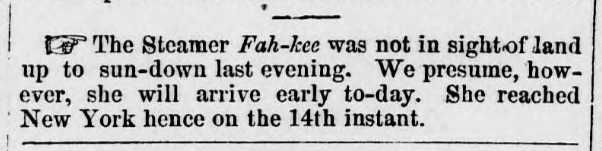
Royal Gazette notice that the steamer Fah-kee was not in sight of land up to sun-down last evening and was expected early to-day; she had reached New York on the 14th instant
Royal Gazette, 26 January 1869
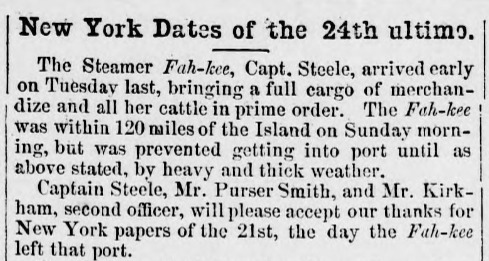
Royal Gazette article headed New York Dates of the 24th ultimo, reporting that the steamer Fah-kee, Captain Steele, arrived early on Tuesday after being prevented from getting into port by heavy and thick weather, having left New York on the 21st
Royal Gazette, 2 February 1869: the Fah-kee held off by the weather
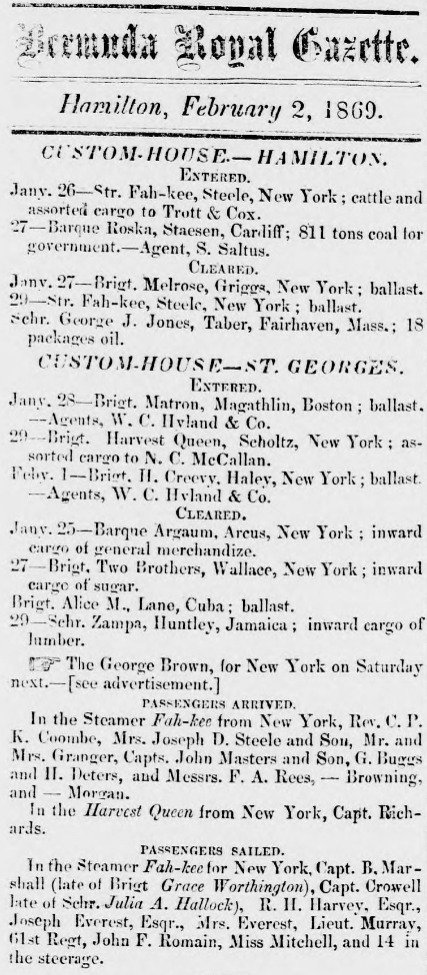
Royal Gazette Custom-House list for Hamilton, showing the steamer Fah-kee entered on 26 January from New York and cleared on 29 January for New York in ballast, with lists of passengers arrived and sailed
Royal Gazette, 2 February 1869: entered 26 January, cleared 29 January

The letter left Bermuda in the Fah-kee. From the autumn of 1868 she ran every three weeks between Bermuda and New York under contract to the Bermuda Government, the first steamer to carry Bermuda’s mails under a contract made by the colony itself rather than by the GPO in London. She carried packet mail on 31 round trips between October 1868 and July 1870. She had left New York on 21 January and was within 120 miles of the island by the morning of Sunday the 24th. Heavy weather then kept her out of port until early on Tuesday 26 January. She cleared Hamilton for New York on Friday 29 January, the same day this letter was posted, and the Gazette of 2 February lists the passengers who sailed in her.

Earlier descriptions of this cover say it was delayed by storms en route. The Gazette tells a slightly different story: the weather caught the Fah-kee on her way in to Bermuda, before she took this letter.

From New York the letter crossed the Atlantic in the Cunard steamer Russia. It reached Queenstown on 19 February and London the following day, then went on to Woolwich.

Bermuda to Woolwich

The steamer on one side, the letter on the other.

The Fah-kee
The letter
21 Jan
The Fah-keeLeaves New York for Bermuda.
24 Jan
The Fah-keeWithin 120 miles of Bermuda, held off by the weather.
26 Jan
The Fah-keeEnters Hamilton.
29 Jan
The Fah-keeClears Hamilton for New York.
The letterPosted at Ireland Island.
19 Feb
The letterReaches Queenstown in the Cunard Russia.
20 Feb
The letterReaches London, then on to Woolwich.
III

Doris in Bermuda

Royal Gazette paragraph: H. M. S. Doris was at Halifax when the Admiral left, would probably remain there till the middle of the present month, when she will leave for these Islands, and is expected to winter here
Royal Gazette, 1 December 1868
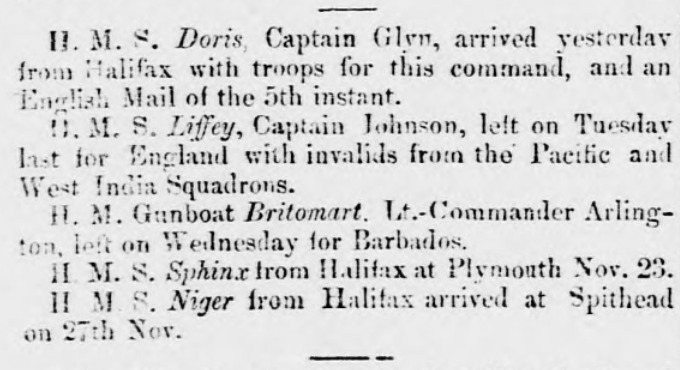
Royal Gazette paragraph: H. M. S. Doris, Captain Glyn, arrived yesterday from Halifax with troops for this command, and an English Mail of the 5th instant
Royal Gazette, 29 December 1868
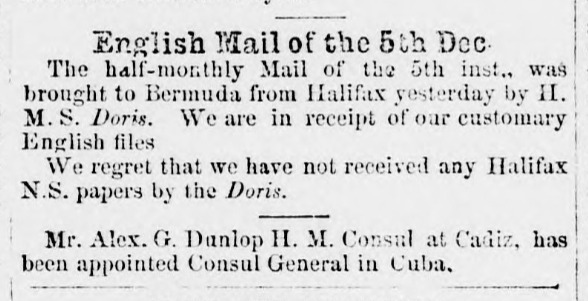
Royal Gazette notice headed English Mail of the 5th Dec, reporting the half-monthly mail brought to Bermuda from Halifax yesterday by H. M. S. Doris
Royal Gazette, 29 December 1868
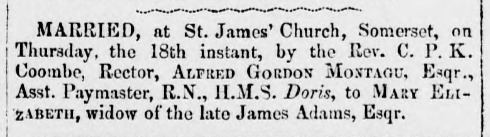
Royal Gazette marriage notice: at St James’ Church, Somerset, on Thursday the 18th instant, by the Rev. C. P. K. Coombe, Rector, Alfred Gordon Montagu, Esq., Asst. Paymaster, R.N., H.M.S. Doris, to Mary Elizabeth, widow of the late James Adams, Esq.
Royal Gazette, 23 February 1869
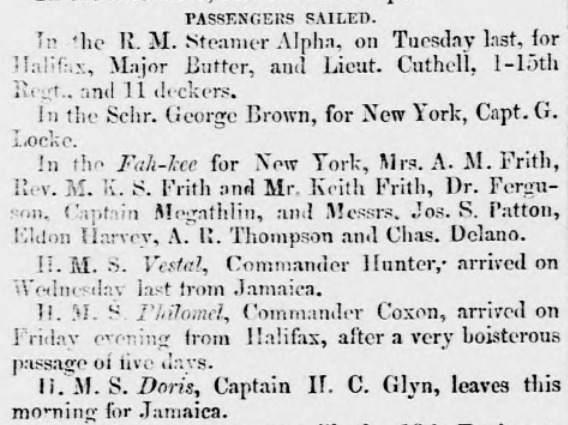
Royal Gazette shipping column listing passengers sailed in the R. M. Steamer Alpha, the schooner George Brown and the Fah-kee for New York, and noting that H. M. S. Doris, Captain H. C. Glyn, leaves this morning for Jamaica
Royal Gazette, 23 February 1869

The Bermuda Royal Gazette followed the ship’s movements that winter, and a few of the notices give a glimpse of life aboard.

1 December 1868. The Gazette reported Doris at Halifax. She was expected to leave for Bermuda in the middle of the month and to winter here.

29 December 1868. Doris had arrived from Halifax the day before. She brought troops for the command and the half-monthly English mail of 5 December.

19 January 1869. Two notices dated 16 January appeared side by side. The wardroom wanted a second steward. The wardroom officers also announced that they would not be responsible for any debts run up by their messman.

23 February 1869. The Gazette reported a marriage at St James’ Church, Somerset, on Thursday 18 February. Alfred Gordon Montagu, Assistant Paymaster of Doris, married Mary Elizabeth, widow of the late James Adams. The service was taken by the Rev. C. P. K. Coombe, Rector, who had arrived from New York in the Fah-kee on 26 January. The same issue announced that Doris would leave that morning for Jamaica.

IV

Who wrote it?

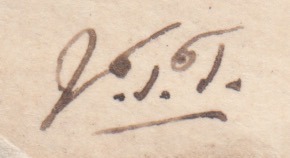
Enlarged view of small ink initials at the lower left of the envelope, apparently J.S.T.
The initials at lower left, apparently “J.S.T.”

I haven’t been able to identify the writer. All three letters carry the same small initials at lower left, apparently “J.S.T.” The Navy List for 1868–69 shows no Trickett among the officers listed for Doris, and no one with those initials.

The entry for Doris reads: 24-gun screw frigate, 2,483 tons, 800 horse power, North America and West Indies. Her officers are listed as follows, with the dates given in the List.

  • Captain Henry C. Glyn, 15 Jan 1868
  • Commander Robert H. M. Molyneux, 28 June 1866
  • Lieutenants Charles Giffard, 9 Feb 1866; Lawrence P. Willan, 3 Feb 1866; Edward C. Abbs, 2 Mar 1866; Arthur F. Gresley, 12 Dec 1867; Frederick A. Moysey, 12 Dec 1867
  • Navigating Lieutenant William L. Dodds, 18 Dec 1866
  • Lieutenant, Marines Edwin Poole, 15 Nov 1866
  • Chaplain Rev. Charles J. Corfe, B.A., 16 July 1867
  • Surgeon Jacob E. Dyas, 23 July 1867
  • Paymaster Luke C. Masterson, 26 Jan 1866
  • Naval Instructor James Payton, B.A., 12 Apr 1866
  • Chief Engineer Francis C. Alton, 30 Jan 1866
  • Sub-Lieutenants James J. L. Sisson (acting), 2 June 1866; Edward H. M. Davis (acting), 5 Dec 1866; Henry T. G. Tipping (acting), 11 June 1867; Reginald O. B. C. Brenton (acting), 18 June 1868
  • Assistant Surgeons George V. Wright, M.D., 17 July 1868; Thomas Conry, 29 Jan 1868
  • Assistant Paymaster Henry Ellis, 12 Mar 1866

What I can say is that the writer knew Trickett, or had regular business with him. He wrote to him by successive mails throughout the ship’s stay.

Trickett was at H.M. Dockyard, Woolwich. The Dockyard closed later in 1869, so these letters reached it in its final year.

V

Three recorded letters

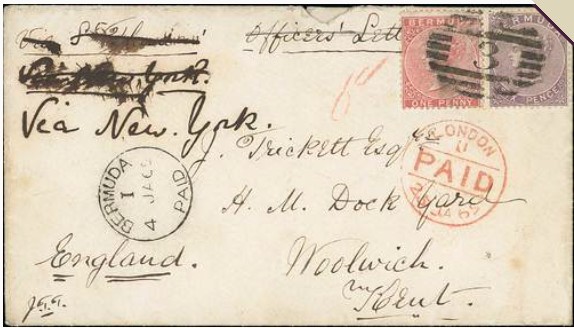
Envelope of 4 January 1869 to J. Trickett Esq., H. M. Dock Yard, Woolwich, with Via St Thomas and a second line heavily inked out, Officers Letter struck through, Via New York written below, franked with 1d and 6d tied by the numeral 3, Bermuda I 4 JA PAID datestamp, red crayon 6d and red London PAID
4 January 1869: re-routed “Via New York”. Image courtesy of Spink.
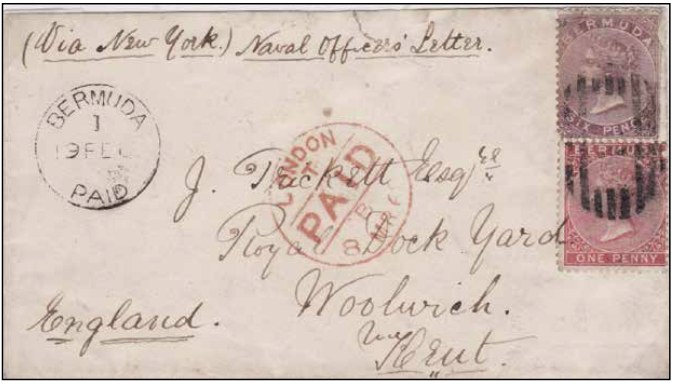
Envelope of 19 February 1869 endorsed (Via New York.) Naval Officers’ Letter, addressed to J. Trickett Esq., Royal Dock Yard, Woolwich, Kent, with 6d and 1d tied by the numeral 3, Bermuda I 19 FE PAID datestamp and red London PAID
19 February 1869: to the “Royal Dock Yard”. From the David Cordon cover census.

4 January 1869. Originally endorsed “Via St Thomas” and “Officers Letter”. Both were struck out in what appears to be the writer’s own ink and replaced with “Via New York”. The letter was carried in the Fah-kee to New York, then in the HAPAG steamer Allemania to Southampton. It has a London PAID of 25 January and a red crayon “6d”, the credit to London. Ex Ludington; David Pitts collection (Spink, lot 196).

29 January 1869. My cover, the one shown above.

19 February 1869. Addressed to the “Royal Dock Yard” and endorsed “(Via New York.) Naval Officers’ Letter.”, with BERMUDA/I/19 FE/PAID. It was posted on the day the mail closed for the Fah-kee’s sailing of 20 February, and crossed the Atlantic in the Cunard Aleppo on her first voyage. Ex Ludington (Spink, 22 June 1999, lot 136) and Freeland.

The Ships · I

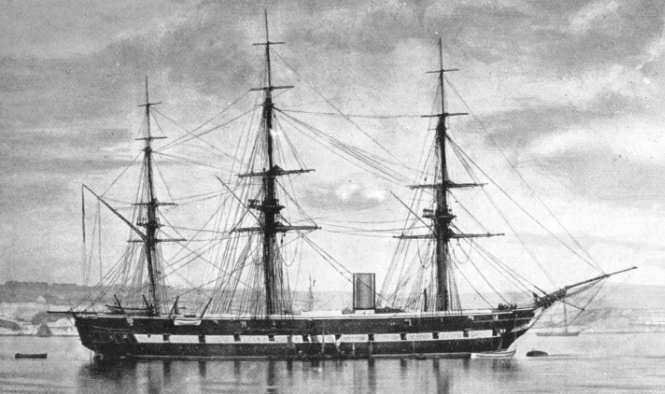
Photograph of the three-masted screw frigate HMS Doris at anchor, her funnel lowered between the main and mizzen masts

H.M.S. Doris

HMS Doris was a wooden screw frigate of the Diadem class, launched at Pembroke Dockyard on 25 March 1857. The Navy List of 1868–69 gives her as a 24-gun frigate of 2,483 tons and 800 horse power, on the North America and West Indies station. Her captain was Henry C. Glyn, appointed in January 1868, and her commander was Robert H. M. Molyneux. She was sold for breaking up in 1885.

BuiltPembroke Dockyard, launched 25 March 1857
TypeWooden screw frigate, Diadem class
Guns24
Tonnage2,483 tons, 800 h.p.
Captain, 1869Henry C. Glyn
FateSold for breaking up, 1885

Photograph from The Navy and Army Illustrated, photographer not identified. Public domain, via Wikimedia Commons.

The Ships · II

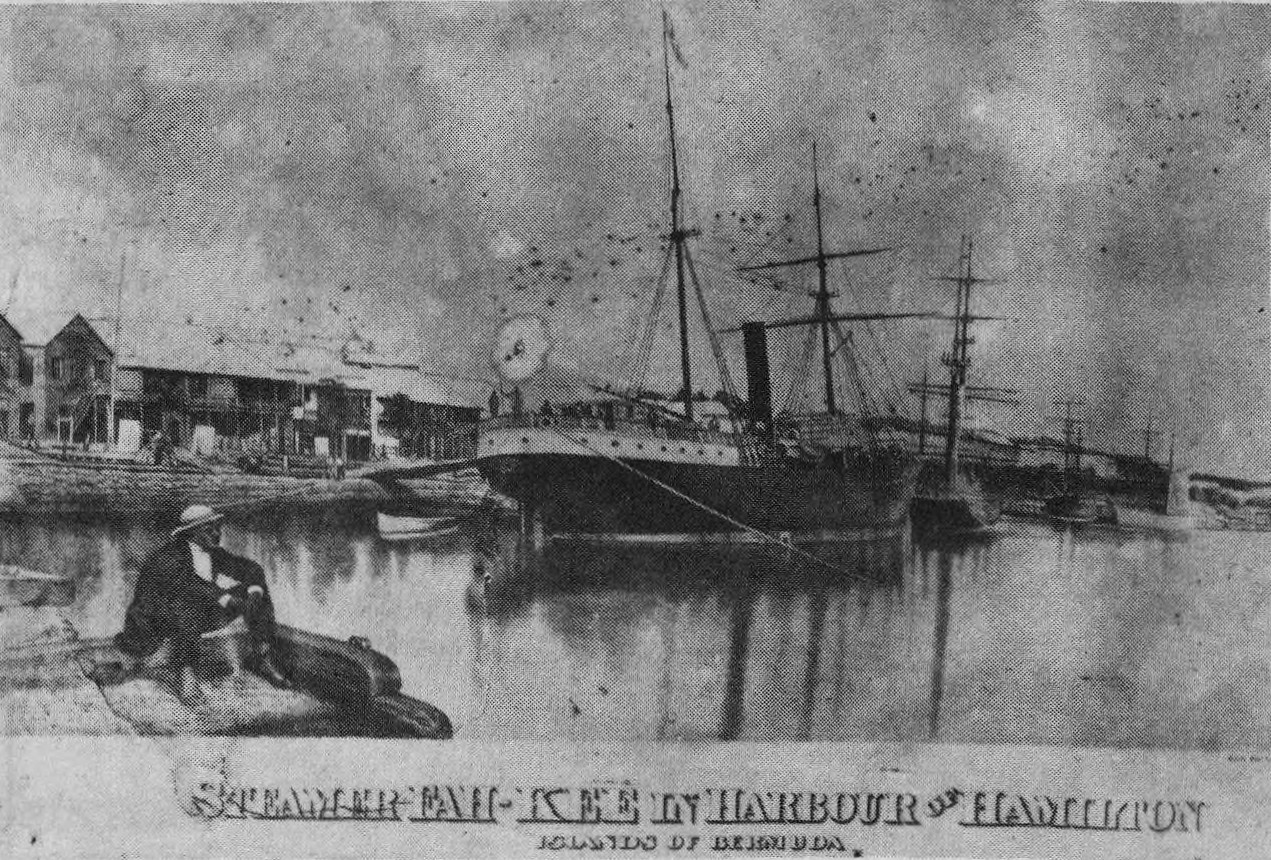
The steamer Fah-kee lying alongside the Front Street wharves in Hamilton harbour, with a man seated on the quay in the foreground, titled Steamer Fah-kee in Harbour of Hamilton, Islands of Bermuda

The Fah-kee

She was completed at Greenpoint, New York, in February 1863 for Wetmore, Cryder & Co., for the China trade, and served the Union Navy during the American Civil War as USS Fahkee, mainly as a supply and dispatch ship. Sold in 1865, she ran between New York and Cuba for Waydell & Co. before the Bermuda contract of 1868. She was sold in February 1872 to the Quebec and Gulf Ports Steamship Company and renamed Pictou. In November 1873 she was seen on fire off Prince Edward Island and was lost with all her crew and 28 passengers.

BuiltGreenpoint, New York, 1863
Civil WarUSS Fahkee, supply and dispatch
Bermuda contract1868–1870
Master, 1869Captain Steele
RenamedPictou, 1872
LostBy fire, November 1873

“Steamer Fah-kee in Harbour of Hamilton”, about 1869. Reproduced in C. K. Bump, “The S.S. Fah-Kee”, BCPSG Journal, July 1984.

Provenance and references