Postal History · Mercantile Fleet Auxiliary · First World War Censorship

M.F.A. Hirondelle

Ireland Island · Bermuda · November 1914

Two censored postcards from Ireland Island that follow an Admiralty supply ship through the West Indies in the first months of the war.

◆

Two postcards posted at Ireland Island, Bermuda, in November 1914 are signed “T” and addressed to members of the Coleman family at 18 Hollybank Avenue, Sandford, Dublin. From the same writer, they were likely sent to his wife and son. Together, they provide strong contemporary evidence of the movements of the Mercantile Fleet Auxiliary Hirondelle and examples of two early Bermuda censor marks.

I

“What cheer Wanger?”

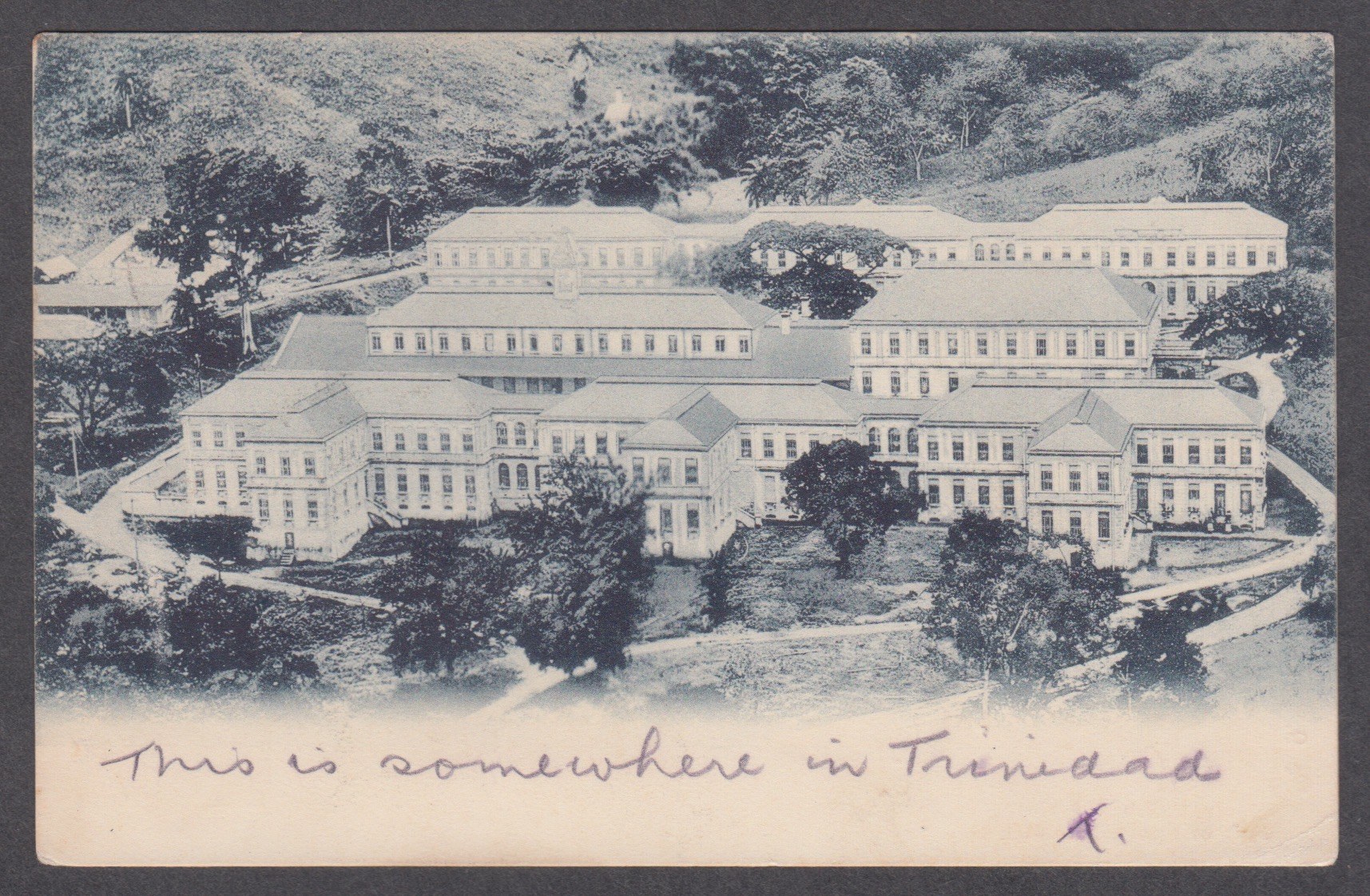
Picture postcard of a large complex of hillside buildings, with This is somewhere in Trinidad written across the foot in violet ink and initialled T
“This is somewhere in Trinidad”
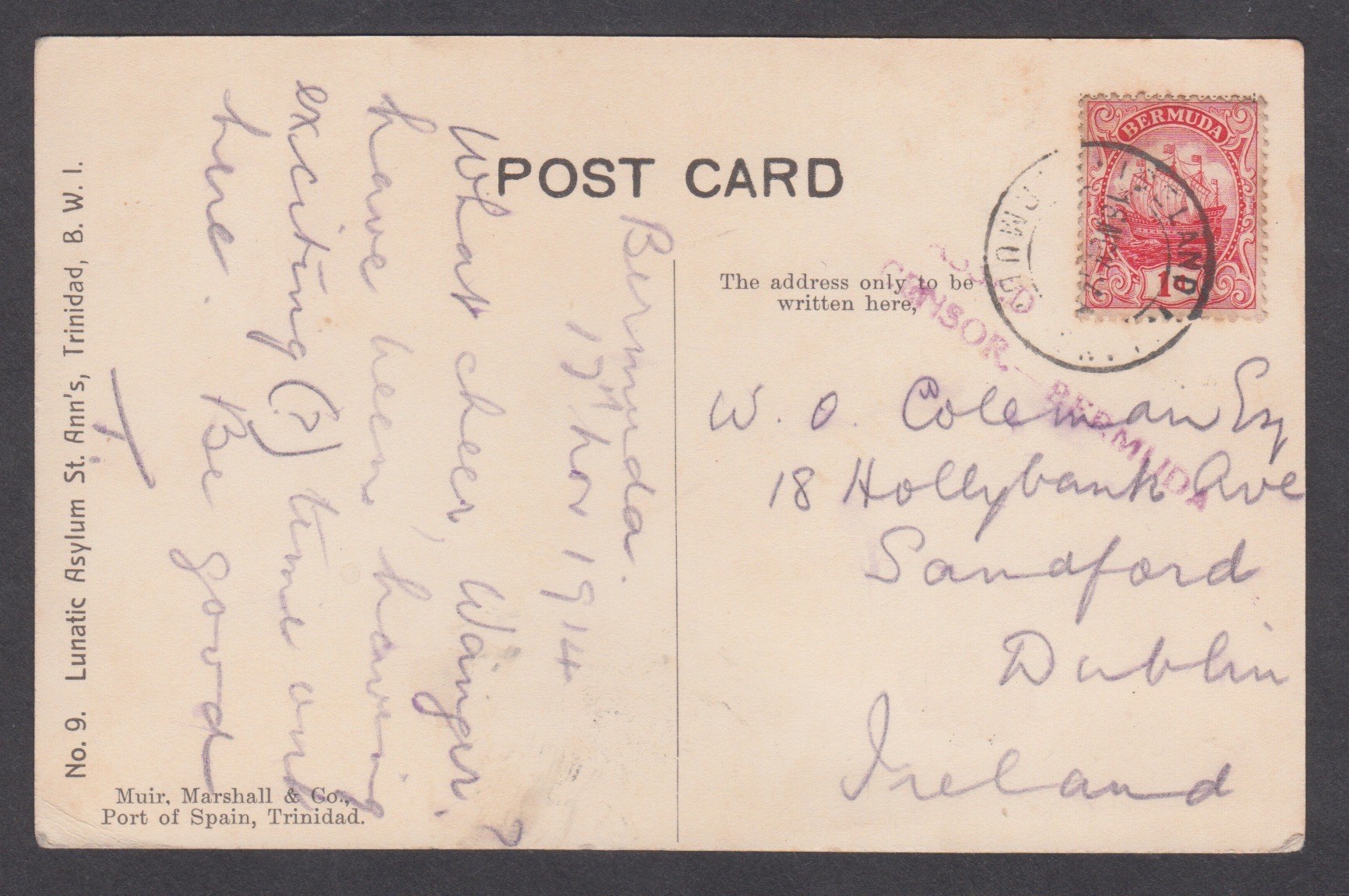
Message side of the card, dated Bermuda 17 Nov 1914, addressed to W. O. Coleman Esq., 18 Hollybank Ave, Sandford, Dublin, Ireland, franked with a Bermuda 1d stamp cancelled at Ireland Island, with a violet Passed Censor Bermuda marking
Ireland Island postmark and CM12 censor mark
  • Written Bermuda, 17 November 1914
  • Card “No. 9. Lunatic Asylum St. Ann’s, Trinidad, B.W.I.”, Muir, Marshall & Co., Port of Spain
  • Posted Ireland Island, Bermuda 1d
  • Censor CM12
  • Addressed to W. O. Coleman Esq., 18 Hollybank Avenue, Sandford, Dublin

The first card is dated “Bermuda 17 Nov 1914” and addressed to W. O. Coleman Esq. It carries a CM12 censor mark. The message reads:

“What cheer Wanger? Have been having exciting (?) times over here. Be good T.”

The publisher’s caption identifies the view as “No. 9 Lunatic Asylum, St Ann’s, Trinidad, B.W.I.” The writer has added: “this is somewhere in Trinidad”.
II

“M.F.A. means Mercantile Fleet auxiliary”

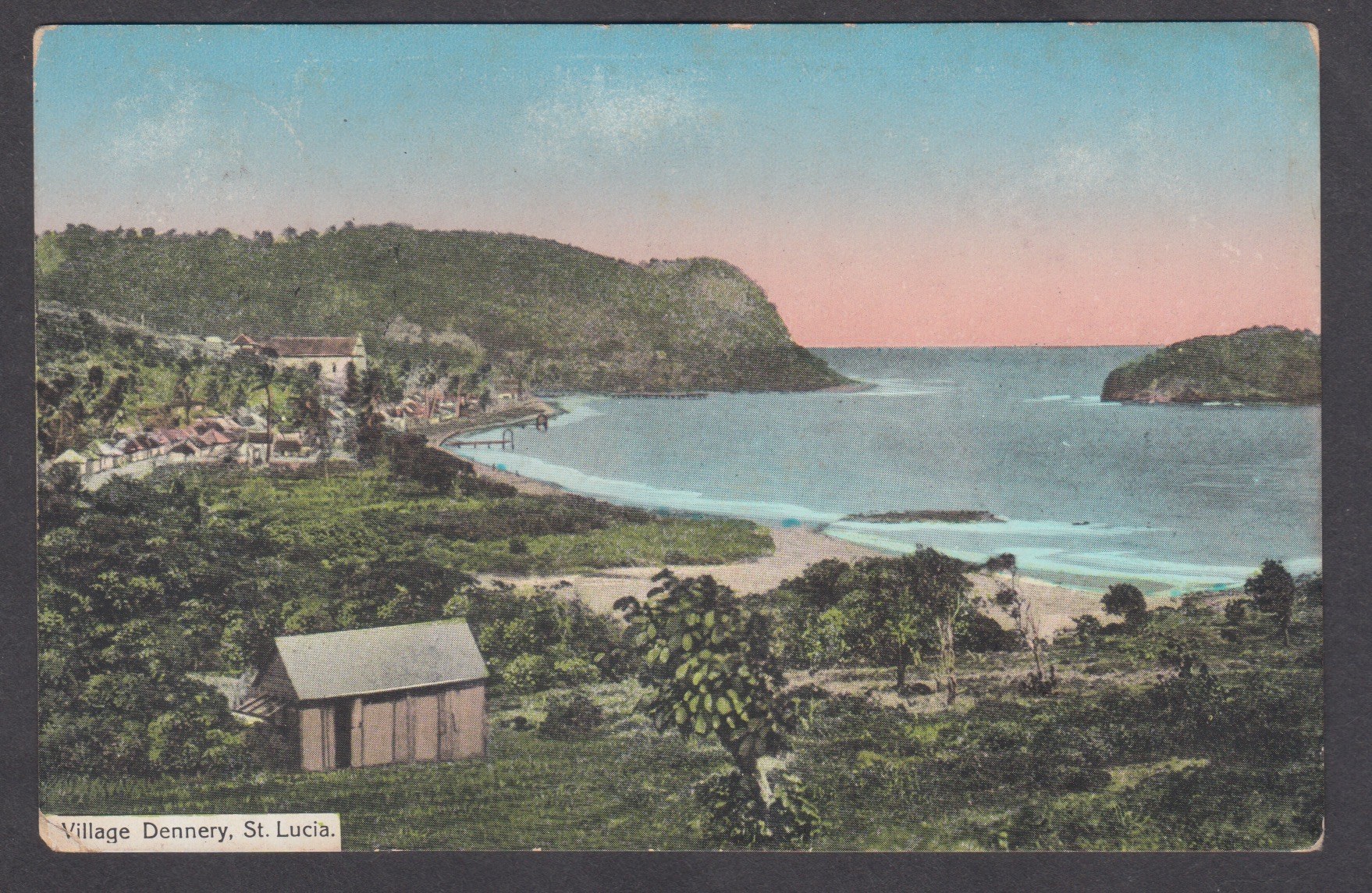
Coloured picture postcard captioned Village Dennery, St. Lucia, looking down over a hut and scrub to a village, beach and bay between two headlands
Village Dennery, St. Lucia
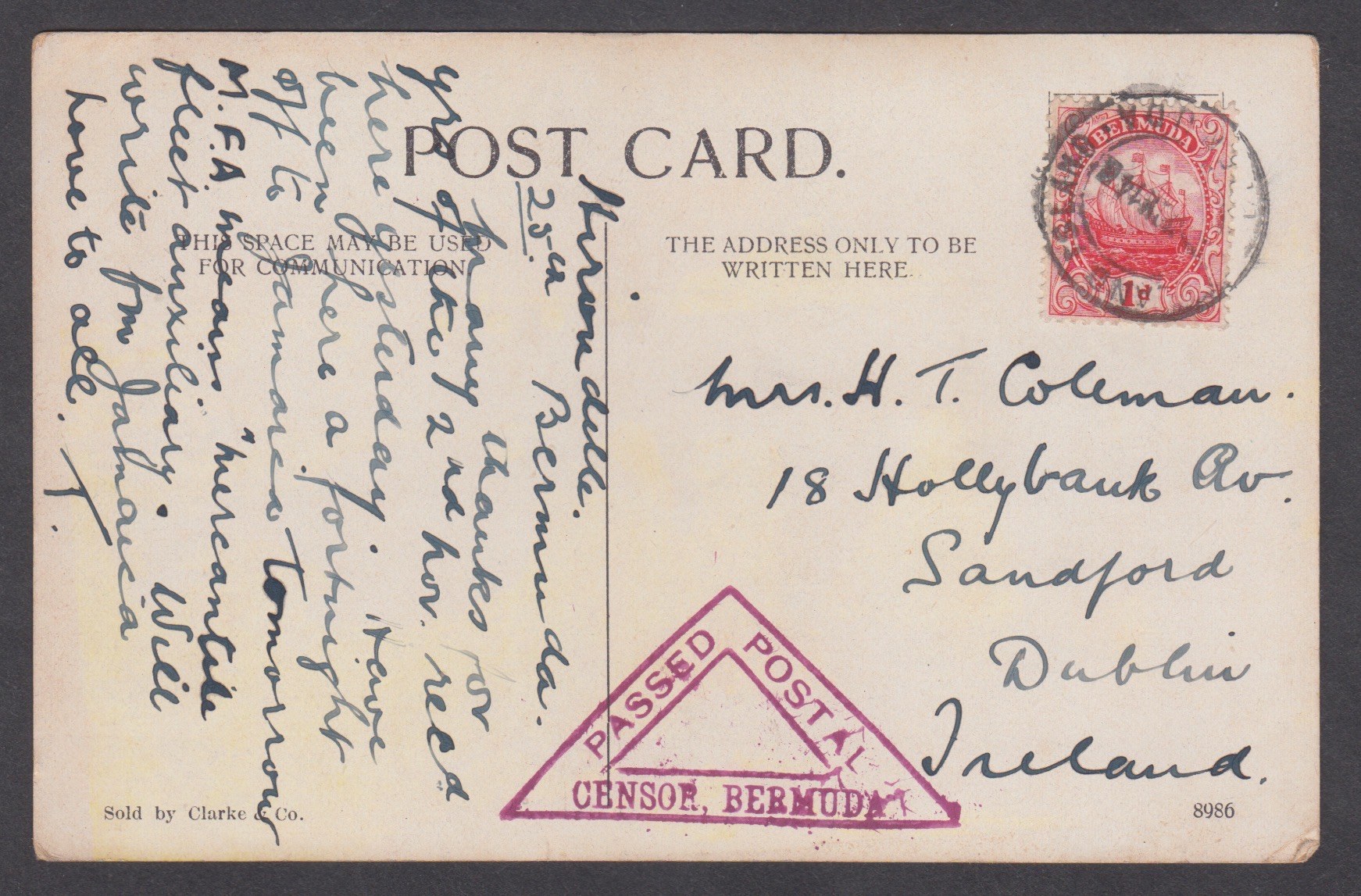
Message side headed Hirondelle 25th Bermuda, addressed to Mrs H. T. Coleman, 18 Hollybank Av., Sandford, Dublin, Ireland, franked with a Bermuda 1d stamp cancelled at Ireland Island, with a large violet triangular Passed Postal Censor, Bermuda marking
Headed “Hirondelle”, with the triangular CM13 censor mark
  • Written Bermuda, 25 November 1914, headed “Hirondelle”
  • Card “Village Dennery, St. Lucia”, sold by Clarke & Co., no. 8986
  • Posted Ireland Island, Bermuda 1d; postmark date unclear
  • Censor CM13
  • Addressed to Mrs H. T. Coleman, 18 Hollybank Avenue, Sandford, Dublin

The second card, depicting St Lucia, is headed “Hirondelle” and dated 25 November. It is addressed to Mrs H. T. Coleman at the same Dublin address and carries a CM13 censor mark. Its message reads:

“Many thanks for yours of 2nd Nov. rec’d here yesterday. Have been here a fortnight. Off to Jamaica tomorrow. M.F.A. means ‘Mercantile Fleet auxiliary’. Will write from Jamaica. Love to all. T.”

CM13 is recorded from Hamilton on 21 November 1914 and St George’s on 27 November 1914. Although the card’s postmark date is unclear, its manuscript date falls just four days after the earliest recorded Hamilton usage.

III

Censored at Hamilton, posted at Ireland Island

Few, if any, other examples of CM12 or CM13 combined with an Ireland Island cancellation are recorded. Postal censorship operated principally at Hamilton, with one assistant censor based at St George’s. Postal employees also undertook censorship as part of their normal duties. At St George’s, postmaster V. O. Brown was appointed an assistant censor on 12 September 1914. Following his resignation as censor, effective 10 October, Major E. H. Robinson of the Army Ordnance Department replaced him.

There is no evidence of a censor stationed at Ireland Island. Mail from outlying offices was apparently taken for censorship and then returned to the originating offices for posting. Hamilton is therefore the most likely censorship location for these two cards, with their Ireland Island cancellations identifying the office of posting.

IV

Hirondelle’s movements

MFA Hirondelle was a merchant steamer employed by the Admiralty as a squadron supply ship. The second postcard’s heading and explanation of “MFA” firmly associate the writer with the vessel.

Royal Navy logs record her at St Lucia on 17–18 September 1914, supplying HMS Berwick and HMS Essex. She reached Abrolhos Rocks, Brazil, on 18 October, supplied British warships there, and sailed on 22 October. Her movements over the following twelve days remain undocumented. She next appears at St Lucia on 4 November and at Fort-de-France, Martinique, on 5–6 November, supplying HMS Berwick.

The writer’s statement on 25 November that he had “been here a fortnight” places his arrival at Bermuda around 10–11 November and strongly supports Hirondelle’s arrival at the same time. His reference to leaving for Jamaica “tomorrow” gives a planned departure date of 26 November. The vessel is next recorded at Kingston, Jamaica, on 2 December, consistent with that voyage.

The postcard views also fit her Caribbean movements. The St Lucia card reflects documented calls there, while the Trinidad view and the writer’s annotation strongly suggest that he acquired it during a call on the journey. The gap between departure from Abrolhos on 22 October and arrival at St Lucia on 4 November provides a credible interval for that visit, although its precise date remains unconfirmed.

The reconstructed itinerary

The ship on one side, the postcards on the other.

The ship
The postcards
17–18 Sep
The shipAt St Lucia, supplying HMS Berwick and HMS Essex.
18–22 Oct
The shipAt Abrolhos Rocks, Brazil, supplying British warships. Sails on the 22nd.
22 October – 4 November: movements undocumented. The likely interval for a call at Trinidad.
2 Nov
The postcardsThe family in Dublin write to “T”.
4 Nov
The shipAt St Lucia.
5–6 Nov
The shipAt Fort-de-France, Martinique, supplying HMS Berwick.
c. 10–11 Nov
The shipArrives at Bermuda, from “been here a fortnight”.
17 Nov
The postcards“T” writes the Trinidad card to W. O. Coleman. Ireland Island, CM12.
21 Nov
The postcardsEarliest recorded use of CM13, at Hamilton.
24 Nov
The postcardsThe 2 November letter from Dublin reaches “T”.
25 Nov
The postcards“T” writes the St Lucia card, headed “Hirondelle”, to Mrs H. T. Coleman. Ireland Island, CM13.
26 Nov
The shipPlanned departure from Bermuda for Jamaica.
27 Nov
The postcardsCM13 recorded at St George’s.
2 Dec
The shipAt Kingston, Jamaica.
V

Passage through censorship

The second postcard openly states the intended departure date and destination of an Admiralty auxiliary, yet passed with a CM13 censor mark. It is a striking example of operational information passing censorship. The explicit reference to the auxiliary’s movements is particularly odd on a censored card. The most likely explanation is that the censor overlooked the significance of the information.

The Ship

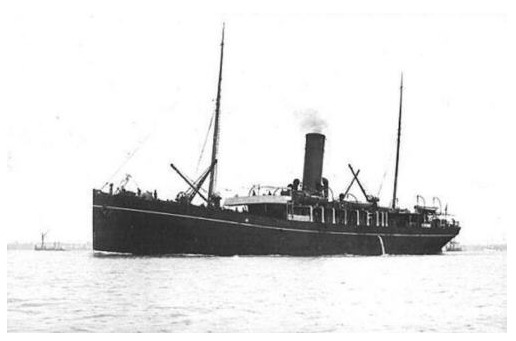
Photograph of the steamer Hirondelle at anchor, a single funnel amidships, two masts with cargo derricks and a dark hull

The Mercantile Fleet Auxiliary and S.S. Hirondelle

The Mercantile Fleet Auxiliary comprised merchant vessels employed to support Royal Navy operations by carrying stores, provisions, water, ammunition and other supplies. Hirondelle is listed among the MFA store carriers as Y9.17.

A 1,648 gross ton steel screw steamer, she was launched at Dundee by Gourlay Brothers on 7 May 1890 for the General Steam Navigation Company. Approximately 268 feet long and capable of about 14 knots, she originally carried passengers and cargo on European routes.

Requisitioned by the Admiralty on 4 August 1914 as a squadron supply ship, she supported Royal Navy vessels in the Atlantic and West Indies. She was back at Bermuda early in 1915, sailing from there on 6 March. Her requisition ended on 7 June 1915, and the following day she became a boom defence vessel and water carrier, before returning to commercial service. On 25 April 1917, while bound from London for Bordeaux with general cargo, she was torpedoed by the German submarine UC-36 and sunk in the Bay of Biscay, about 13 miles off Belle Île, without loss of life.

BuiltGourlay Brothers, Dundee, 1890
OwnersGeneral Steam Navigation Co.
Tonnage1,648 gross
Requisitioned4 August 1914
Lost25 April 1917, Bay of Biscay

Photograph courtesy of Historical RFA.

Still to find out

If you can help with any of these, I’d be very pleased to hear from you.